

Retail REITs Expand Beyond Metros as Tier-II Cities Attract Capital
Retail REITs Expand to Tier-II Cities in India
SHARE:
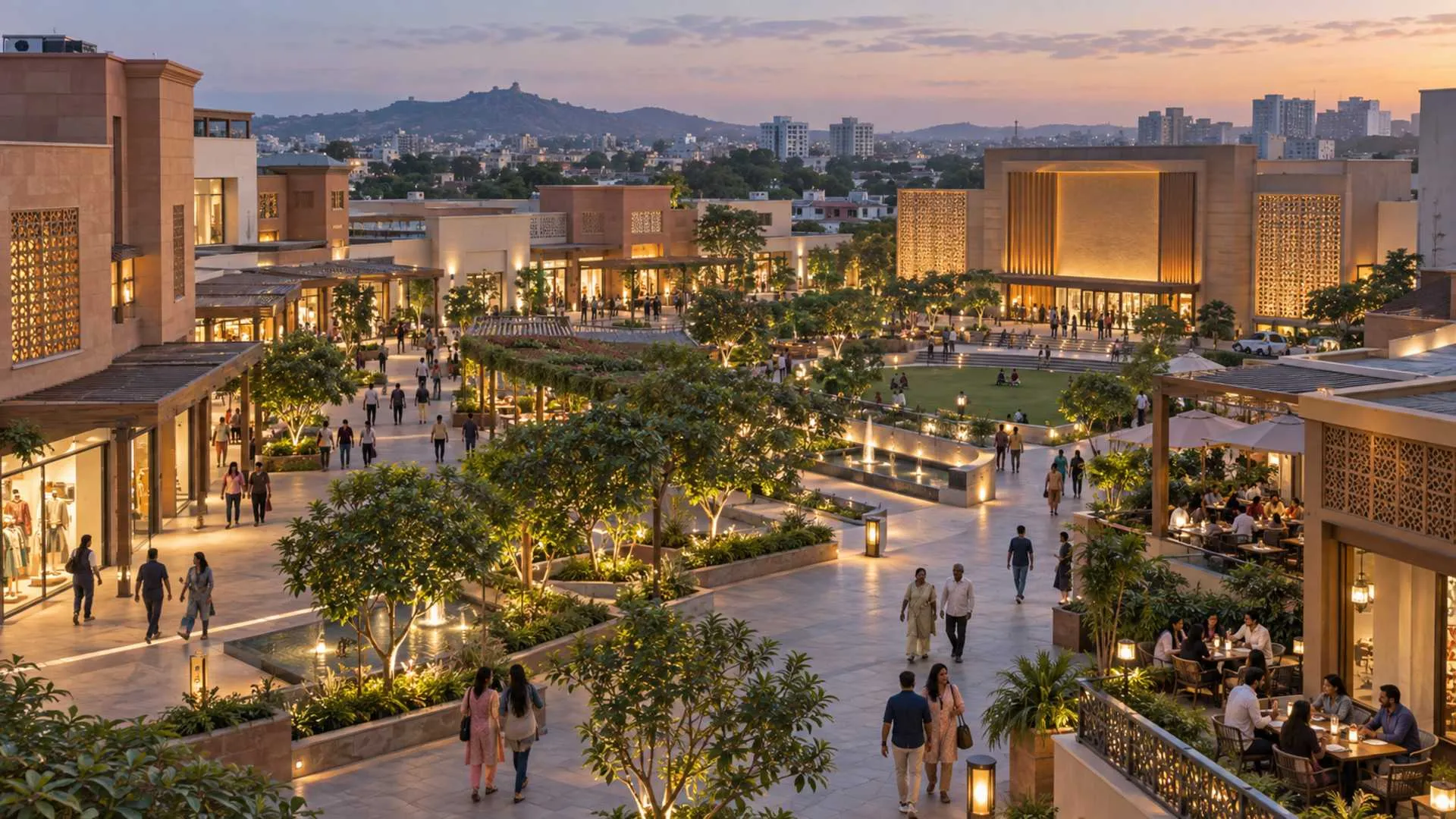
India’s institutional real estate story is expanding beyond Bengaluru offices and Mumbai business districts. Emerging investable properties such as shopping centers in smaller cities are driven by rising consumption, national retailers and demand for organized entertainment and dining.
Recently, industry data showed that India’s operational retail REIT portfolio stood at approximately 11 million sq ft in the first half of 2026. While still considerably smaller than the office REIT market, its geographic spread gives an important clue as to where institutional capital may be heading next.
Investors can gain access to Tier-II consumption through retail REITs without buying a single shop. However, smaller cities are not necessarily safer or more profitable than metros.
Should I Invest in Tier-II Cities Instead of Metro Markets in 2026?
Tier-II cities may offer lower property entry prices and stronger growth potential than mature metros, but returns depend on employment, household spending, infrastructure and resale liquidity. Investors seeking diversification can access some smaller-city retail markets through listed REITs, while direct buyers must evaluate the exact locality, tenant demand and holding period.
Mumbai and Delhi may provide deeper rental and resale markets, whereas Jaipur, Lucknow and Indore can offer earlier entry into developing commercial corridors. The better choice depends on risk tolerance, not the Tier-I or Tier-II label alone.
How Retail REITs Are Rewriting the Geography of Investment
Nexus Select Trust, India’s listed retail-focused REIT, holds malls and related properties across both major metros and smaller urban markets. Its March 2026 valuation report identifies assets in Delhi, Bengaluru, Hyderabad, Chennai, Pune and Navi Mumbai, alongside Chandigarh, Amritsar, Udaipur, Bhubaneswar, Mangaluru, Mysuru, Indore and Ludhiana.
This portfolio shows how retail REITs give exposure to Tier-II city consumption in India. Investors buy exchange-traded units representing an interest in a diversified portfolio rather than purchasing a specific store in a particular mall.
The Times of India has reported that Indian malls are evolving into more organised, institutional-grade properties. Better design, professional management and transparent operations can make successful shopping centres more attractive to private equity and REIT platforms.
Institutional investors are not entering smaller cities merely because land is cheaper. They are looking for malls with stable occupancy, credible tenants, strong catchments and measurable spending.
Why Jaipur, Lucknow and Indore Are Drawing Attention
Jaipur benefits from tourism, its proximity to Delhi-NCR and commercial growth along corridors such as Tonk Road, Jagatpura and Ajmer Road. Improved road connectivity can widen its business reach, although infrastructure announcements should not be treated as guaranteed property appreciation.
Lucknow has become an important North Indian real estate market. UP RERA registered 67 projects in the city during 2025, involving 13,668 approved residential and commercial units and an estimated investment of ₹9,398 crore. That activity indicates developer confidence, but the widely circulated claim of 22.6% annual property growth in Lucknow should not be applied to every neighbourhood or project without locality-specific evidence.
Indore combines industrial activity, education, technology-sector expansion and improving infrastructure. The Super Corridor, AB Road and areas connected to MPIDC-led industrial development are closely watched by property investors. Nexus Select Trust’s presence through Indore Central and Treasure Island provides listed retail exposure to the city.
Jaipur and Lucknow, however, were not listed as Nexus Select Trust mall locations in its March 2026 valuation portfolio. Investors should therefore avoid assuming that every fast-growing Tier-II market already has direct representation in a listed retail REIT.
Why Institutional Capital Remains Selective
Tier-II growth is uneven. Some cities have a large population but lack the consumption density, retailer demand, or leasing transparency required for an institutional mall.
Ahmedabad illustrates this difference. The city is a major commercial centre, yet an Ahmedabad Mirror report noted that Ahmedabad’s office REIT penetration remained behind leading Indian markets. This office-market statistic should not be confused with retail exposure: Nexus Select Trust already holds Ahmedabad One in its retail portfolio.
Institutional investors typically assess:
- Mall occupancy, footfall and tenant sales
- Catchment income and consumer spending
- Lease tenure and rental escalations
- Competition from nearby shopping centres
- Sponsor quality, debt and operating costs
- Future supply and exit liquidity
A city may be growing rapidly but still lack a sufficiently stable property for REIT ownership. Conversely, one dominant mall in a smaller city may perform well because organised competition is limited.
Retail REIT or Direct Tier-II Property?
Buying a shop gives the owner control over the unit, tenant and eventual sale. It also concentrates the investment in one property and requires responsibility for title verification, leasing, maintenance and vacancy.
A retail REIT provides exposure to multiple malls, tenants and cities through units traded on stock exchanges. Entry can be significantly lower than the price of a shop, while the trust manages leasing and operations.
REIT returns remain market-linked. Distributions and unit values can be affected by occupancy, tenant performance, debt costs, valuations and consumer spending. Owning REIT units does not give an investor the right to occupy or independently sell an underlying shop.
Claims that Tier-II properties will always outperform metros should also be treated cautiously. Lower acquisition prices can support stronger percentage growth, but smaller markets may experience thinner resale demand and longer vacancy periods.
Is the Early Tier-II Investment Window Closing?
Not entirely. India contains several growth stages at once. Indore and Chandigarh already have institutional retail assets, while cities such as Jaipur, Lucknow and Nagpur continue developing the scale and property quality required by large investors.
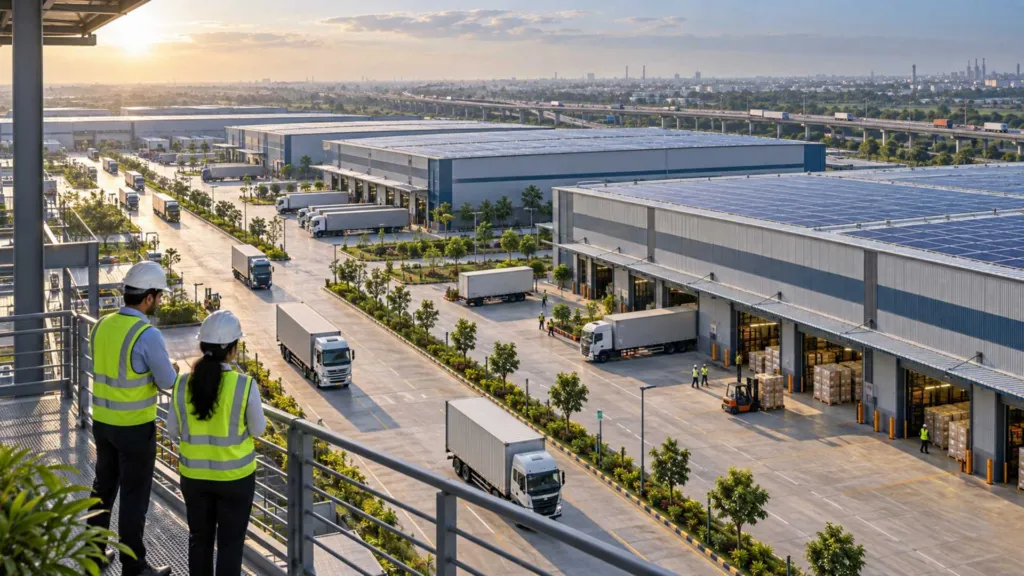
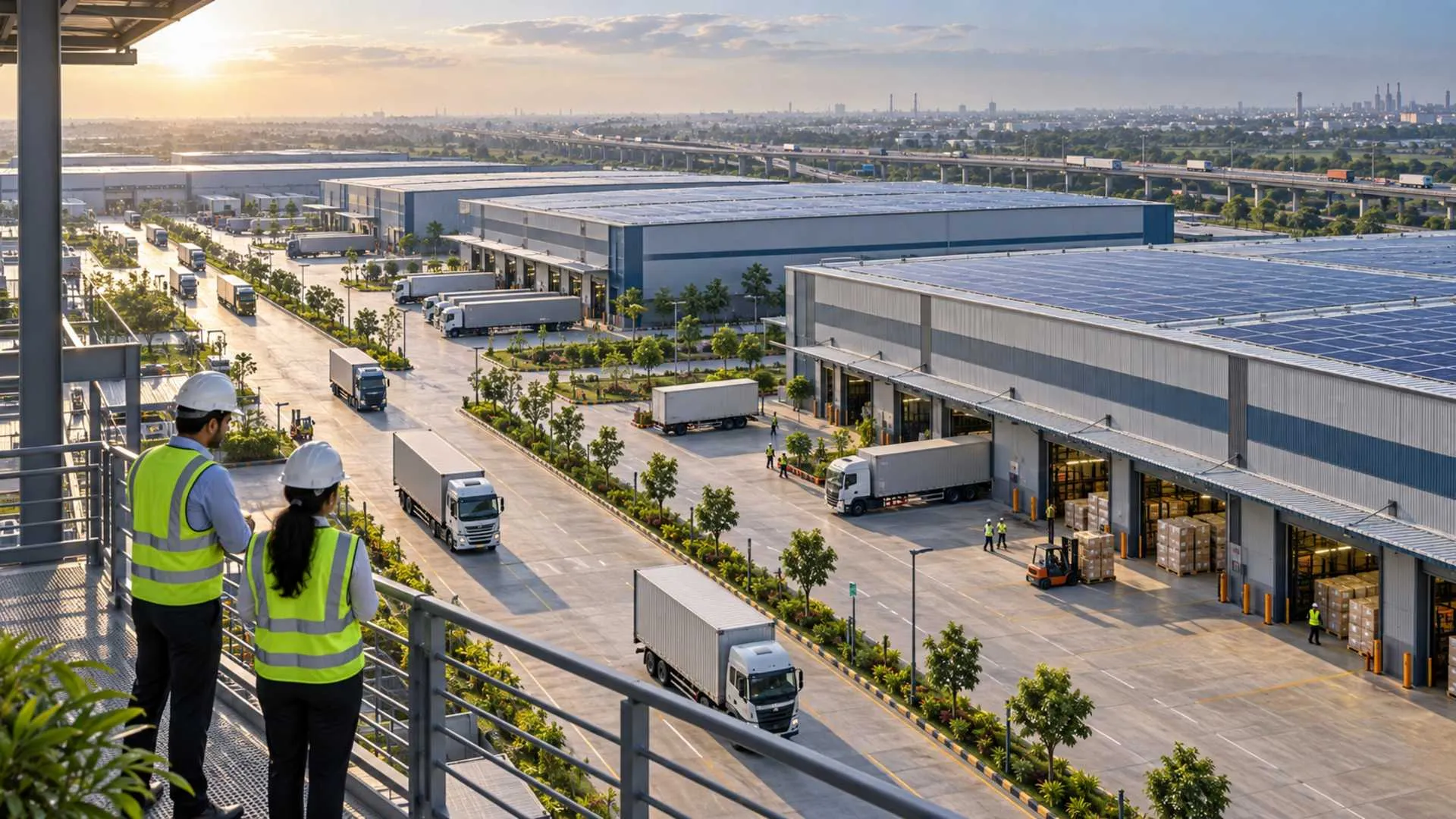
As more developers build institutional-grade malls, successful assets could eventually enter existing or future REIT portfolios. Warehousing InvITs may broaden the story further by bringing logistics properties in Tier-II locations into institutional structures.
For investors, the opportunity is no longer simply “Tier-II versus metro.” The sharper question is whether the chosen asset captures genuine consumption and employment growth at a sensible valuation.
Retail REITs are making India’s smaller-city growth more accessible, but institutional capital will follow performance, not hype.