


Which Indian City Has the Most Unsold Homes in 2026?
Affordable Homes in India
SHARE:
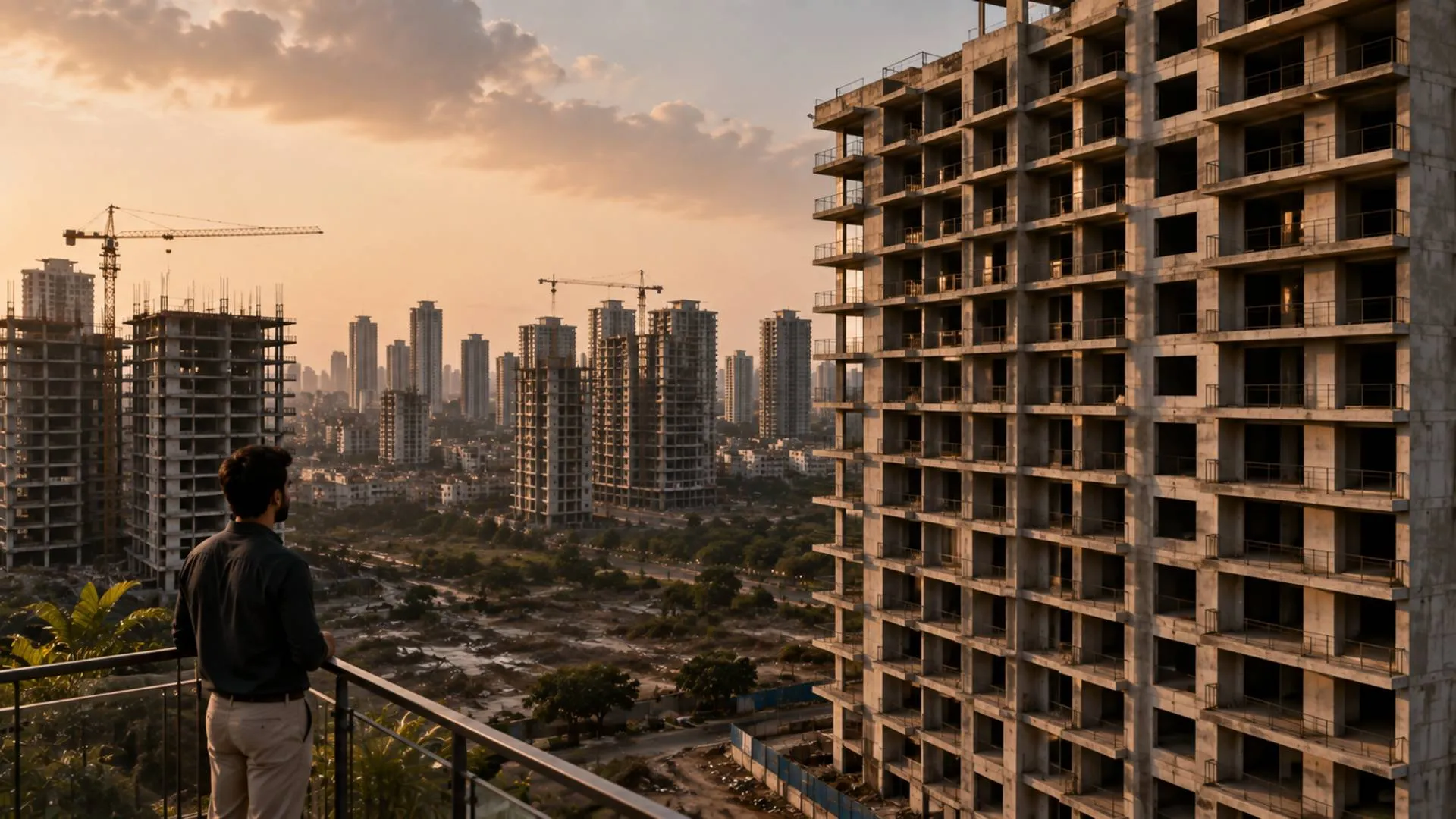
The housing market in India has entered a strange stage since homes are being sold, prices are staying the same, and at the same time the number of unsold properties is increasing.
According to Knight Frank India’s data, as reported by ETRealty, by the end of the first half of 2026, the number of unsold housing units in India’s eight main residential markets had reached 5,25,695, representing a year-on-year increase of 4%. During the same period, 1,71,471 homes were sold, which is only 1 per cent higher than the figure for the corresponding period the previous year.
However, the figure given does not address a more complex question: which Indian city will have the greatest number of unsold houses in 2026 and does a high level of inventory really mean that buyers should wait for prices to fall?
Which Indian City Has the Most Unsold Homes in 2026?
Hyderabad has the largest absolute stock of unsold homes among major Indian cities, while Ahmedabad has the slowest inventory absorption. Hyderabad had approximately 56,095 unsold homes in H1 2026, up 3% year-on-year. Ahmedabad, however, recorded the highest Quarters to Sell (QTS) at 8.1 quarters, followed by NCR at 7.6 quarters.
That distinction matters. The Knight Frank India QTS (Quarters to Sell) metric estimates how long existing inventory would take to sell based on the average sales velocity of the previous eight quarters. India’s eight-market average stood at 6.0 quarters in H1 2026.
So, when asking about the India most unsold homes city 2026 Knight Frank data, buyers need to look at both the number of unsold units and how quickly those units are being absorbed.
Why Are So Many Homes Sitting Unsold in India in 2026?
The bigger story is not simply oversupply. India’s unsold housing problem is increasingly concentrated at the expensive end of the market.
Knight Frank data shows that unsold inventory below ₹50 lakh actually declined 7% to 1,71,363 homes, while inventory between ₹50 lakh and ₹1 crore fell 3% to 1,34,841 homes. In contrast, unsold homes priced between ₹2 crore and ₹5 crore surged 43% year-on-year to 65,671 units.
Interestingly, this does not automatically mean premium housing is in trouble. Sales in the ₹2-5 crore category also increased 19%, leaving the segment with a QTS of 4.4 quarters. Supply is rising rapidly, but buyers are still absorbing a significant part of it.
The real warning appears further up the price ladder. The ₹20-50 crore ultra-luxury category recorded a 14.2-quarter QTS, although Knight Frank cautions that the relatively small number of homes in these categories makes the figure more volatile.
Hyderabad, Ahmedabad or NCR: Where Is the Bigger Risk?
Hyderabad presents perhaps the most fascinating paradox. House of Investors notes that the city has the country’s biggest pile of unsold flats, yet prices have not collapsed. Knight Frank reported Hyderabad’s average residential price rising 7% year-on-year to ₹8,258 per sq ft in H1 2026.
That is a reminder that high unsold inventory does not automatically equal falling property prices.
Ahmedabad unsold homes 2026 data tells a different story. Its 8.1-quarter QTS makes it the slowest-clearing major market, while Delhi NCR unsold homes 2026 carry a 7.6-quarter QTS. NCR also saw H1 sales fall 7% year-on-year.
At the opposite end sits Pune. Its 4.0-quarter QTS was the lowest among the major markets, followed by Chennai at 4.5 quarters, signalling considerably faster absorption.
Should I Buy a Home Now or Wait for Prices to Drop in India?
For buyers hoping that 5.25 lakh unsold homes will trigger a nationwide clearance sale, the data offers little support.
Rising inventory can improve negotiating power without causing headline prices to collapse. Business Today notes that buyers may gain leverage in projects where inventory is accumulating, but current evidence does not indicate widespread developer distress or a broad discount cycle.
A buyer should therefore investigate the project, not just the city. Useful questions include:
- How much of the project remains unsold?
- How old is the inventory?
- Is construction progressing according to MahaRERA/RERA disclosures?
- Are comparable projects selling faster?
- Can the developer negotiate on payment plans, parking, floor premiums or other charges?
One encouraging indicator is that the average age of unsold inventory fell from 14.3 quarters in H1 2025 to 13.5 quarters in H1 2026, suggesting older stock is gradually being absorbed.
Should Buyers Be Worried?
Not yet, but they should be selective.
Knight Frank executives have described current inventory levels and sales velocity as broadly healthy, with unsold stock still below the much higher levels recorded around the 2014 market peak.
India’s unsold homes 2026 story is therefore less about an approaching housing crash and more about a growing mismatch between what developers are building, what those homes cost and how quickly buyers can absorb them.
For homebuyers, that mismatch could actually create an opportunity. Instead of waiting indefinitely for a nationwide price correction, compare inventory, QTS, project-level sales, RERA progress and actual transaction prices before making the call.
Before booking your next property, look beyond the asking price. Compare local supply, developer track record, construction progress and buyer demand, because in 2026, the best deal may be hiding inside the inventory numbers.