

Affordable Homes Are Just 6% of Supply: Who Is India Building For?
Affordable Homes in India
SHARE:
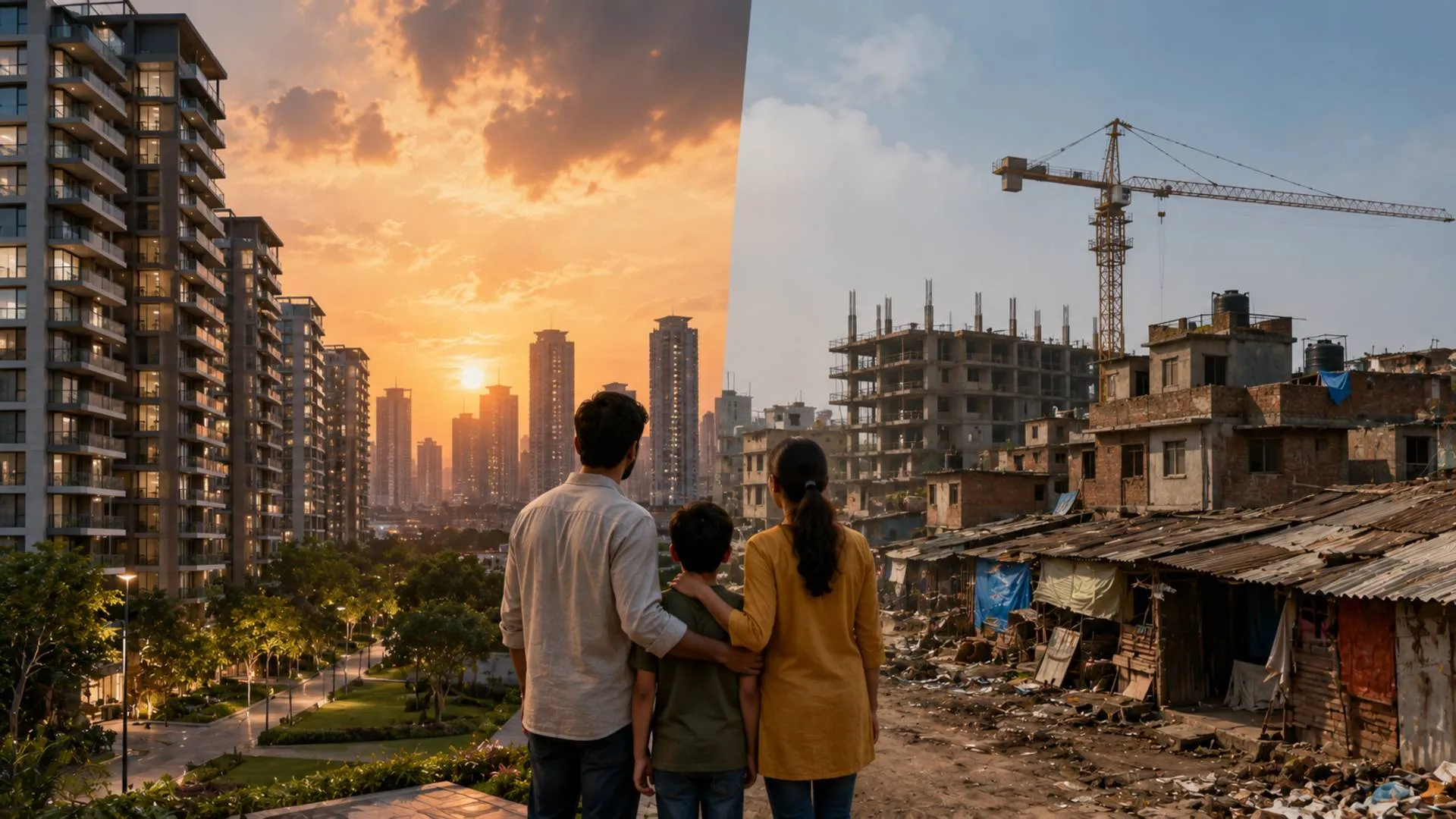
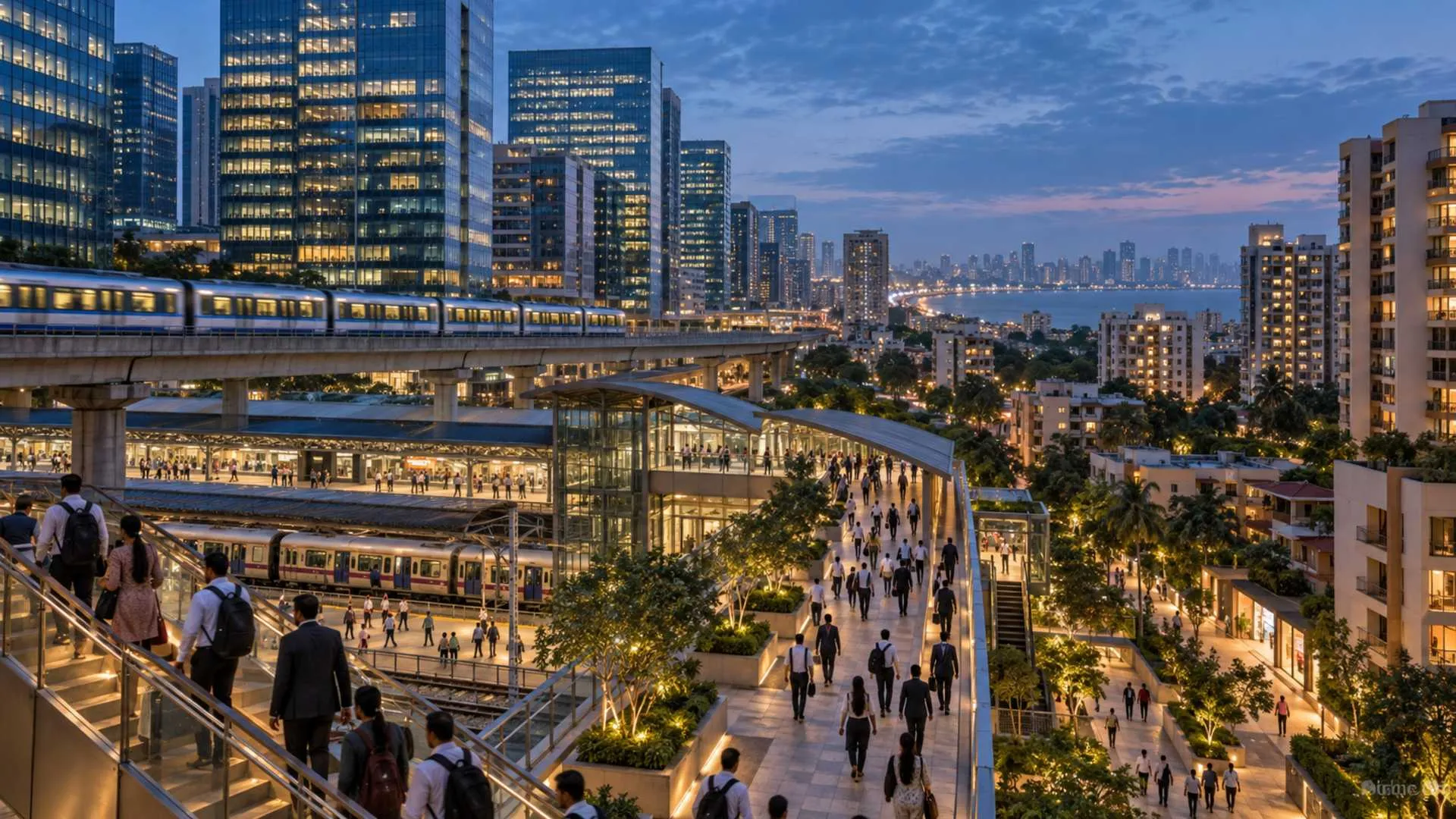
India is building more homes, but fewer seem designed for the buyer who used to drive the mass housing market.
According to ANAROCK data reported by The Week, affordable housing made up only 6% of new residential launches in India’s top seven cities in Q2 2026. In 2018 affordable homes accounted for almost 52% of launches. Meanwhile, overall new launches in Q2 2026 were up 7% year-on-year.
That comparison raises an uncomfortable question: is India building the right homes for the right buyers in 2026?
Can a Salaried Person Afford a House in Indian Metro Cities in 2026?
For many salaried households, buying a home in Mumbai, Pune, Bengaluru or another major metro has become considerably harder. Affordable supply is shrinking while property prices and EMI burdens remain high. The result is a widening gap between what developers find profitable to build and what middle-income buyers can comfortably afford.
The affordable homes 6% new supply India figure becomes even more striking when viewed against the larger premiumisation trend.
From 52% to 6%: Where Did Affordable Housing Go?
The affordable housing collapsed 6% launches India Q2 2026 story did not happen overnight.
Upstox, citing Knight Frank India, reported that homes below ₹50 lakh accounted for around 52% of new launches across eight major cities in 2018, but their share had already dropped to about 17% by mid-2025. It also noted that the affordable housing supply-to-demand ratio declined from 1.05 in 2019 to 0.36 in 2025.
By Q2 2026, ANAROCK’s definition of affordable homes, properties below ₹40 lakh, represented only 6% of launches across the top seven cities. Homes between ₹80 lakh and ₹1.5 crore, by comparison, commanded the largest share at 27%.
A separate CareEdge Ratings analysis reinforces the direction of travel. Homes below ₹1.5 crore fell from 85% of launches in Q1 2022 to 47% in Q1 2026, while ₹1.5-4 crore homes expanded to 44%. Homes above ₹4 crore reached 9%, nine times their 2022 share.
India’s housing shortage is increasingly becoming an affordability mismatch, not simply a shortage of apartments.
Why Are House Prices Rising Faster Than Salaries?
There is a commercial reason developers are moving upwards.
Affordable projects face expensive urban land, rising construction costs, financing pressures and thinner margins. Premium homes can absorb those costs while delivering stronger profitability. Upstox notes that increasing land and construction expenses have made low-cost development less attractive.
But the buyer’s mathematics looks very different.
The Week reported that the EMI-to-income ratio for budget buyers has climbed from about 43% to nearly 60%, while middle-income households have seen the ratio move from around 28% to approximately 40%.
That matters enormously for someone earning ₹60,000 to ₹1.2 lakh per month. Even when a bank approves the loan, being eligible for an EMI and being comfortable paying it for 20 years are two different things.
In Pune, for instance, Upstox’s 2025 comparison placed a typical 2BHK EMI at roughly ₹81,700-₹94,300 against rent of ₹30,000-₹38,000. In MMR, the gap was wider, with its illustrative EMI ranging from ₹1.76 lakh to ₹2.03 lakh.
Premium Homes Rise Even as Buyers Pull Back
Here is where the market gets interesting.
Housing sales across India’s top seven cities fell 6% year-on-year in Q2 2026 to roughly 90,700 units, while new supply increased. Pune recorded a particularly sharp 15% annual sales decline, while MMR sales dropped 8%.
At the same time, average residential prices across the seven cities increased around 7% year-on-year, and unsold inventory rose 10% to more than 6.16 lakh units.
So who is buying homes in India if not middle-class buyers?
The answer is not that the middle class has disappeared. Rather, developers are increasingly targeting buyers capable of absorbing higher ticket sizes: affluent end-users, investors, NRIs and households benefiting from stronger incomes in select employment hubs.
This creates a potential fault line. If affordable and entry-level projects keep disappearing, renting could shift from a temporary stage before homeownership into a long-term reality for more salaried urban Indians.
Is India Building for the Wrong Buyer?
Not necessarily, but the market may be underbuilding for one of its largest potential buyer groups.
Developers cannot sustainably sell homes below cost. At the same time, cities cannot solve affordability simply by adding expensive inventory.
Closing the gap may require cheaper serviced land, faster approvals, infrastructure-led expansion into peripheral markets, targeted incentives and stronger public programmes such as PMAY, MHADA and CIDCO.
The bigger opportunity is significant. Upstox notes that every additional ₹1 lakh of residential construction demand in India is estimated to support 2.61 direct and indirect jobs, rising to 4.06 when wider economic effects are included.
Affordable housing is therefore not merely a real estate segment. It is housing infrastructure with consequences for employment, household wealth and urban mobility.
The Bottom Line
The question in 2026 is no longer whether India can build enough homes. It is whether enough Indians can afford the homes being built.
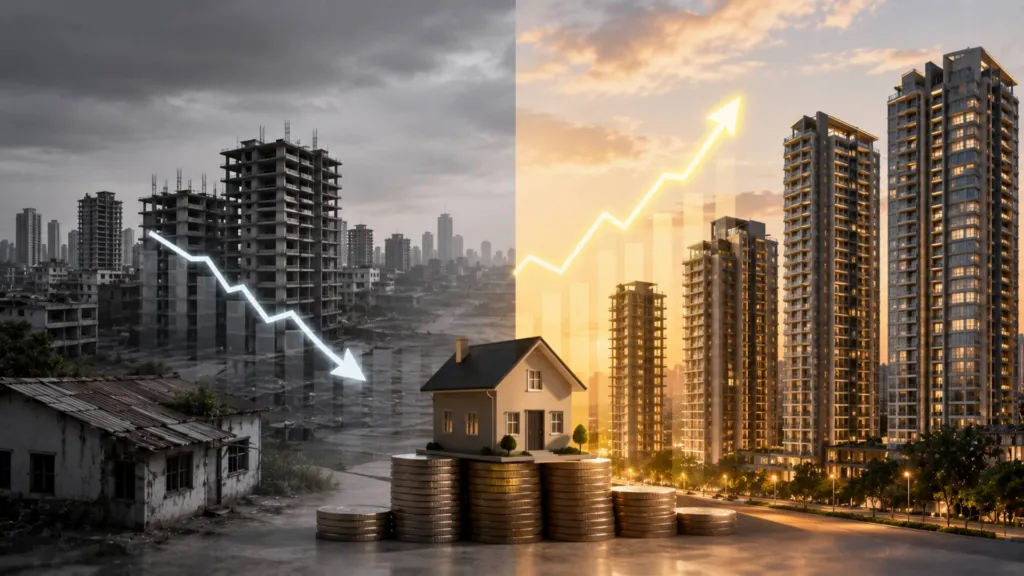
The fall in affordable launches from around 52% in 2018 to just 6% in Q2 2026 is one of the clearest signs yet that the market has structurally moved upmarket.
For buyers, that makes location, EMI affordability, government housing schemes and emerging suburban markets more important than ever. For developers and policymakers, the challenge is bigger: bring the economics of building and the economics of buying back into the same conversation.
Planning your next property move? Compare locations, affordability and real estate opportunities carefully before stretching your budget and follow the latest housing-market updates to see where genuinely affordable supply is still emerging.