

India Sold Fewer Homes but Made 16% More: What Changed?
India sold 1% fewer homes in FY26, but housing sales value rose 16% to ₹9.33 lakh crore.
SHARE:
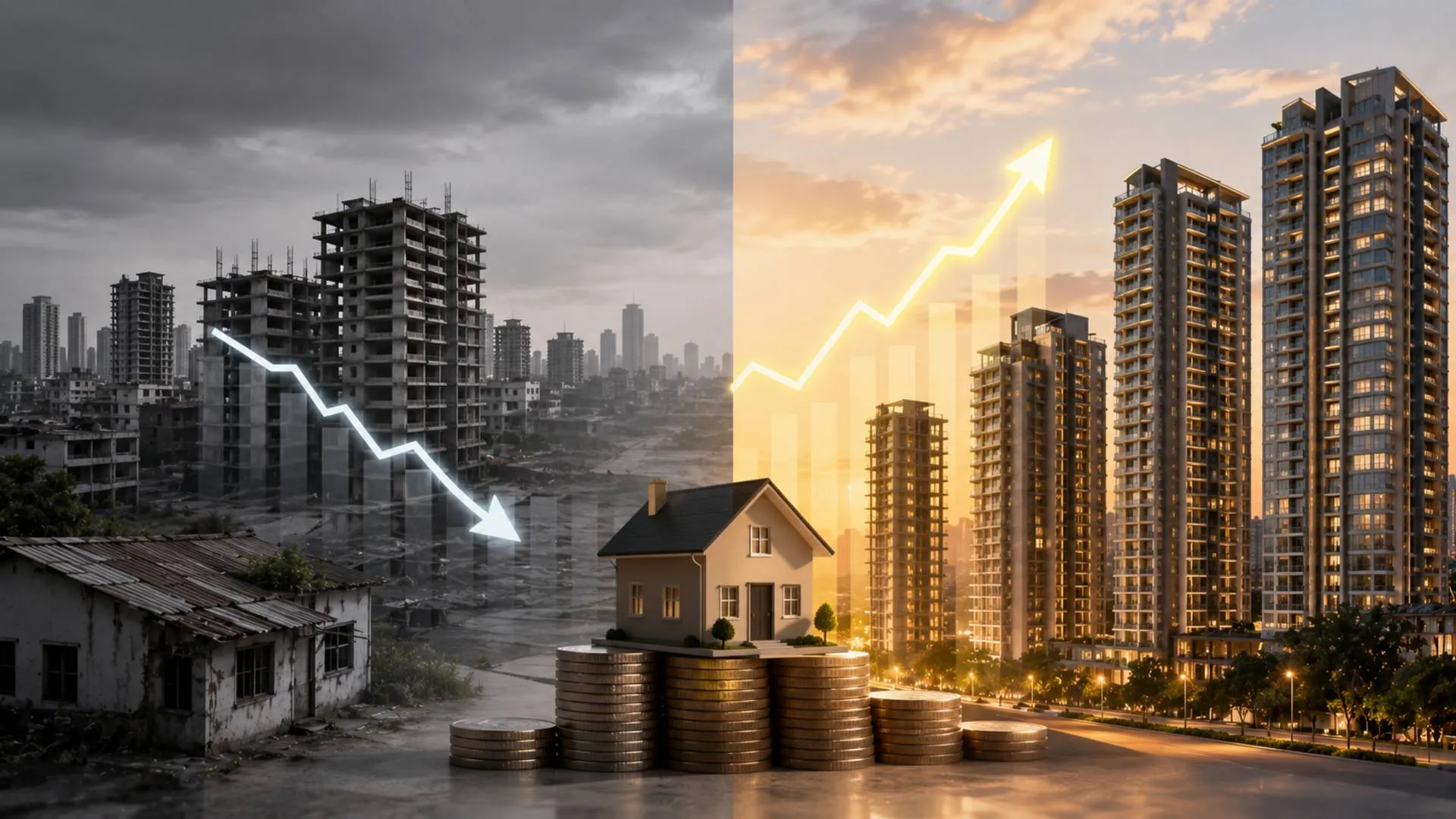
One of the most revealing real estate metrics of 2026 came out of India’s housing market, where fewer homes were sold, but buyers spent more money than ever before.
Housing sales in 75 Indian cities fell around 1% YoY in FY26 to 7.10 lakh units from 7.19 lakh units, based on Liases Foras data cited by Business Standard. But the total sales value jumped nearly 16% to a record Rs 9.33 lakh crore.
So why will India be making more money from fewer home sales in 2026? It is not just simple price inflation. India’s housing market is transitioning from a volume to a value play, with bigger homes, higher ticket sizes and premium buyers increasingly determining what gets built and sold.
Why Are India Home Prices Rising When Fewer Homes Are Being Sold?
India is selling fewer homes but generating higher housing revenue because the market is shifting towards more expensive properties. Premiumisation, larger apartments, affluent buyers and rising property prices mean every transaction can generate significantly more value even when overall sales volumes soften.
That is the central story behind India housing sales volume down, value up in 2026.
The same pattern was already visible in 2025. The Financial Express, citing ANAROCK, reported that sales across the top seven cities declined 14% to around 3.96 lakh units, while their combined value increased 6% to more than ₹6 lakh crore. Average residential prices climbed 8% to ₹9,260 per sq ft.
By FY26, the divergence had become even clearer.
India’s Housing Market Is Moving From Volume to Value
The ₹9.33 lakh crore figure reveals what headline sales numbers alone cannot.
Liases Foras found that 52% of launches across India in FY26 were priced above ₹1 crore, while nearly 48% of apartment launches sat in the ₹1 crore-₹5 crore bracket. The ₹1 crore-₹1.5 crore category alone recorded more than 83,000 launches.
In other words, developers do not necessarily need to sell more units to increase revenue. They need to sell higher-value units.
A separate analysis by Shiju Peethambaran noted that the average home ticket size had already reached ₹1.42 crore in H1 2025, up from ₹1.24 crore a year earlier.
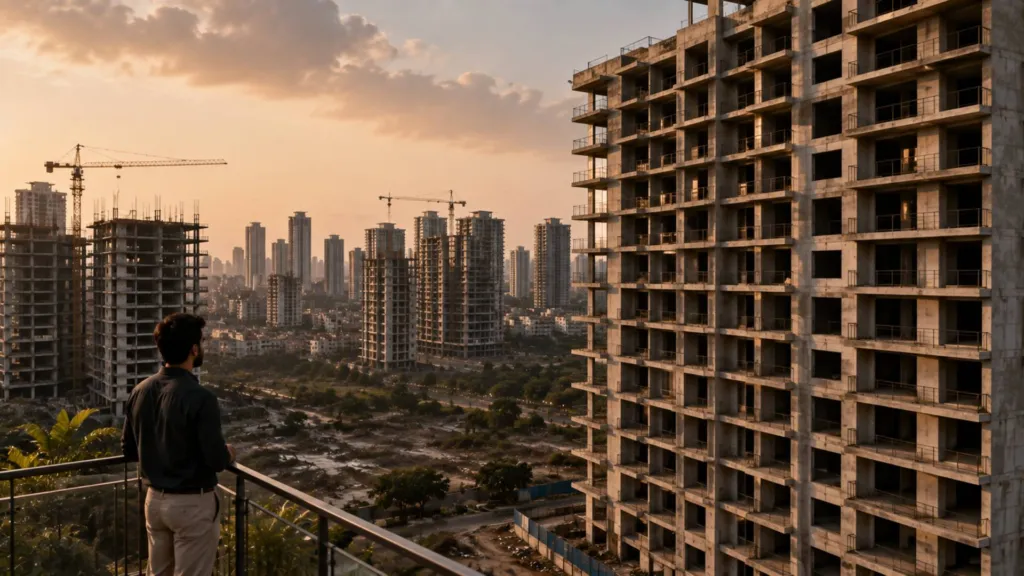
This India real estate premiumisation, value-over-volume trend is changing the product mix: bigger apartments, branded developments, better amenities and luxury or upper-mid-income housing are taking more space in developers’ portfolios.
And the buyer profile is changing with it.
Who Is Buying If Overall Home Sales Are Slowing?
Higher-income end-users, HNIs, NRIs and lifestyle-driven buyers are becoming increasingly influential in premium residential markets.
A LinkedIn analysis by Jyoti Prakash Gadia highlights the contrast particularly sharply: affordable home sales below ₹50 lakh fell 23% year-on-year in Q1 2026, while sales in the ₹20-50 crore ultra-luxury category reportedly jumped 80%.
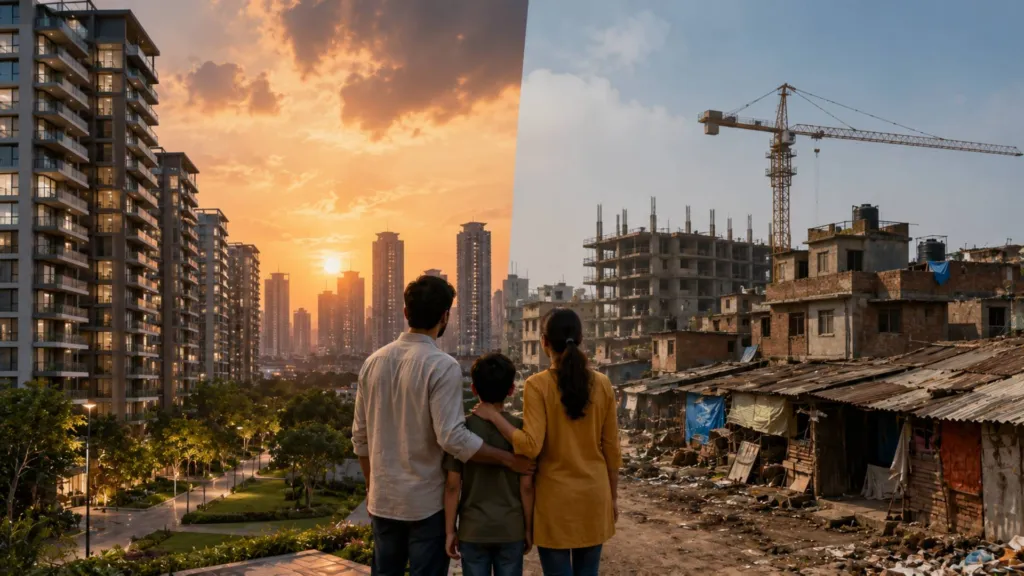
That does not mean ordinary buyers have stopped wanting homes. It suggests India increasingly has two housing markets operating at once.
At one end are affluent buyers who can absorb rising prices. At the other are salaried households becoming more sensitive to ticket size, down payment and EMI commitments.
The market is therefore not simply “booming” or “slowing.” It is becoming more segmented.
Why Are Fewer Homes Selling While Prices Keep Rising?
The latest Q2 2026 numbers make that contradiction even harder to ignore.
According to The Economic Times, citing PropTiger, sales across the top eight cities declined 6.1% year-on-year, yet the sales-weighted average price reached ₹10,153 per sq ft. Bengaluru prices jumped 26% annually despite sales declining 9.2%, while Pune prices rose 13.7% even as sales dropped 20.8%.
Several forces are keeping prices firm:
- Developers are maintaining relatively disciplined supply.
- Premium housing demand remains resilient.
- Land and development costs keep project economics elevated.
- Buyers are increasingly choosing established, higher-quality projects.
- Developers have less incentive to chase unit volumes through aggressive discounting.
Higher revenue, therefore, should not automatically be interpreted as more Indians buying homes.
That distinction matters.
Can the Average Indian Family Still Afford a Home in 2026?
This is where the record ₹9.33 lakh crore sales value becomes a more complicated success story.
India’s housing market can continue generating higher revenue while simultaneously becoming harder for middle-income households to enter.
The danger is a widening affordability gap: premium buyers sustain developer revenues, while aspiring first-time homeowners either move farther towards peripheral locations, reduce their expectations or remain renters for longer.
There is still activity below ₹1 crore. Liases Foras recorded nearly 34,000 launches below ₹30 lakh in FY26, and the ₹50-75 lakh category remained a significant part of new supply.
But the centre of gravity is clearly moving upward.
What Changed in Indian Real Estate? The Buyer Did
India’s housing story is no longer primarily about how many homes can be sold. Increasingly, it is about how much value each home can generate.
That explains the apparent contradiction: approximately 1% fewer homes sold across 75 cities, but sales value climbed nearly 16% to ₹9.33 lakh crore in FY26.
For developers, premiumisation can protect revenues. For investors, it signals where capital and purchasing power are concentrating. But for policymakers and homebuyers, it raises a different question: if housing revenue keeps breaking records while fewer families buy, is the market becoming stronger, or simply more expensive?
The next phase of Indian real estate may depend on whether developers can preserve premium growth while rebuilding viable housing options for the much larger middle-income market.
Thinking of buying in 2026? Compare the total purchase cost, EMI burden, location fundamentals and long-term demand, not simply the headline price appreciation, before deciding how much you should actually spend on a house.