

Punawale & Tathawade: Pune’s Growth Corridors to Watch in 2026
SHARE:
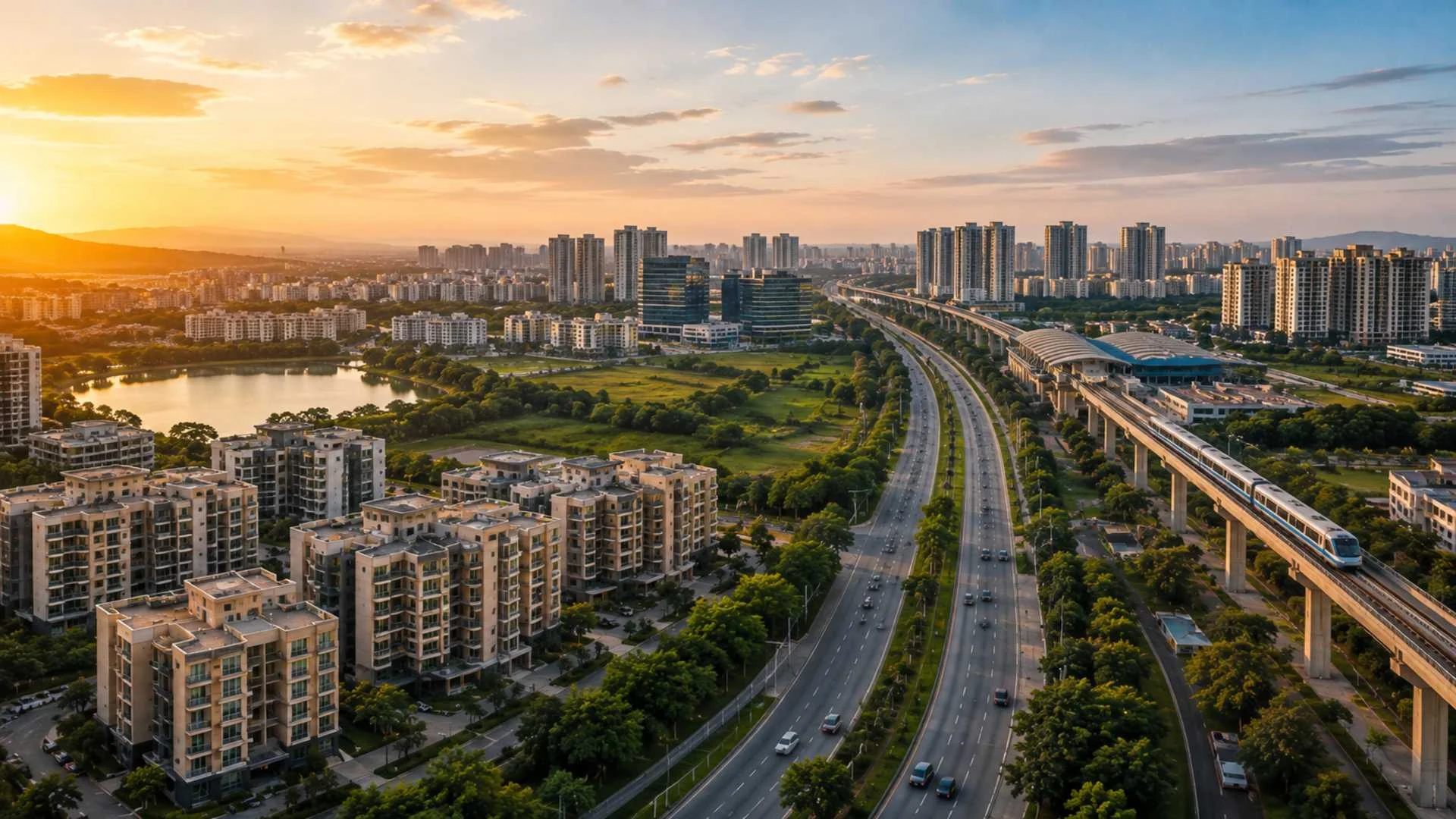
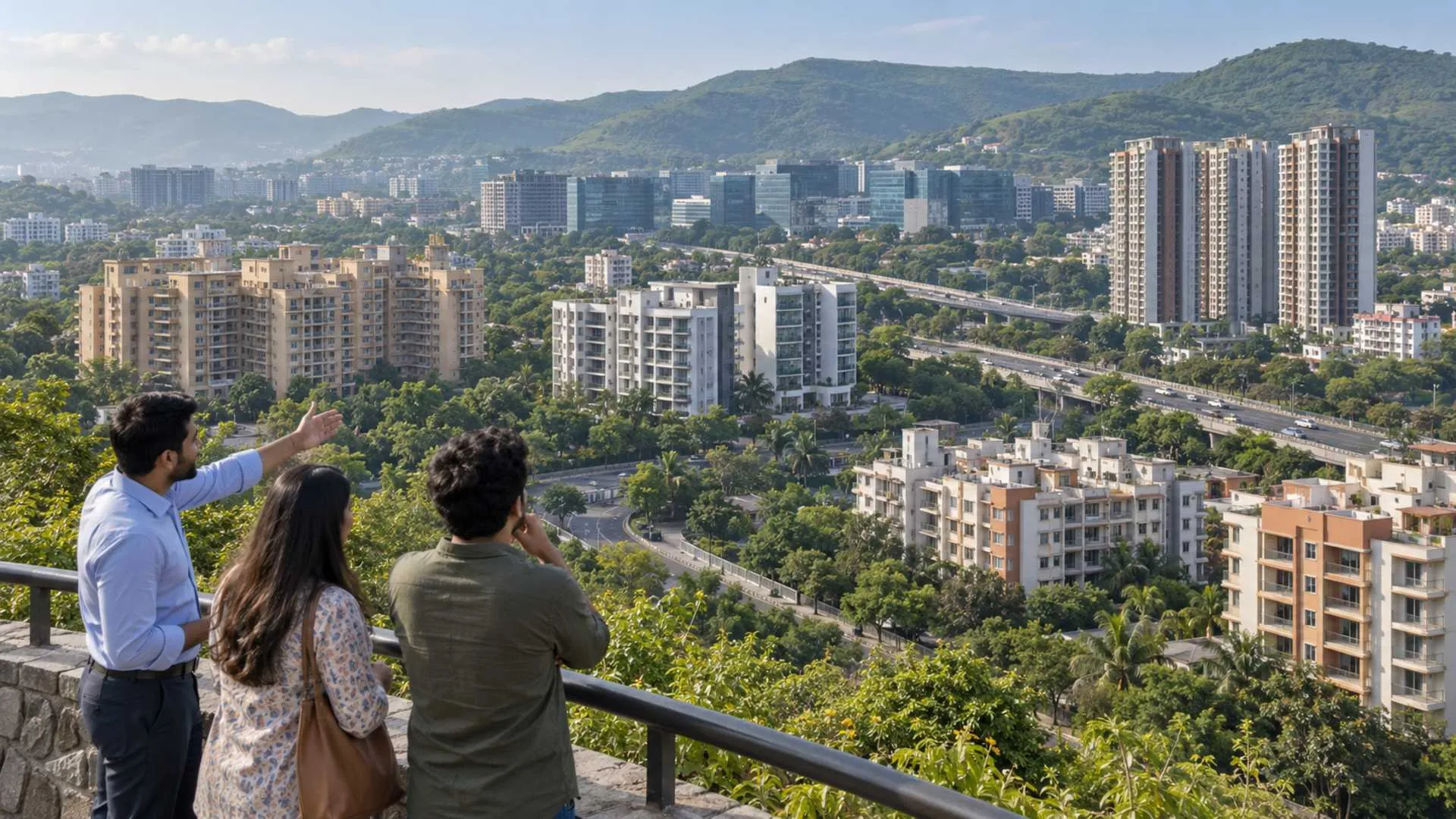
West Pune’s residential map is shifting again. Wakad and Baner may remain established favourites, but buyers searching for the next combination of affordability, IT connectivity and appreciation potential are increasingly looking at Punawale and Tathawade.
The Punawale-Tathawade growth corridors to watch Pune 2026 story is particularly relevant to IT professionals, first-time buyers and investors who want access to Hinjewadi without paying the premium attached to more mature western suburbs.
The two neighbourhoods, however, are at different stages of development. Punawale offers a lower entry point and improving everyday infrastructure, while Tathawade has moved further along its growth curve, helped by NH-48 connectivity, proximity to Wakad and short access to Hinjewadi.
That distinction could become increasingly important as Pune West enters its next phase of residential expansion.
Why Punawale and Tathawade Are Suddenly on Buyers’ Radar
Location explains much of the momentum.
Tathawade lies within PCMC limits along NH-48 and borders Wakad, Hinjewadi and Punawale. Aishwaryam Group’s May 2026 market guide cites 99acres data showing Tathawade apartment prices at roughly ₹8,150-₹9,900 per sq ft, with five-year appreciation of about 43%. The same report puts average rental yield at around 4%. (Aishwaryam)
Punawale remains less expensive. A separate Aishwaryam Group Punawale property investment guide cites an apartment range of approximately ₹6,400-₹9,300 per sq ft and an average of about ₹7,300 per sq ft. It reports five-year appreciation of around 39%. (Aishwaryam)
That creates a compelling price ladder for buyers:
| Market | Indicative residential pricing* | Key attraction |
| Punawale | ₹6,400-₹9,300/sq ft | Lower entry price, Hinjewadi access |
| Tathawade | ₹8,150-₹9,900/sq ft | IT proximity, NH-48 connectivity |
| Wakad/Baner | Generally more mature/premium | Established lifestyle ecosystem |
*Indicative market ranges cited by the referenced sources; actual project prices vary by location, configuration, developer, floor and construction status. (Aishwaryam)
This is why the Punawale Tathawade PCMC growth belt Pune 2026 is attracting attention: buyers can remain connected to Pune’s dominant western employment corridor while entering below the pricing of some established neighbourhoods.
Why Is Punawale Cheaper Than Baner and Is It Worth Buying?
Punawale is generally cheaper because Baner is a much more mature premium residential and commercial market with established lifestyle infrastructure and stronger location branding. Punawale is still moving through its development cycle. For buyers comfortable with an emerging neighbourhood, Punawale can offer better entry pricing, access to Hinjewadi and Wakad, and potential upside as infrastructure and social amenities mature.
In other words, the price gap is partly a maturity gap, not simply a quality gap.
That makes the Punawale vs Baner, which area should you buy in 2026 decision less obvious than comparing prices alone. Baner may suit buyers who want established convenience today; Punawale may appeal more to those willing to trade some maturity for affordability and future potential.
Punawale: The Affordable Entry Into West Pune’s Growth Story
Punawale’s biggest selling point in 2026 is straightforward: it still offers room to enter the West Pune property story without stretching towards Baner or Wakad-level budgets.
According to Guddwill Spaces, the locality is gaining attention because of its access to Hinjewadi, Wakad and Tathawade, along with connectivity towards the Mumbai-Pune Expressway. The report also points to improving infrastructure and IT-led residential demand as important drivers. (Guddwill Spaces)
The more detailed Aishwaryam market analysis says demand is increasingly concentrated in 2 BHK and 3 BHK apartments and gated communities. It also notes that rental demand is being supported by professionals who want to stay within commuting distance of Hinjewadi. (Aishwaryam)
Micro-location matters, though. Punawale core, including pockets around established residential and retail stretches, will behave differently from newer development towards the Ravet or Marunje side. Buyers considering the Punawale Ravet edge for riverside or value-focused projects should therefore compare road access and surrounding development rather than relying on a locality-wide average.
For first-time buyers, smaller configurations remain particularly relevant. Search interest around Punawale 1BHK ₹39-55 lakh entry first-time buyer options reflects the market’s affordability positioning, although live inventory and all-inclusive prices need to be checked project by project.
The larger investment question is whether the lower price compensates for infrastructure that is still catching up. For many buyers, the answer may be yes, but only with a sufficiently long holding period.
Tathawade: The IT-Corridor Alternative Getting Harder to Ignore
Tathawade’s proposition is different.
It is no longer simply the cheaper neighbourhood beside Wakad. The locality is developing an identity as a connected residential base between Hinjewadi’s employment engine and West Pune’s established lifestyle belt.
Krisala’s Tathawade connectivity analysis highlights access to the Aundh-Ravet BRTS Road, Mumbai-Bangalore Highway, Wakad, Punawale, Ravet, PCMC, Baner, Balewadi and Hinjewadi. (Krisala)
Aishwaryam’s analysis puts Hinjewadi IT Park at roughly a 10-minute road journey from Tathawade under favourable conditions. It also highlights access to NH-48 and the Aundh-Ravet BRTS corridor. (Aishwaryam)
This explains why the Tathawade 8-15 min Hinjewadi Phase 1 commute proposition has become central to the locality’s marketing story.
Education is another demand generator. JSPM’s educational ecosystem and colleges in the broader Tathawade-Wakad belt support student and staff demand, while healthcare and retail options are expanding around the neighbourhood.
There is a trade-off. Tathawade’s nightlife and standalone high-street ecosystem are still limited compared with Baner-Balewadi or established Wakad. Residents seeking restaurants, malls and entertainment frequently rely on neighbouring Wakad, Hinjewadi and Baner-Balewadi. Krisala similarly frames Tathawade’s lifestyle advantage around access to these surrounding hubs rather than a fully self-contained entertainment district. (Krisala)
For families and professionals, that may be acceptable. For buyers seeking a fully mature urban lifestyle outside their doorstep, it deserves consideration.
Infrastructure Could Decide the Next Phase
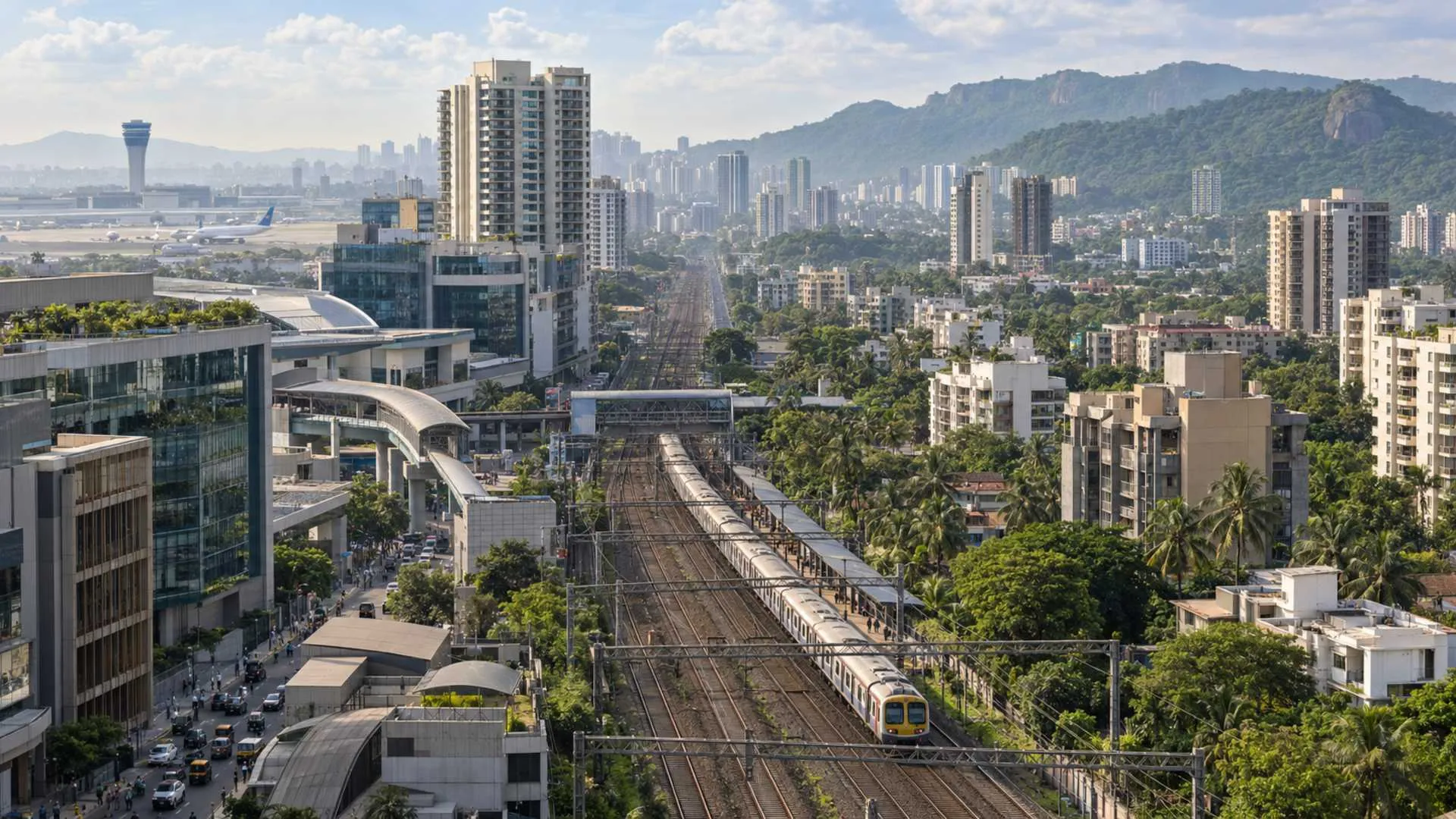
The biggest long-term story is not a single apartment launch. It is the transport network forming around the two suburbs.
NH-48 is effectively becoming a residential spine for West Pune. Aishwaryam’s June 2026 infrastructure analysis notes that road widening, underpasses and service-road improvements are reshaping connectivity around Wakad, Tathawade and Punawale. (Aishwaryam)
Metro connectivity is another potential catalyst.
For Tathawade, Metro Line 3, the Hinjewadi-Shivajinagar corridor, is particularly important. Aishwaryam reported that the 23.203-km elevated line, with 23 stations, had reached 94.58% physical construction as of January 2026, citing PMRDA’s dashboard. Wakad Chowk is identified as the nearest station for Tathawade. (Aishwaryam)
Punawale’s benefit is more indirect, making last-mile and feeder connectivity important rather than assuming every property will become “metro-adjacent.”
Infrastructure can support appreciation, but buyers should be wary of paying tomorrow’s infrastructure premium today. Distance from an actual station, access road quality and peak-hour travel time matter more than a project’s marketing map.
Punawale or Tathawade: Where Does the Investment Case Look Stronger?
There is no universal winner.
Punawale currently makes a compelling case for buyers prioritising affordability and a longer growth runway. Aishwaryam’s cited market data, an average near ₹7,300 per sq ft and 39% five-year appreciation, suggests the locality has already moved beyond being purely speculative while retaining comparatively accessible pricing. (Aishwaryam)
Tathawade suits buyers willing to spend more for stronger immediate connectivity and proximity to established employment and residential nodes. Its cited 43% five-year appreciation also shows how rapidly that proposition has been repriced. (Aishwaryam)
For buyers asking whether Tathawade’s past growth will continue, the sensible answer is more measured. Historic appreciation does not guarantee another comparable cycle. Future performance will increasingly depend on project quality, infrastructure delivery, supply, resale demand and the buyer’s entry valuation.
That also applies to Punawale. The opportunity is strongest when the property is selected on fundamentals, not simply because the locality is labelled the “next hotspot.”
The Developer Race Is Heating Up
Another sign of a maturing corridor is the breadth of projects buyers now compare.
Searches increasingly span Aishwaryam Group Punawale projects, Kasturi Group Punawale developments, Paranjape Schemes, Kolte Patil-adjacent options and VTP Realty developments, while Tathawade buyers compare projects and resale inventory associated with names such as Rohan, Puranik, Mahindra, Newton Homes, Austin Group and Saheel.
Queries such as Saheel iTrend Vesta Tathawade price 2BHK review 2026, Rohan Harita Tathawade price and possession, or Puranik Abitante Tathawade resale ₹8,500-₹10,000 per sq ft show how buyer intent is becoming increasingly project-specific.
That is healthy for the market. As localities mature, buyers stop purchasing a pin code and start comparing individual projects.
Before booking, buyers should verify the current MahaRERA record, carpet area, possession timeline, maintenance charges, total acquisition cost, approach roads and the developer’s delivery history independently. Upcoming project claims and quoted prices can change quickly.
What Should Buyers Watch Through 2026?
Punawale and Tathawade now sit at an interesting point in Pune’s development cycle.
Watch three signals particularly closely:
- Infrastructure delivery: NH-48 improvements, Metro Line 3 and last-mile connectivity.
- Price discipline: Whether residential rates continue rising alongside genuine end-user demand rather than running ahead of it.
- Livability: Schools, healthcare, retail, roads and neighbourhood services must mature with housing supply.
Punawale arguably has more room to transform. Tathawade has already demonstrated stronger maturation and commands a higher entry price.
That creates two distinct propositions: Punawale is the affordability-plus-upside play; Tathawade is the connectivity-plus-maturity play.
The Bottom Line: Pune West’s Next Chapter Is Already Being Built
For those looking to buy a home in Pune in 2026, the fundamentals are increasingly suggesting Punawale as a good place to buy. It is still reasonably priced, has seen price appreciation over the years and is in the larger Hinjewadi-Wakad employment ecosystem. (Aishwaryam)
Tathawade, in contrast, has moved deeper into the mainstream. Its proximity to NH-48, Wakad and Hinjewadi along with improving transport infrastructure, makes it a strong end-user proposition. (Aishwaryam)
Tathawade and Punawale are no longer cheaper options to developed West Pune. They are turning into residential markets with their own demand stories.
So the 2026 question is no longer “Will these areas grow?” but “Which micro-pocket, project and entry price provides the strongest value?”
Planning to buy in Pune’s western corridor? Compare Punawale and Tathawade projects on all-inclusive price, MahaRERA status, actual peak-hour commute, possession timeline and neighbourhood infrastructure before booking. The right opportunity may not simply be the cheapest home; it may be the address best positioned for Pune West’s next growth cycle.