Twenty Chikhali Bungalows Face Floodline Dispute: What Pune Buyers Should Check
Chikhali Floodline Dispute 2026: Pune Property Buyer Guide
SHARE:
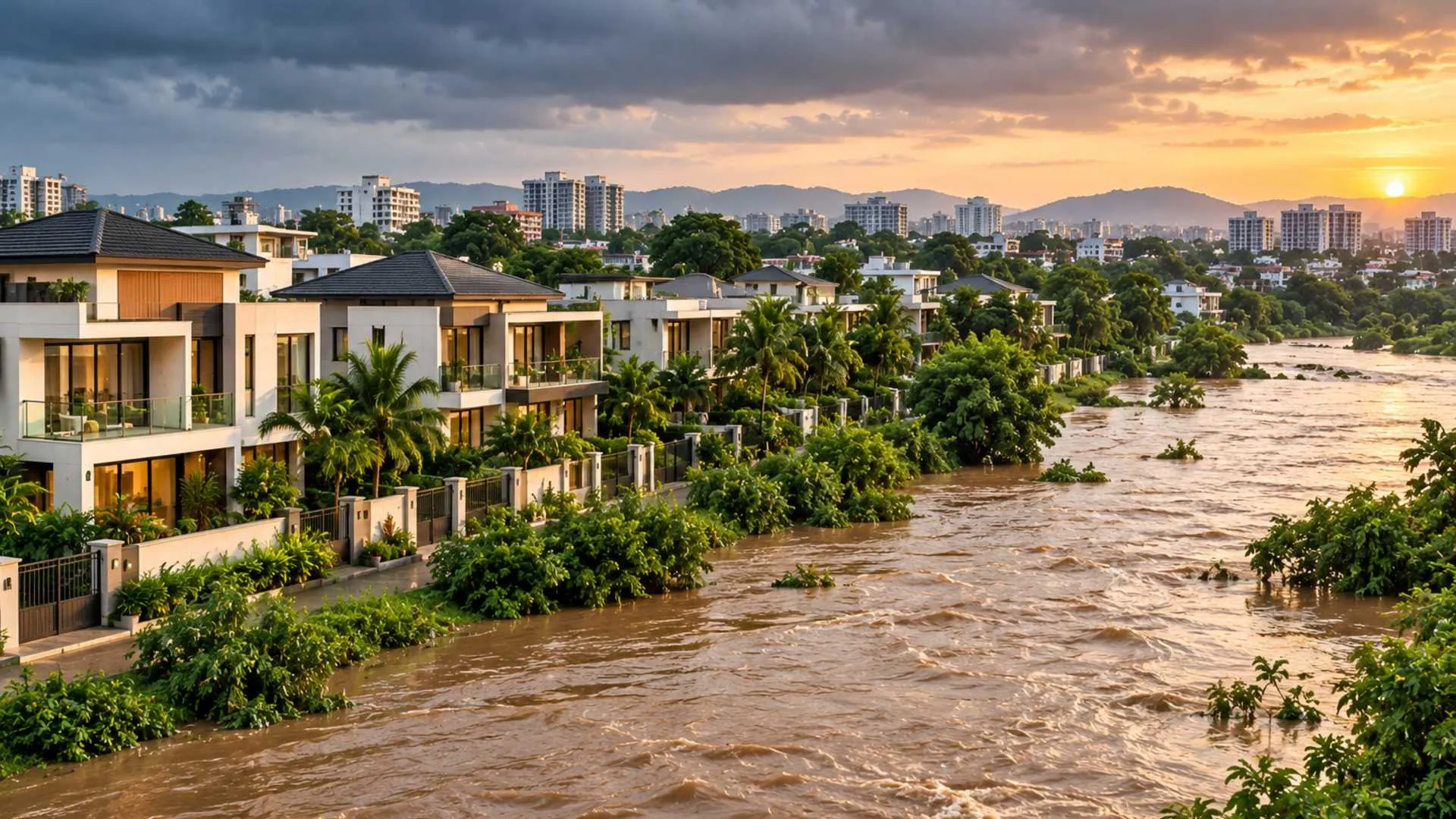
A river view can sell a home. In Chikhali, the line marking where that river may flood has become the centre of a dispute over whether 20 residential structures can remain standing.
The Supreme Court has ordered a status quo on proposed demolition proceedings involving the structures at Moi Phata, offering residents temporary relief. The intervention pauses action; it does not settle the dispute over floodline boundaries or building permissions.
For anyone considering a flat in Pune, a bungalow or property in Chikhali, Pune, the case raises a question that deserves attention before the booking cheque: do the property’s official records support what the seller is promising?
This Chikhali bungalows floodline dispute Pune buyer guide for 2026 examines the latest development, separates it from the earlier demolition of 36 bungalows and explains the checks buyers should make before purchasing near a river.
What Should Buyers Check Before Buying Property Near a River in Pune?
Before buying property near a river in Pune, verify the plot’s survey or Gat number against official floodline maps, sanctioned land use and building approvals. Check applicable blue and red floodline restrictions, pending notices, court proceedings and local flood history. Have an independent property lawyer and qualified surveyor review the records before committing money.
A brochure showing riverside greenery cannot answer these questions. Neither can a property tax receipt, an electricity connection or a seller’s assurance that neighbouring houses have stood there for years.
Why the 20 Chikhali Structures Remain Under Dispute
According to The Times of India’s September 30, 2026 report, the Supreme Court’s September 17 order directed parties to maintain status quo. The matter was listed for a further hearing on December 9.
The intervention followed an August 13 National Green Tribunal order directing PCMC, in consultation with the irrigation department, to identify structures within the Indrayani River’s blue floodline and demolish those falling within it after allowing affected residents to be heard.
Residents have challenged the demarcation, contending that subsequent revisions to PCMC’s draft development plan placed their structures outside the blue floodline. These competing positions remain under judicial consideration.
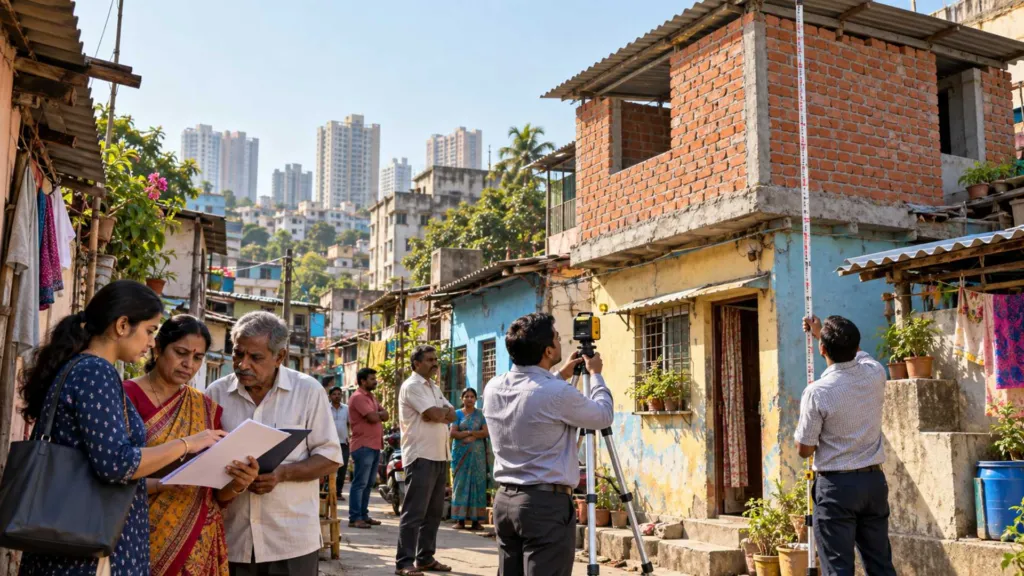
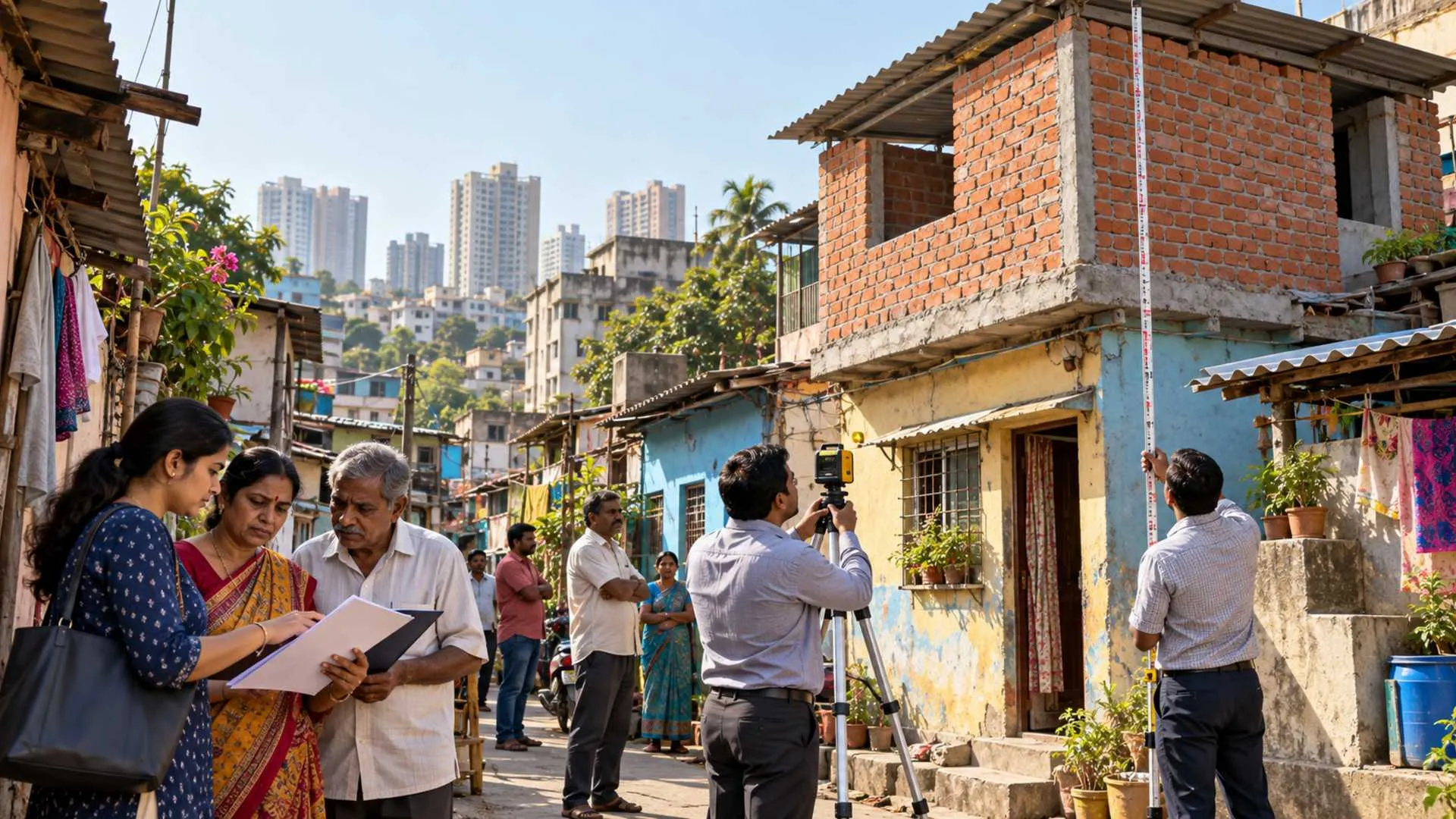
Earlier reporting by The Times of India explained that a joint committee had identified the 20 structures along the Ram Zara nullah, a tributary joining the Indrayani. The committee reported that the structures fell within the river’s blue floodline, while civic officials said they had been built without the required permissions.
The proceedings arose from a 2023 application by Gopal Kachave. The nullah’s involvement is significant for buyers: checking the main river alone may miss a drainage channel running beside the property.
Grihik’s September 30 report also describes the Supreme Court intervention as temporary protection while the dispute continues. Buyers should therefore avoid interpreting the pause as a clearance certificate for the affected properties, or for other riverbank developments.
Were 36 Bungalows Already Demolished in Chikhali?
Yes, but that was a separate case.
The Times of India’s May 2025 coverage reported the demolition of 36 unauthorised bungalows within the Indrayani River’s blue floodline. Its accounts described homeowners losing houses built with savings and borrowed money. Some residents questioned how homes receiving civic services could subsequently face demolition.
According to RealtyPromoo, that earlier action concerned the River Villa project associated with M/s Jare World and M/s V Square, and proceedings initiated by environmental activist Tanaji Gambhire. Those details concern the earlier project; they should not be transferred to the current Moi Phata dispute.
Readers may also encounter SaudaGhar’s December 2024 report, which refers to 29 bungalows. That figure belongs to earlier proceedings and reporting, rather than the present group of 20 structures.
The essential distinction is straightforward: 36 bungalows were demolished in May 2025; 20 separate structures are now the subject of a dispute in which demolition proceedings have been paused.
For buyers researching illegal construction in Pune or property demolition in Pune, checking the date, location and properties covered by an order is as important as reading its headline.
What Is the NGT Blue Line, and Why Does It Matter?
The phrase “NGT blue line Pune” appears frequently in property searches. The blue floodline, however, is a technical demarcation used in floodplain regulation; the National Green Tribunal examines compliance with the applicable rules.
The July 2024 NGT judgment in the earlier Chikhali proceedings, available on Indian Kanoon, reproduces Maharashtra’s floodline framework. It distinguishes the prohibitive zone associated with the blue line from the restrictive zone between the blue and red lines.
The judgment also discusses limited permitted uses and provisions concerning redevelopment of existing authorised properties. An exception cannot be assumed to authorise a new bungalow or residential project. Its applicability requires examination of the property’s records and current rules.
For a buyer, “outside the blue line” should be the beginning of verification. It does not answer whether the site falls within another restricted area, whether the construction is sanctioned, or whether access roads and drainage remain vulnerable.
Nor should a 25-year return-period flood be understood as a flood that arrives once on a fixed 25-year calendar. It describes a statistical likelihood, not a timetable.
Questions such as “How far from the Indrayani River is a property safe?” therefore need a site-specific answer. A distance quoted by a broker cannot replace official mapping and an assessment of ground levels, drainage and access.
The Pune Riverbank Property Buyer Checklist
Whether the search is for an affordable flat in PCMC Pune, a PCMC flat in Pune or a bungalow plot, start with the property’s identity.
Ask for the exact survey or Gat number, subdivision, plot boundaries and sanctioned layout. A project name or map pin is insufficient for matching land to official records.
Then organise the verification around five checks:
- Floodline position: Obtain the relevant official blue and red floodline map and have a qualified surveyor locate the actual plot and building footprint on it.
- Planning and construction approvals: Examine sanctioned land use, layout and building plans, commencement permission and applicable completion or occupancy documents.
- Ownership and project records: Review the title chain, relevant land records, encumbrances and MahaRERA information where registration is required.
- Notices and litigation: Request copies of demolition notices, objections, inspection reports and court or tribunal orders affecting the land or structures.
- Physical flood exposure: Inspect nearby nullahs, drainage outlets, basement entrances, electrical installations and the route connecting the property to the main road.
These are practical checks to commission before purchase. Ask the lawyer reviewing the transaction to identify missing records and unresolved issues in writing.
1 Finance’s article on the earlier demolition emphasises checking land use, permissions and project records rather than relying on verbal assurances. It also highlights the financial strain faced by homeowners whose houses were demolished while loan repayments continued.
For property in Pimpri-Chinchwad, confirm the competent planning authority for the specific parcel. A PCMC or PMRDA riverbank property legal check must use records relevant to that property’s jurisdiction.
If a seller produces a “PCMC NOC,” ask what it certifies, which parcel it covers and what conditions apply. Obtain the complete document rather than accepting a photograph of its first page.
Is Chikhali a Good Area to Buy Property in Pune?
The dispute does not establish that every flat in Chikhali, Pune faces the same risk. Equally, it gives buyers a reason to examine individual projects carefully.
A Chikhali flat versus Chikhali bungalow riverbank risk comparison should focus on location, permissions and exposure, not simply the building type.
| Buyer’s comparison | What deserves attention |
| Flat versus bungalow plot | Both require verified approvals and floodline checks; an upper-floor flat still depends on safe access and shared services. |
| Riverbank versus inland property | Check nullahs, drainage and ground levels alongside river proximity. |
| Chikhali versus Moshi affordable flat | Compare individual parcels and projects rather than assuming either locality is uniformly safer. |
Someone searching “buy flat Chikhali” or “Chikhali flat price 2026” may begin with affordability. The more useful comparison includes the cost of resolving missing permissions, drainage problems, or litigation.
For buyers considering north Pune property or an affordable flat in north Pune, a lower asking price should prompt questions about what is included—and what remains uncertain.
Floodline scrutiny also extends beyond the Indrayani. The Indian Express reported in July 2025 that the Bombay High Court directed an expert committee to review the Mula-Mutha floodline demarcation. That broader review should not be treated as an automatic change to any particular Chikhali plot’s status.
Rainfall headlines require similar care. The Indian Express’s September 22, 2026 report recorded a 17% rainfall deficit for Maharashtra while reporting Pune district’s seasonal rainfall at 20% above normal.
A statewide rainfall deficit cannot establish that an individual riverbank property is safe from flooding.
Before the Booking Amount, Ask for the Map
The Chikhali floodline dispute and its bearing on property buyers hinges on evidence. Which of the boundaries applies? Does the sanctioned plan match the building? Are there any notices or proceedings pending? Can the seller offer complete documents?
Buyers must also avoid assuming that demolition will automatically result in compensation or that a pending appeal is necessarily permanent. Any possible remedy must be measured against the documents of the transaction and any proceedings.
The case with the 20 structures still awaits resolution. Its immediate lesson for the Pune market has already surfaced. Check the land as diligently as the house.