Green Leases Explained: Who Pays for a Building’s Energy-Saving Upgrades?
Green Leases Explained: Who Pays for Energy Upgrades?
SHARE:
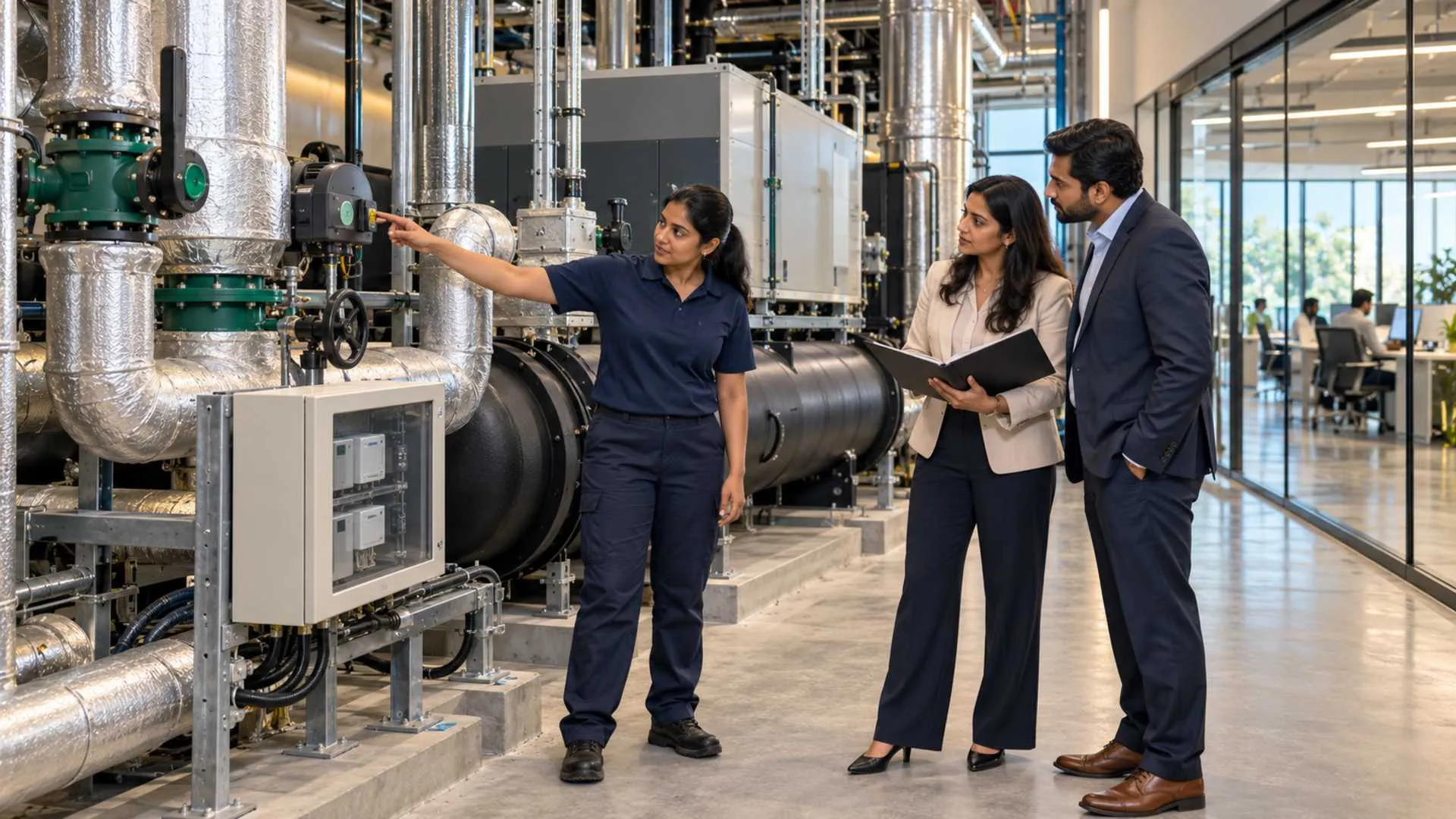


An office building needs a new and more efficient cooling system. The landlord has to approve the investment, but tenants who pay their own electricity bills could reap most of the rewards. Everybody supports less energy consumption, until somebody has to sign the cheque.
The commercial real estate equivalent of the split incentive problem creates a financial hurdle that makes otherwise sensible investments unviable. Green leases are meant to bridge the gap between environmental goals and the fine print of investment and cost recovery.
They define who pays for what, who benefits from reduced bills and how savings or additional costs are distributed.
For developers, investors and occupiers, the issue is proving anything but a theoretical interest. A more sustainable office building needs a financial model that makes the investment attractive to the person footing the bill.
Who pays for a building’s energy-saving upgrades under a green lease?
The landlord, tenant, or both may pay, depending on the lease and applicable law. A landlord can fund an upgrade upfront and recover an agreed amount over time; a tenant may fund efficient fit-out equipment; or both can share costs and verified savings. A green lease does not automatically authorise additional charges.
What is a green lease and why does the split incentive matter?
A green lease brings sustainability commitments into the landlord–tenant agreement. Its scope can include energy efficiency, water conservation, waste management, fit-outs and performance reporting.
Savills India describes green leases through agreed sustainability targets and measurable performance indicators. Obligations may fall on the owner, occupier or both. It also distinguishes lease commitments from voluntary memoranda between the parties.
That distinction matters: a promise to cooperate is different from an enforceable obligation to pay.
The familiar split incentive arises when the landlord pays for capital improvements while the tenant receives lower utility bills. It can also work in reverse: an occupier may hesitate to invest in equipment when its remaining lease is too short to recover the expenditure.
The problem is a mismatch between who controls an improvement, who finances it and who benefits.
An energy-aligned lease seeks to connect those interests. The Institute for Market Transformation uses that term alongside green and high-performance leasing; its Green Lease Leaders programme recognises collaborative leasing practices.
How green leases share upgrade costs
There is no universal 50:50 formula. The arrangement should reflect equipment ownership, expected benefits, lease length and the parties’ responsibilities.
Elinta Charge identifies mechanisms including cost sharing, defined service-charge recovery, tenant-improvement allowances and incentives linked to performance. These are options to negotiate, rather than automatic features of every green lease.
| Possible arrangement | How payment works | What needs agreement |
|---|---|---|
| Landlord-funded upgrade | Owner pays upfront and recovers an agreed contribution | Eligible expenditure, recovery period and limits |
| Tenant-funded fit-out | Occupier pays for equipment within its premises | Ownership, consent, maintenance and lease-end treatment |
| Joint investment | Both contribute to the improvement | Contributions, responsibilities and benefit allocation |
| Shared savings | Verified savings support an agreed payment | Baseline, calculation method and reconciliation |
An amortised pass-through spreads recoverable expenditure over an agreed period. A cap-and-share mechanism can limit recovery while dividing the remaining benefit. Neither protects the tenant unless the calculation and safeguards appear in the agreement.
Consider a hypothetical office retrofit producing verified annual energy-cost savings of ₹12 lakh. If the agreed annual landlord recovery is ₹8 lakh, the occupier retains ₹4 lakh before other adjustments.
If savings fall to ₹6 lakh, the original charge would exceed the savings. A negotiated cap could reduce recovery, but only if the contract provides for it.
Projected savings should support the investment decision; an agreed verification process should support the bill.
The lease should also explain what happens when the tenant leaves, the building changes ownership, or the equipment fails before the recovery period ends.
Energy data sharing is where the agreement becomes measurable
A lower electricity bill does not necessarily prove that a retrofit worked. Fewer employees, shorter operating hours, weather changes, or a different tariff can alter expenditure.
OxMaint’s green lease guidance highlights baseline consumption, shared-savings calculations, submetering and reconciliation. These provisions give facility managers a method for checking performance rather than relying on estimates.
Useful green lease clauses should establish:
- Measurement: which meters and systems provide the evidence.
- Baseline: the comparison period and permitted adjustments.
- Data sharing: access rights, reporting frequency and confidentiality.
- Verification: who checks results and resolves calculation disputes.
- Cost allocation: how charges are divided among occupiers.
Submetering can separate tenant consumption from common services. It does not, by itself, decide how a shared cooling-system upgrade should be charged.
The facility-management team also needs a defined role. Equipment settings, maintenance and after-hours operation affect whether expected benefits appear.
Green Design Consulting emphasises data transparency and joint investment in measures such as HVAC optimisation, lighting retrofits and smart controls. Its operational focus reinforces why signing the lease is only the beginning.
The clauses most likely to prevent expensive disputes
The difficult conversations should happen before equipment is ordered.
In its October 19, 2026 commentary, Weightmans identifies disputes around upgrade responsibilities, access, service charges, alterations and reinstatement. Its discussion concerns the UK legal context; it should not be treated as a statement of Indian law.
For any lease negotiation, the practical questions remain important. Can the owner enter occupied premises? What notice is required? Who pays for disruption and making good afterwards? Is expenditure intended to maintain existing equipment, meet a legal requirement or improve the investment?
A broad sustainability clause may leave these questions unanswered.
Fit-out standards deserve similar attention. Efficient lighting and controls can support performance, while poorly coordinated alterations can undermine it. At lease expiry, removing useful equipment may conflict with the parties’ environmental objectives.
EV charging adds another layer. Elinta Charge recommends defining infrastructure and charger responsibilities, ownership, billing, metering and maintenance. Installing a charger is not the same financial decision as upgrading the building’s electrical capacity.
The strongest green lease landlord–tenant cost-sharing arrangement identifies both the financial benefit and the operational responsibility.
Why green leases matter for India’s office market
India’s green-certified office stock gives this discussion scale. The CREDAI–Colliers findings published in April 2025 put green-certified stock at approximately 503 million sq ft, or 66% of Grade A inventory across six major cities, at end-2024. This is dated market evidence, not a fresh 2026 measurement.
Certification and leasing answer different questions. IGBC, GRIHA and LEED relate to their respective building-assessment frameworks; a green lease allocates responsibilities between parties. A certified building does not establish who must pay for its next retrofit.
For a GCC or multinational occupier with ESG objectives, the useful questions concern access to energy data, fit-out requirements and accountability. For an owner, they concern investment recovery and maintaining building performance.
Savills India’s discussion of voluntary collaboration also cautions against assuming that green leases are already universal. Each proposed agreement needs examination on its own terms.
Regulation provides another reason to coordinate. New York City’s Local Law 97 guidance states that most buildings above 25,000 sq ft face emissions limits beginning in 2024, with stricter limits in 2030. That is a jurisdiction-specific example, not an Indian requirement.
In India, the Bureau of Energy Efficiency describes minimum energy standards for qualifying commercial buildings. Applicability and local implementation need checking; an energy code should not be confused with a standard landlord–tenant payment formula.
Can green leases support higher rents and building values?
They can help make performance more transparent, but a green clause does not guarantee a premium.
A prospective occupier should compare rent, service charges, utility costs and improvement contributions together. Lower energy consumption may not compensate for an excessive recovery charge.
Likewise, an investor needs evidence of operating performance, tenant demand and expenditure obligations. Certification, efficient operation and a well-drafted lease can complement one another without being interchangeable.
For green leases and building energy-saving upgrades, the answer to “who pays?” must be negotiated alongside “who benefits?” and “who verifies?”
Before your next office lease or renewal, ask for the upgrade plan, proposed recovery formula and performance baseline. Explore commercial-property requirements through RealtyConnect, and bring the owner, occupier and facility manager into the discussion early. The best agreement makes a worthwhile upgrade easier to fund and its benefits easier to prove.