

India’s Warmest August Turns Climate Resilience Into a Housing Question
India’s Warmest August 2026: What It Means for Housing
SHARE:
The warm August experienced in India, which is the hottest such August since weather records began 125 years ago, could also have altered buyer expectations regarding a home.
In August 2026, the average temperature in the country was 28.01°C and rainfall was still much lower than normal. For the real estate market, the implication is now hard to overlook: even factors such as location, floor plan and amenities might no longer be sufficient. Whether or not a house can stay habitable in extreme heat could turn into a major factor when buying a home.
The discussion about India’s warm August 1901 climate resilience in 2026 is now taking place not just at architecture conferences but also in sales offices.
What Home Features Actually Keep Houses Cool During Heat Waves in India?
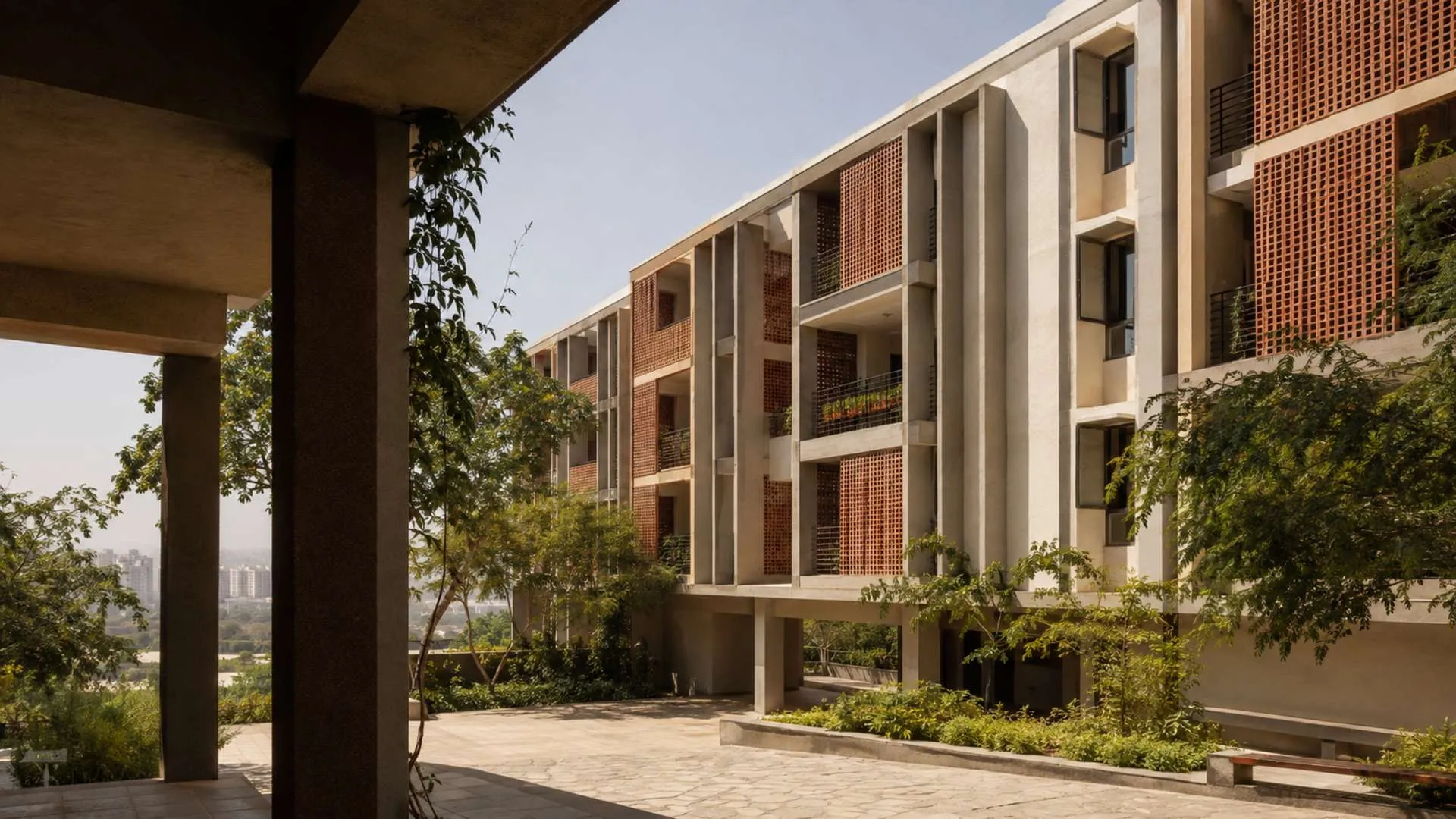
Heat-resilient homes combine cross-ventilation, external shading, insulated roofs, suitable wall materials, reflective surfaces and carefully positioned windows. Deep balconies, courtyards, trees and jaali screens can reduce direct solar exposure, while ceiling fans and efficient cooling systems manage the remaining heat.
These climate-resilient home features for India’s 2026 heat wave work best as an integrated design system. A single “green” feature cannot compensate for an apartment with poor ventilation, extensive unshaded glass, or a heat-exposed roof.
Why Was August 2026 So Hot in India?
According to Business Standard, citing the India Meteorological Department, India recorded an average August temperature of 28.01°C, the highest since nationwide records began in 1901.
That was approximately 0.67°C above normal. India’s August 2026 minimum temperature of 24.36°C was also the highest August minimum recorded since 1901, compared with a normal of 23.68°C.
Hotter nights matter to housing because buildings have less time to release accumulated heat. Apartments can remain uncomfortable after sunset, increasing dependence on fans and air-conditioning.
Rainfall intensified the problem. India received 16.3% less rain than normal during August, while the June–August deficit reached 13.8%. Around 47% of the country’s districts recorded deficient or very deficient rain.
Moneycontrol reported that IMD linked the heat to weak monsoon conditions and a developing El Niño pattern. Lower rainfall meant less cloud cover and weaker natural cooling across large parts of the country.
Will Climate Resilience Become a Property-Selling Point in India?
Yes, but only if developers can prove that the building performs better, rather than relying on vague “eco-friendly” branding.
A climate-resilient property could reduce indoor heat exposure, electricity consumption and dependence on mechanical cooling. Over time, those advantages may influence rental demand, resale appeal and maintenance costs.
The change may resemble the rise of security, backup power and air-quality features in residential marketing. Extreme heat could make buyers ask measurable questions:
- How hot does the top-floor apartment become in May?
- Do living rooms receive cross-ventilation?
- Is the roof insulated or treated with reflective material?
- Are western façades shaded?
- What happens during a power cut?
This is the real India record heat August 2026 real estate impact guide: buyers may begin evaluating thermal comfort before evaluating clubhouse size.
Which Building Features Should Buyers Examine?
Cross-Ventilation and External Shading
A cross-ventilation layout in an Indian flat should allow air to enter and exit through openings on different sides. Buyers can check whether internal walls block airflow and whether windows can remain safely open.
Deep balconies, fins and jaali screens can shade openings before sunlight reaches the glass. However, the claim that a jaali screen produces 40% heat reduction in an Indian home should not be applied universally. Performance depends on material, orientation, opening ratio and local climate.
Roofs, Walls and Thermal Mass
Top-floor apartments face greater roof exposure. In a top-floor versus ground-floor heat-risk Indian apartment comparison, the top floor may become hotter when insulation is inadequate, while ground floors may face reduced daylight, dampness or privacy concerns.
Reflective roof finishes, insulation and ventilated roof assemblies can limit heat transfer. Thermal-mass walls can delay heat entering the interior, but they must be designed for the local day-and-night temperature pattern.
A green roof or terrace garden for heat reduction in an Indian apartment can provide shading and insulation, although waterproofing, structural capacity and maintenance are essential.
Orientation Is More Complicated Than a Compass Direction
A north-east-facing flat in India heat advantage guide can be misleading because orientation alone does not determine comfort. Window size, surrounding buildings, latitude, wind direction and afternoon exposure also matter.
A north-east-facing versus south-west-facing flat heat comparison in India may favour the home with lower western exposure, but only after shading, ventilation and building geometry are considered.
Could Extreme Heat Affect Property Values?
Properties with persistently high indoor temperatures may become more expensive to occupy and less attractive to tenants. Heat can also place additional pressure on power infrastructure, water demand, landscaping and building equipment.
The heat-island effect of concrete buildings in India can intensify local temperatures where dense construction replaces vegetation and permeable ground. This makes neighbourhood design, trees, shaded streets, open spaces and reduced heat-absorbing surfaces nearly as important as the apartment itself.
A heat-resilient home versus a regular apartment in India cost comparison should therefore include lifetime electricity and maintenance expenses, not merely the launch price.
Still, it is too early to claim that extreme heat will make whole markets unsellable. Employment, affordability and connectivity remain powerful demand drivers. Climate performance is more likely to create a price and desirability gap between better- and poorly-designed buildings within the same locality.
Which Indian Cities Are Safest From Extreme Heat?
No city should be marketed as a guaranteed “climate-safe” property investment. Pune and Bengaluru may offer relatively moderate conditions compared with parts of Delhi-NCR, Vidarbha, Rajasthan or interior Telangana, but both face their own heat, flooding and water-supply risks.
Similarly, Shimla and Dehradun as hill-station climate refuges, Coimbatore and Mysore as moderate-climate property investments, or Chandigarh’s green-cover climate resilience must be evaluated against local water availability, landslide or flood exposure, construction density and changing weather patterns.
A Pune cool climate versus Delhi-NCR heat-risk property comparison based only on average temperature would ignore these other hazards. Climate risk is neighbourhood-specific, not simply city-specific.
What Buyers Should Ask Before Booking
Anyone wondering, “Is my home going to be too hot to live in after India’s warmest August?”, should visit during the hottest afternoon available and inspect the actual unit orientation.
Ask the developer for information on roof insulation, wall assemblies, window specifications, shading and energy modelling. Certifications such as IGBC or LEED can provide useful context, but buyers should verify the project’s rating and understand what it covers.
India’s warmest August may mark the moment thermal comfort becomes a mainstream property filter. Developers who demonstrate cooler interiors, lower energy demand and climate-conscious site planning could gain a tangible sales advantage.
Before choosing a home, compare its climate performance alongside price, location and legal approvals. The next premium feature may not be another amenity; it may simply be a home that remains comfortable when the city outside does not.