

Will Future Homebuyers Ask What Their Buildings Are Really Made Of?
Building Materials Every Homebuyer Must Check
SHARE:
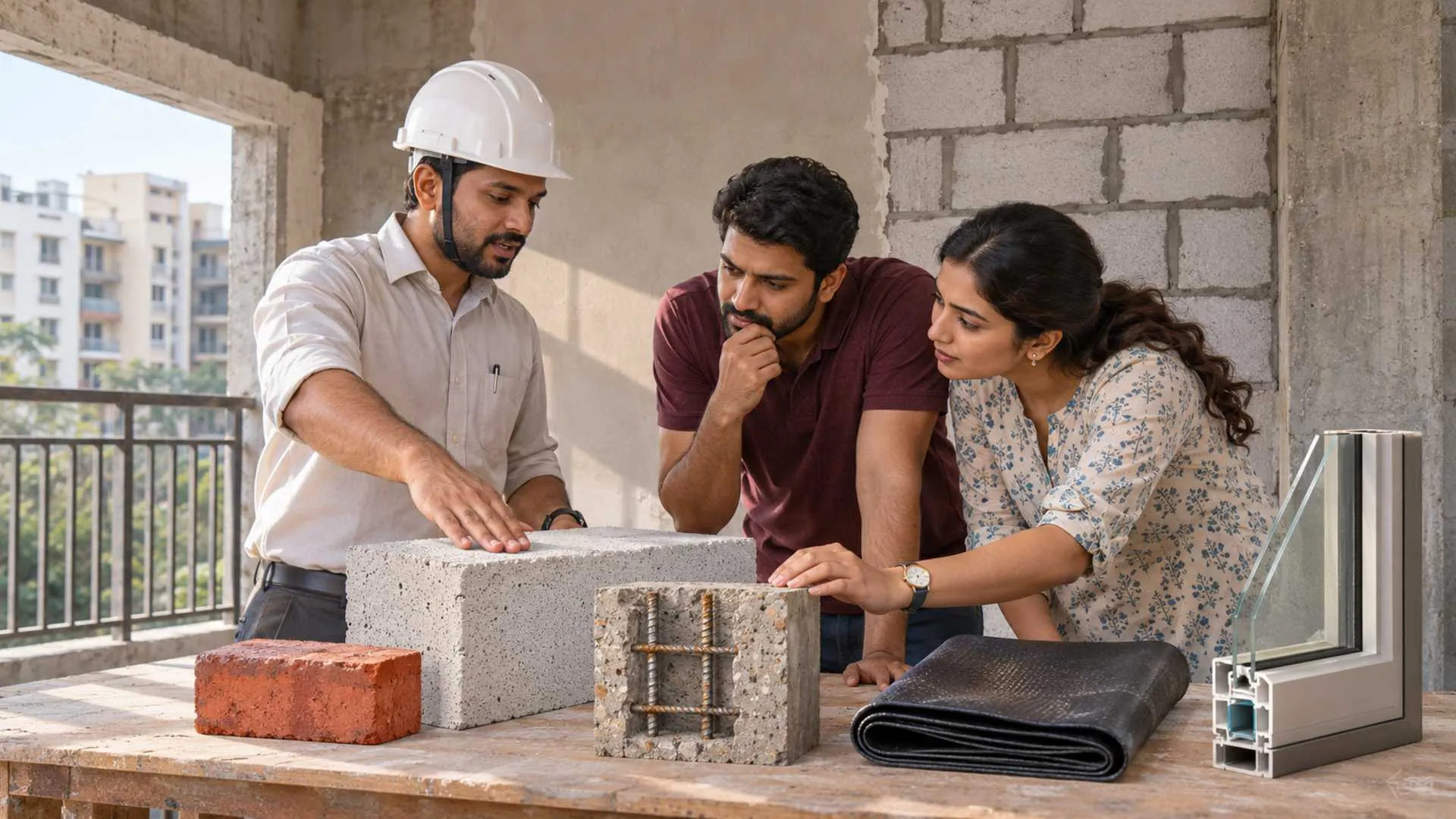


Your next home’s most important features could be the ones the sample flat cannot show you. Its walls, concrete, waterproofing and windows influence comfort, maintenance and running costs long after the booking cheque clears. As homebuyers ask about building materials, construction quality becomes easier to compare, but “MIVAN”, “AAC” or a green badge alone cannot prove performance. The smarter approach is to understand the construction system, request written specifications, verify certification and inspect before possession. This guide explains what sits behind the finishes, what buyers may pay for better performance, and how RERA protects them.
Will Indian homebuyers increasingly ask what their buildings are made of?
There are good reasons to expect greater interest: materials affect durability, insulation, repair needs and environmental performance. Buyers should ask about the structural system, wall materials, waterproofing, electrical specifications and verified green certification. These details need supporting documents and professional assessment. No construction technology guarantees a defect-free home, and a sustainability badge does not replace structural due diligence.
Why the “84% Can’t Check Construction Quality” Finding Needs Context
The knowledge gap is real, but its headline statistic needs a date.
The frequently repeated claim that 84% of homebuyers can’t check construction quality traces to a Magicbricks poll reported by The Tribune in September 2018. It concerned consumers’ uncertainty about due diligence, not a fresh, nationally representative measurement of Indian buyers in 2026.
The underlying problem remains easy to recognise. Buyers can compare flooring and kitchen finishes, while reinforcement, concealed plumbing and waterproofing are harder to evaluate.
NewHomeSource makes a similar point in its materials guide: choices affect quality, energy efficiency and durability, yet buyers often depend on builders and agents for explanations. Its findings concern its own market and should not be treated as Indian survey evidence.
Construction quality transparency starts with making those explanations understandable and putting important promises in writing.
What Modern Indian Apartments Are Made Of: MIVAN, AAC and Precast
First, clear up a common misunderstanding: MIVAN aluminium formwork technology is not an alternative to reinforced concrete itself. Aluminium panels act as moulds for casting concrete components; they are removed after the concrete gains sufficient strength.
BMTPC’s technology guidance describes monolithic construction using engineered formwork to cast structural components together. It can support repetitive, faster construction, but execution and quality control remain essential.
Table 1: Construction technologies compared
| Technology | What it means | Potential benefit | What buyers should verify |
|---|---|---|---|
| MIVAN / aluminium formwork | Engineered moulds used for monolithic concrete construction | Repeatable geometry and efficient construction cycles | Concrete testing, curing, joints and alteration restrictions |
| AAC blocks | Autoclaved aerated concrete masonry units | Low weight and useful thermal insulation | Block specification, installation and fixing requirements |
| Precast concrete | Components cast in a controlled yard, then assembled | Repeatable production and reduced site fabrication | Connections, tolerances and erection quality |
| Conventional RCC frame | Reinforced-concrete structure with masonry infill | Established construction approach | Reinforcement, concrete quality, curing and masonry details |
| Prestressed slabs | Concrete elements incorporating tensioned tendons | Structural efficiency for appropriate spans | Approved design and restrictions on drilling |
The AAC blocks vs red bricks question is about suitability, not a universal winner. AAC’s insulating properties are useful, but wall thickness, plaster, moisture detailing and workmanship also affect performance.
For precast concrete and modern construction in India, factory control is valuable only when site assembly matches the design. Prestressing likewise does not automatically mean beam-free rooms or additional carpet area.
Avoid blanket promises of “50–80 years” or fixed speed advantages. Service life depends on design, exposure, construction and maintenance.
The University of the Built Environment also highlights emerging materials such as self-healing concrete. These innovations broaden future possibilities; they do not establish what a particular apartment project actually uses.
Green-Certified Homes in India: Registrations Are Not Certifications
IGBC’s November 2026 website reports 20,620+ registered projects covering more than 16.55 billion sqft, with 8,650+ projects certified and fully operational. These figures cover its wider building portfolio, not residential homes alone.
That distinction matters when evaluating green-certified homes under IGBC in India. Registration indicates participation; pre-certification and final certification represent different stages.
IGBC Green Homes addresses energy, water, materials, waste and occupant comfort. The council identifies potential energy savings of 20–30% and water savings of 30–50%, but an individual household’s bills depend on design, operation and usage.
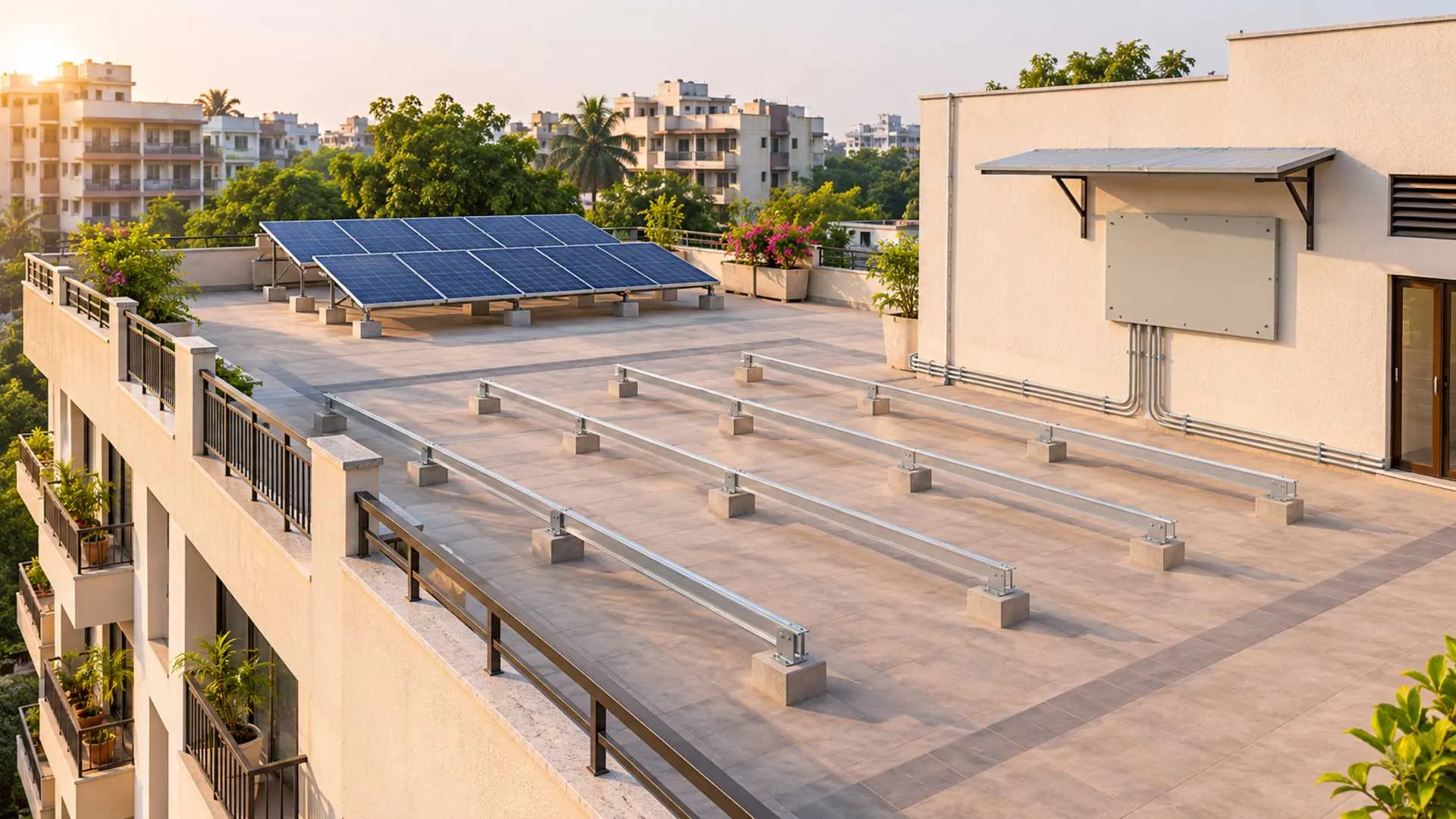
LEED provides another green-building assessment framework, while GRIHA is India’s national green-building rating system. Their criteria and certification pathways differ.
Ask for the certificate, rating level, assessed project phase and scope. A landscaped entrance or solar-powered streetlight does not establish whole-project certification.
Will Buyers Pay More? What the Green Premium Data Shows
Ghar.tv’s April 2026 study surveyed 1,644 homebuyers across ten cities. It reports 61% willing to pay some premium, averaging ₹312/sqft, against a ₹187/sqft realised premium in its proprietary analysis.
Table 2: Green-home premiums reported by Ghar.tv
| City | Stated premium, ₹/sqft | Realised premium, ₹/sqft | Willing to pay any premium |
|---|---|---|---|
| Bengaluru | 421 | 268 | 74% |
| Hyderabad | 398 | 241 | 71% |
| Chennai | 387 | 231 | 69% |
| Pune | 342 | 198 | 65% |
| Mumbai | 318 | 204 | 63% |
| Delhi-NCR | 284 | 162 | 58% |
| Ahmedabad | 271 | 157 | 54% |
| Jaipur | 241 | 144 | 52% |
| Kolkata | 228 | 131 | 49% |
| Lucknow | 198 | 112 | 46% |
| National average | 312 | 187 | 61% |
The reported 40% gap between intention and realised premium is the useful finding: enthusiasm does not fully convert into spending.
A green premium of ₹312 per sqft that buyers are willing to pay is therefore a survey result, not a recommended surcharge. Compare the additional purchase cost with documented benefits, maintenance obligations and expected savings.
What RERA Already Gives Buyers: Five-Year Defect Liability
RERA defect liability lasts five years under Section 14(3), measured from handing over possession. Its scope extends beyond structural defects to covered defects in workmanship, quality, services and other relevant obligations under the agreement for sale.
When such defects are brought to the promoter’s notice within that period, the Act requires rectification without additional charge within 30 days. Failure can entitle the allottee to appropriate compensation under the Act.
This is not a blanket warranty for every maintenance issue or later alteration.
Keep dated photographs, inspection reports, correspondence and the agreement’s specification schedule. Report problems promptly in writing, with evidence and a clear description.
Knowing the material is useful; documenting the promised performance is more useful when something goes wrong. A defect claim is easier to assess when the original specification and condition are recorded.
The Homebuyer’s Construction Material Checklist
A practical construction quality checklist for homebuyers begins before possession. Ask the developer’s technical team to explain the system and provide the relevant specifications.
Table 3: What to ask your developer
| Component | Question to ask | Evidence to request |
|---|---|---|
| Structure | What structural system and quality-control process are used? | Engineer’s explanation and relevant test records |
| Walls | AAC, fly-ash masonry or red bricks—and which specification? | Material schedule and applicable compliance records |
| Waterproofing | Which system covers terraces, bathrooms and external joints? | Specification, test records and warranty terms |
| Plumbing | What pipe materials, pressure ratings and fittings are specified? | Product schedule and pressure-test records |
| Electrical | What cable sizes, protective devices and earthing are provided? | Specifications and test documentation |
| Windows | What frame, glazing and sealing system is installed? | Product specification and performance details |
| Flooring and paint | What grades, finishes and application systems are promised? | Agreement schedule and product details |
| Green certification | Registered, pre-certified, or finally certified? | Certificate covering the relevant phase |
Treat vague answers such as “premium standard materials” as a reason to seek clarification. Equally, a famous brand cannot compensate for incorrect installation.
During construction, request authorised visits rather than entering restricted work areas. Before possession, commission a qualified inspection covering accessible finishes, drainage, seepage indicators, doors, windows and services. A snag inspection does not certify the concealed structure.
Lancia Homes’ discussion of prefabrication reinforces the value of production consistency, but buyers still need evidence for their own building.
From RERA Registration to Material Disclosure: What Comes Next?
Construction material disclosure and developer transparency could become stronger buying differentiators. A simple “building material label” would help: structural system, wall specification, waterproofing, glazing, certification status and maintenance requirements on one comparable sheet.
That is an editorial proposal, not an announced nationwide mandate. RERA already addresses sanctioned plans and project specifications; a standard consumer-facing label could make existing information easier to understand.
The next competitive advantage may belong to developers who explain performance clearly and support it with records. Buyers need not become engineers, but they can become better questioners.
The smarter homebuyer asks where the flat is, what it costs and what is behind its walls.