

Top 10 Pune Areas to Buy Property in 2026
Top 10 Pune Areas to Buy Property in 2026
SHARE:
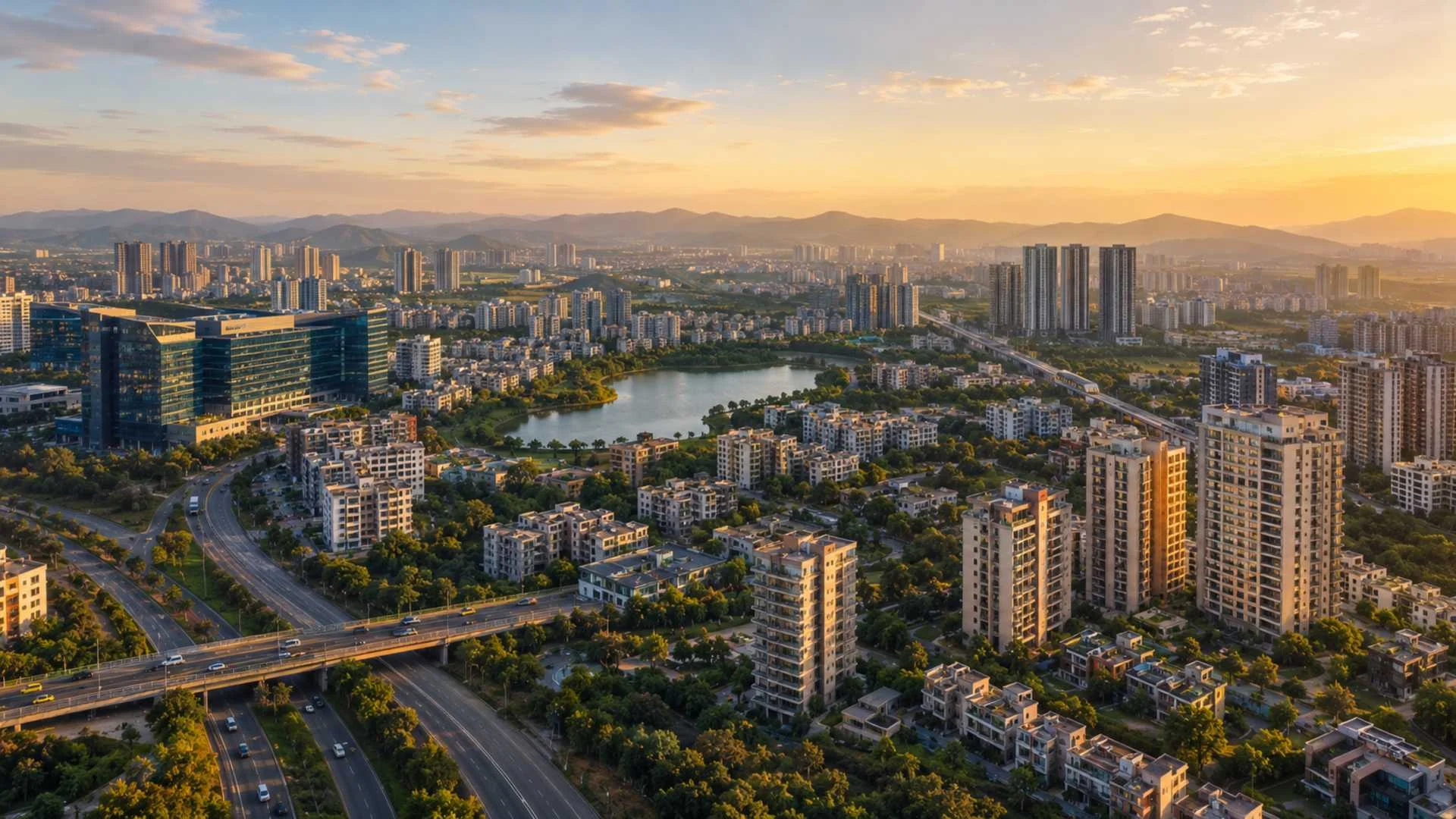
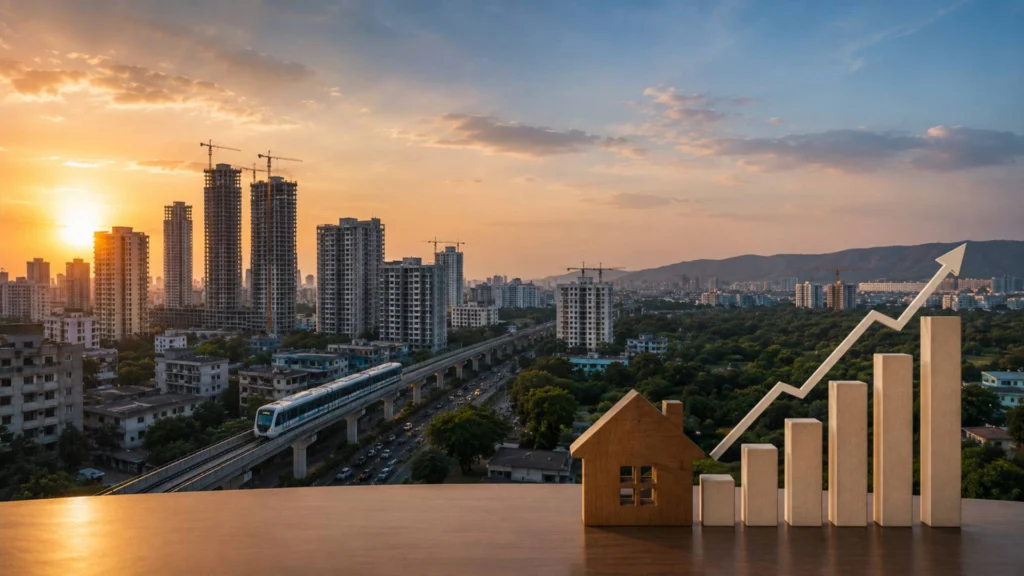
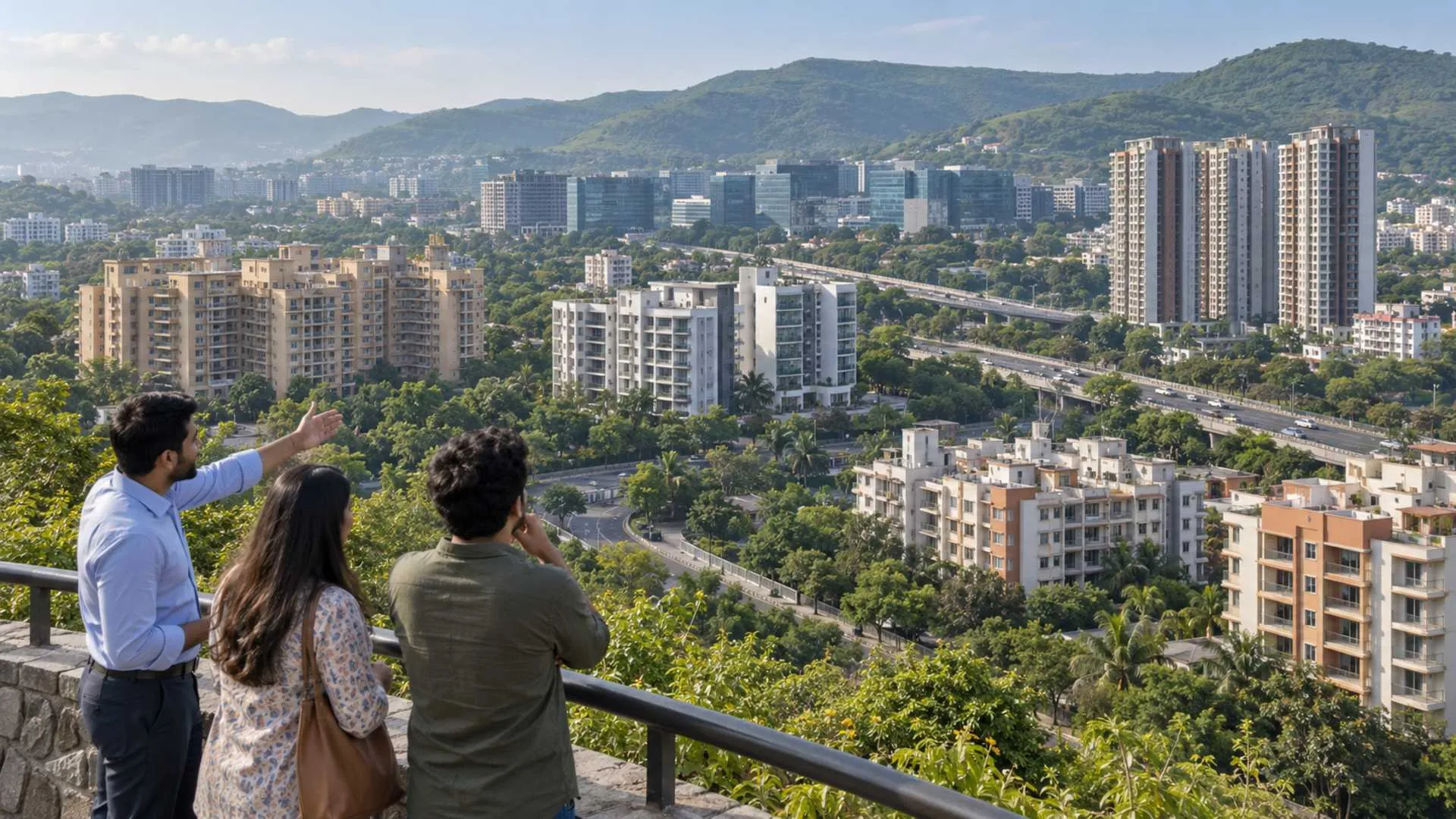
In 2026, the property map of Pune is going to be redrawn. Is the question any longer just whether one is in East Pune or West Pune? Nowadays, buyers are making their choice between well-established premium neighbourhoods, IT areas driven by employment opportunities and outlying locations where infrastructure might trigger the next surge in property values.
The situation is solid. According to the July 2026 Pune Housing Report produced by CRE Matrix and CREDAI Pune, Pune saw 44,265 housing transactions amounting to ₹37,048 crore in the first half of 2026. The average price of a house that was sold was ₹84 lakh, a rise of 38% when compared with the first half of 2022. There was also a 220% increase in the number of units sold for homes priced above ₹2 crore during that period, indicating a clear trend towards premiumisation of demand. (CRE Matrix)
Pune is still a market that operates on more than one budget. In areas such as Baner and Kharadi as well as Hinjawadi, Tathawade and Moshi, buyers are still able to enter at very different price levels.
Then what are the top ten places to buy in Pune in 2026? The answer will vary according to whether your main consideration is appreciation, rental demand, affordability, lifestyle, or just the need to reduce your daily commute.
What Are the Top 10 Areas to Buy Property in Pune in 2026?
The top Pune areas to consider in 2026 include Kharadi, Baner-Balewadi, Wakad, Hinjawadi, Tathawade-Punawale, Wagholi, Hadapsar-Magarpatta, Viman Nagar, Kothrud and Moshi-Chikhali. Kharadi and Hinjawadi benefit from major IT employment, Baner and Viman Nagar offer premium lifestyle positioning, while Wagholi, Tathawade and Moshi-Chikhali provide comparatively affordable entry points with infrastructure-led growth potential.
This list is not a ranking based solely on last year’s appreciation. It is a Pune area comparison guide for homebuyers in 2026, balancing employment, connectivity, social infrastructure, price positioning, rental depth and future development.
1. Kharadi: Pune’s East-Side Growth Engine
Few Pune micro-markets have changed as dramatically as Kharadi.
EON IT Park and World Trade Center have turned the locality into one of East Pune’s strongest employment centres. That office ecosystem creates something investors cannot manufacture with marketing: a continuous pool of professionals who want to live close to work.
Brickfolio identifies Kharadi as a premium growth corridor with strong rental demand, highlighting EON IT Park, World Trade Center, premium gated developments and expanding social infrastructure.
The wider North-East Pune story is equally compelling. Recent CREDAI Pune-CRE Matrix data indicates that the North-East macro-market has recorded particularly strong growth in average home values since 2022.
Searches for Kharadi EON WTC IT hub ₹8500-₹14500 per sq ft reflect the wide pricing spectrum buyers encounter. Actual quotations vary substantially by project, age, configuration and precise micro-location, so buyers should treat online price bands as indicative rather than fixed locality rates.
Projects and developers commonly researched here include Mantra Melange Kharadi price review 2026, ARV Richvue Keshavnagar, ARV Uthville Kharadi, and other developments from large Pune and national brands.
Best suited for: IT/GCC professionals, rental investors and premium end-users.
2. Baner-Balewadi: Premium West Pune Without Leaving the IT Story
Baner has reached the point where buyers increasingly compare it with Pune’s established premium addresses rather than its emerging suburbs.
Its advantage is location. Hinjawadi lies to one side, while Aundh, University Road and central employment districts remain accessible on the other. NH-48 adds regional connectivity, while Balewadi has developed its own restaurant, retail and lifestyle ecosystem.
Magicbricks lists Baner among Pune’s prominent investment locations and notes its connectivity with Aundh and Shivajinagar. Its PropWorth data indicates roughly ₹1.12–₹1.24 crore for the illustrated 900-sq-ft 2BHK category, though actual 2026 project prices vary widely. (MagicBricks)
That is why Baner property price per sq ft 2026 premium lifestyle searches increasingly return premium numbers rather than affordable West Pune inventory.
Developer searches such as Godrej Baner, Kolte Patil Baner premium projects, Mantra Meridian Balewadi price review 2026 and VTP Realty Wakad Baner projects comparison show another change: branded residential supply is becoming part of Baner-Balewadi’s premium identity.
Best suited for: affluent end-users, senior IT professionals and buyers prioritising lifestyle plus connectivity.
3. Wakad: The Practical All-Rounder
If Baner represents premium West Pune, Wakad is arguably its more practical cousin.
Its biggest advantage is dual catchment. Residents can access the Hinjawadi employment corridor while remaining connected to the broader Pimpri-Chinchwad ecosystem.
MagicBricks highlights Wakad’s proximity to Hinjawadi and Baner, access to NH-48 and established schools and hospitals. Its current guide places the illustrated 900-sq-ft 2BHK sale bracket at roughly ₹95 lakh–₹1.05 crore. (MagicBricks)
The frequently searched Wakad PCMC IT dual catchment metro ₹9500-₹10500 reflects the price level seen in portions of the current market, although project-level rates can sit above or below that range.
Wakad is especially compelling for buyers asking for the best Pune neighborhood for first time buyer 2026 but who do not want to move too far from established social infrastructure.
Best suited for: first-time buyers with mid-to-upper budgets, families and Hinjawadi professionals.
4. Hinjawadi: Buy Where Pune’s IT Economy Works
Hinjawadi’s proposition is refreshingly simple: live close to one of Pune’s biggest employment clusters.
The Rajiv Gandhi Infotech Park supports a huge professional workforce, creating rental demand across Phases 1, 2 and 3 and neighbouring residential pockets.
Magicbricks lists Hinjawadi among its top Pune investment locations and highlights the area’s IT ecosystem, Mumbai-Pune Expressway access and Metro Line 3 connectivity story. (MagicBricks)
Brickfolio similarly identifies Hinjawadi as a leading IT investment hub, citing employment, rental demand and improving transport connectivity.
The crucial mistake is treating all three phases as one market. Hinjewadi Phase 1, 2 and 3 rental yield IT park 2026 can produce very different results depending on office proximity, township access and surrounding infrastructure.
The Kolte Patil Life Republic Hinjewadi vs Kharadi comparison illustrates the wider choice buyers face: township-led West Pune versus premium employment-led East Pune.
Best suited for: IT employees, rental-focused investors and buyers seeking comparatively accessible entry into an employment corridor.
5. Tathawade-Punawale: West Pune’s Value Alternative
This may be the most interesting part of the list for buyers who like Wakad but not Wakad prices.
Tathawade and Punawale sit close enough to the Wakad-Hinjawadi ecosystem to benefit from its employment demand while maintaining a different price profile.
Brickfolio calls Tathawade one of Pune’s fast-growing residential destinations, highlighting its position near Hinjawadi and Wakad and its appeal to IT professionals and students.
Current market commentary puts parts of Tathawade around ₹7,500–₹7,600 per sq ft on average, with a much wider ₹6,500 to ₹10,000-plus project range. One 2026 locality assessment estimates recent annual appreciation around 14–15%, although that should not be interpreted as a guaranteed future CAGR. (Pearl Realtors)
The Tathawade Punawale PCMC growth belt 14-15% CAGR keyword therefore needs context: recent appreciation has been strong in parts of the corridor, but future returns depend on entry price and execution of infrastructure.
Projects searched here include Saheel iTrend Vesta Tathawade vs Wakad projects alongside numerous branded and mid-market developments.
Best suited for: first-time buyers, Hinjawadi workers and investors seeking West Pune appreciation potential below established-market pricing.
6. Wagholi: The Affordable Door Into East Pune
Kharadi’s growth has created its own spillover market.
That market is Wagholi.
As Kharadi becomes more premium, Wagholi provides a lower-cost entry into the broader eastern employment corridor. The investment thesis is therefore less about Wagholi becoming another Kharadi and more about what buyers are willing to pay to remain within reach of Kharadi without buying there.
Magicbricks includes Wagholi among its top ten Pune investment locations for 2026. (MagicBricks)
The search phrase Wagholi affordable Kharadi spillover ₹5000-₹7500 captures its positioning, although rates vary significantly across older inventory, newer developments and locations closer to Kharadi.
Infrastructure is the opportunity and the risk. Buyers should personally test peak-hour road connectivity rather than relying solely on map distances.
Best suited for: budget-conscious East Pune professionals and longer-horizon investors.
7. Hadapsar-Magarpatta: The Mature Employment Corridor
Not every good 2026 investment needs to be “emerging.”
Hadapsar-Magarpatta proves it.
Magarpatta City, surrounding commercial centres, malls, schools and hospitals have created a mature residential ecosystem. That means buyers are not entirely dependent on a future road, future mall or future office district to make the location work.
Brickfolio identifies Magarpatta and Hadapsar as established investment corridors, noting their proximity to IT parks and existing commercial and social infrastructure.
Magicbricks also places Hadapsar first on its 2026 Pune investment-locality list and points to its established retail and social infrastructure. (MagicBricks)
The keyword Hadapsar Magarpatta end-user mature south east describes the market well: its appeal is maturity rather than speculation.
Best suited for: families, end-users and investors who prefer established rental catchments.
8. Viman Nagar: Airport-Side Premium Living
Viman Nagar offers something many emerging suburbs cannot: a fully formed neighbourhood identity.
Its airport proximity, access to Kharadi and Yerawada, educational institutions, malls, restaurants and established residential communities make it particularly attractive to professionals and families.
It also belongs to a broader premium eastern belt alongside Kalyani Nagar, explaining the popularity of searches such as Viman Nagar Kalyani Nagar airport premium belt 2026.
Viman Nagar is unlikely to win an affordability contest with Wagholi or Moshi. That is not the point. Buyers here are paying for established infrastructure, accessibility and lifestyle.
Projects such as Shubh Nirvana Gateway Viman Nagar review are part of the branded-development searches around this premium eastern corridor.
For buyers who want East Pune exposure but consider Kharadi too office-centric, Viman Nagar provides an interesting alternative.
Best suited for: premium end-users, airport-linked professionals and families.
9. Kothrud: Old Pune’s Answer to the New Corridors
Kothrud rarely generates the same “next hotspot” headlines as Pune’s expanding suburbs.
It does not need to.
This is an established residential market with deep social infrastructure, educational access and connectivity to central Pune. The Kothrud property price and established residential families’ search intent are therefore very different from someone researching Tathawade or Wagholi.
There is less of a “wait five years for the neighbourhood to arrive” story here.
That maturity can also mean a higher entry price and less large-scale greenfield supply. For end-users, however, scarcity can itself support value.
Kothrud also offers an important reminder when discussing the Pune fastest-growing property value areas 2026: fastest growth and best place to live are not necessarily the same thing.
Best suited for: established Pune families, long-term end-users and buyers prioritising social infrastructure over speculative upside.
10. Moshi-Chikhali: The Affordability Play
At the opposite end of Pune’s pricing spectrum sits Moshi-Chikhali.
This PCMC corridor appeals to buyers who prioritise ownership and space over a premium address. Searches for Moshi Chikhali PCMC most affordable ₹4700-₹6800 illustrate the lower entry-price positioning seen in selected projects, though buyers should verify current quotations project by project.
The northern Pune-PCMC belt also benefits from industrial and manufacturing employment, giving it a different demand base from IT-heavy Kharadi or Hinjawadi.
Developer-specific searches such as Naiknavare Chikhali Moshi affordable review indicate increasing buyer interest in branded projects within affordable corridors.
For a buyer deciding between renting indefinitely in a premium neighbourhood and owning farther out, Moshi-Chikhali can change the affordability equation.
Best suited for: budget-first buyers, industrial-belt employees and long-horizon investors.
What About Aundh, Koregaon Park, Ravet, Undri and Mahalunge?
A top-ten list inevitably leaves strong markets outside it.
Aundh, Pune premium residential schools hospitals 2026 remains compelling for buyers who value established infrastructure. MagicBricks describes Aundh as one of Pune’s premium residential locations and lists the illustrated 900-sq-ft 2BHK bracket at ₹1.26–₹1.39 crore. (MagicBricks)
Koregaon Park luxury premium Pune Central price 2026 belongs to a completely different category: scarcity, centrality and prestige rather than affordability-led appreciation.
For growth-oriented buyers, Mahalunge Maan next Baner western extension 2026 deserves attention. Brickfolio identifies Mahalunge as an emerging corridor because of its position near Baner, Balewadi and Hinjawadi.
Meanwhile, Ravet affordable Ring Road upside near Hinjewadi and Undri Pisoli south Pune affordable family corridor can suit buyers whose budgets do not stretch to established markets.
This is why a “top ten” should be a shortlist, not a substitute for individual requirements.
Which Pune Areas Have the Fastest-Growing Property Values in 2026?
For anyone searching which Pune areas have the fastest-growing property values in 2026, recent appreciation should be interpreted carefully.
The city is benefiting from multiple structural demand drivers: IT, GCC expansion, automotive and manufacturing employment, education, Metro development and the wider Ring Road connectivity story. CRE Matrix specifically identifies GCCs, IT, manufacturing and automotive employment as continuing sources of end-user housing demand. (CRE Matrix)
Magicbricks similarly highlights Pune Metro Line 3, the Outer Ring Road and wider Metro expansion among the city’s major 2026–27 infrastructure themes. (MagicBricks)
But Metro Line 3, Ring Road and infrastructure-driven Pune area appreciation should never be read as “infrastructure announcement equals guaranteed return.”
The best micro-market is one where infrastructure improves an area that already has underlying demand.
That distinction matters enormously.
Pune’s Three Buyer Markets in 2026
The best areas to buy property in Pune in 2026 become easier to understand when divided into three groups.
Premium established: Baner-Balewadi, Kothrud, Viman Nagar-Kalyani Nagar, Aundh and Koregaon Park. These areas offer mature infrastructure and lifestyle, but buyers pay for it upfront.
IT-led mid-premium: Kharadi, Wakad, Hinjawadi and Hadapsar-Magarpatta. Their strongest advantage is employment-linked housing and rental demand.
Affordable growth: Wagholi, Tathawade-Punawale, Moshi-Chikhali, Ravet and Undri-Pisoli. Buyers sacrifice some maturity in exchange for lower entry costs and potential infrastructure-led appreciation.
Interestingly, this broadly matches how Pune residents themselves discuss neighbourhood choices. In a Reddit discussion about good places to live, residents repeatedly suggested areas including Aundh, Baner and Hinjawadi, while the debate itself showed how subjective “best” becomes once commute and lifestyle enter the equation. (Reddit)
The best investment area and the best place to wake up every morning may not be the same address.
Should I Buy a Flat in Pune or Keep Renting in 2026?
The should I buy a flat in Pune or keep renting in 2026 comparison comes down to time horizon.
If your career may move you across Pune, or out of Pune, within two or three years, renting can preserve flexibility. Buying introduces stamp duty, registration, financing costs, maintenance and transaction friction.
But if you expect to stay for seven to ten years, have a stable down payment and can comfortably manage the EMI, ownership becomes easier to justify.
Pune’s market still has powerful underlying demand. H1 2026 recorded ₹37,048 crore of housing transactions, while the average home value reached ₹84 lakh. (CRE Matrix)
That does not mean every apartment will appreciate.
It means Pune continues to have a deep housing market supported by real end-users.
Which Pune Micro-Market Could Give the Highest Returns Over Five Years?
Nobody can credibly guarantee the winner.
For higher-risk appreciation potential, emerging corridors such as Tathawade-Punawale, Mahalunge-Maan, Wagholi and Ravet deserve attention.
For employment-backed demand, Kharadi and Hinjawadi remain difficult to ignore.
For a blend of lifestyle, scarcity and established demand, Baner-Balewadi and Viman Nagar are stronger candidates.
And for affordability, Moshi-Chikhali can offer an entry point that premium Pune simply cannot.
The best Pune area guide for first-time buyer affordability and lifestyle therefore starts with four questions: Where do you work? How much can you comfortably spend? How long will you hold the property? And would you actually want to live there if appreciation slowed?
Those answers are more valuable than any ranking.
The Pune Property Map Is Getting Bigger And More Competitive
The most interesting part of Pune real estate in 2026 is not that one neighbourhood is winning.
It is that multiple corridors are winning for different reasons.
Kharadi has employment. Baner has lifestyle. Hinjawadi has the IT ecosystem. Wakad has balance. Tathawade and Punawale offer value. Wagholi provides East Pune affordability. Hadapsar offers maturity. Viman Nagar has premium connectivity. Kothrud offers established-city living. Moshi-Chikhali brings ownership within reach of a different buyer segment.
Meanwhile, developers ranging from Godrej Properties, Kolte Patil and VTP Realty to Mantra, Saheel, ARV and Naiknavare are competing across these corridors with increasingly differentiated projects.
And Pune’s wider fundamentals remain powerful: 44,265 homes were sold in H1 2026 despite moderation from peak sales years. (CRE Matrix)
The opportunity, therefore, is not simply to “buy Pune.”
It is to buy the right Pune for your budget, career and holding period.
Shortlist the Area Before You Shortlist the Builder
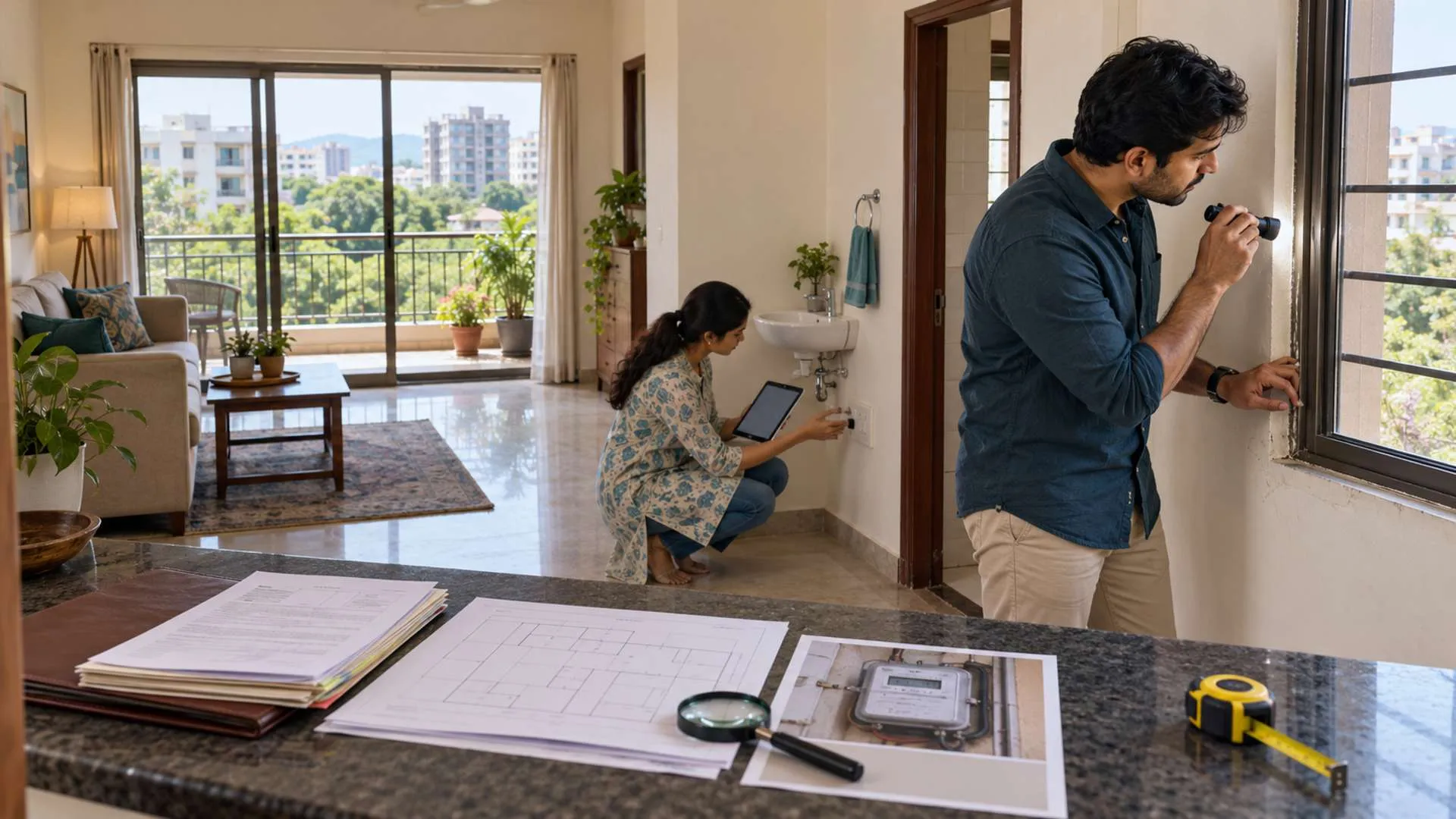
Before visiting your next sample flat, shortlist three micro-markets and compare actual registered prices, MahaRERA records, peak-hour commute, rental demand, infrastructure status and complete acquisition cost.
Then compare projects, from Saheel iTrend City Life Hinjewadi vs Kharadi and Mantra Melange Kharadi price review 2026 to Godrej Baner, Kolte Patil Baner premium projects or affordable developments farther into PCMC, on their own merits rather than brand recognition alone.
Pune has no shortage of places to buy in 2026. The real advantage belongs to buyers who know why they are buying there.