

Why Panvel and Uran Are Navi Mumbai’s Next Growth Frontier
Explore Panvel and Uran real estate in 2026
SHARE:
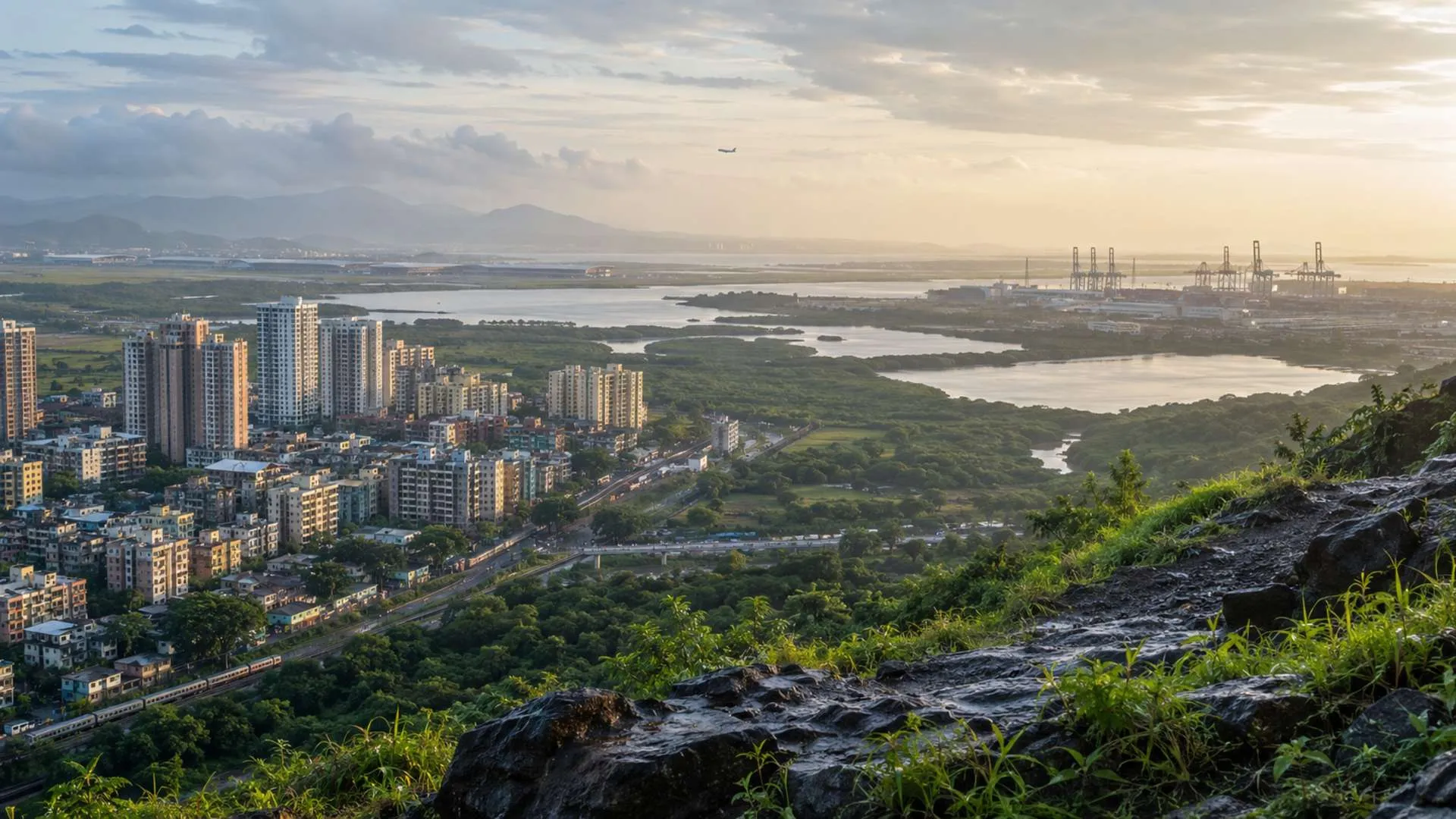
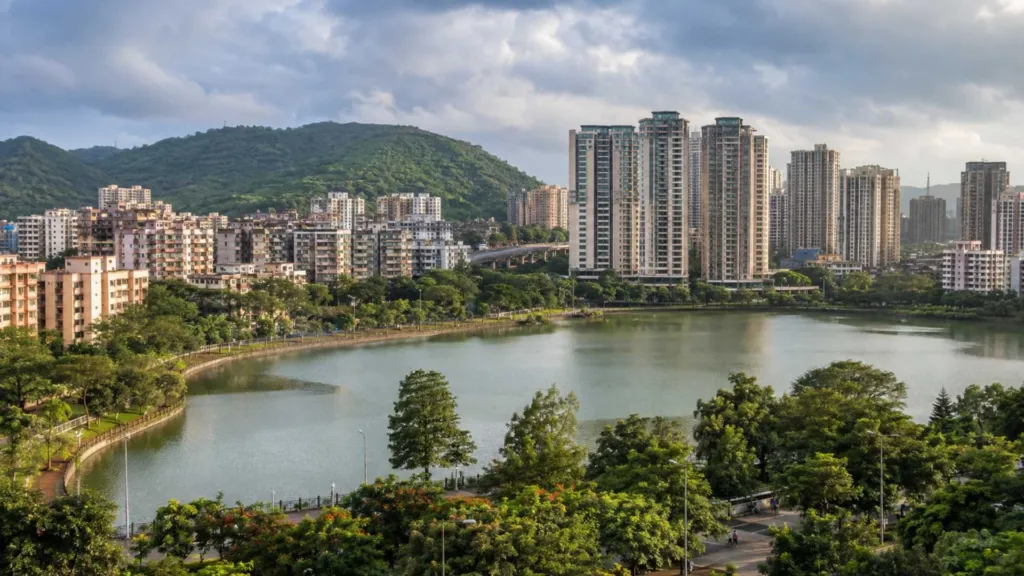
Navi Mumbai’s real estate map is moving south. Panvel, once viewed mainly as the final suburban railway stop before the Mumbai–Pune corridor, is becoming a large residential market. Farther west, Uran and the CIDCO-planned Dronagiri node are drawing attention through a lower entry price, port-led employment and improving rail connectivity.
Together, they form the Panvel-Uran-Navi Mumbai growth frontier in 2026, but the two markets are not interchangeable. Panvel offers greater residential maturity, while Uran and Dronagiri remain longer-horizon infrastructure and employment bets.
The investment question is no longer whether this belt will develop. It is how much growth has already entered property prices and how long buyers may have to wait for the next phase.
Is Panvel a Good Place to Invest in Property in 2026?
Panvel can suit homebuyers and long-term investors seeking airport-linked growth, established railway and highway connectivity and a wide choice of new housing. However, its 76% residential price-index rise since 2021 suggests that part of the infrastructure opportunity is already reflected in prices.
This Panvel property investment guide 2026 airport story is backed by more than promotional enthusiasm. Business Today, citing an ANAROCK report, stated that Panvel received 42,330 new homes between 2021 and H1 2026.
Homes priced between ₹50 lakh and ₹1 crore represented 47% of launches, while 1 and 2 BHK homes together formed 85% of new supply. These figures position Panvel as a market driven substantially by first-time buyers, young professionals and nuclear families rather than luxury demand alone.
For anyone asking “Panvel mein ghar lena worth it hai kya abhi 2026 mein?”, the answer depends on the purchase purpose. End-users may value Panvel’s railway junction, social infrastructure and access to employment corridors. Investors need a realistic five-to-seven-year holding period because 91% of available residential inventory was reportedly under construction in H1 2026.
Has the Navi Mumbai Airport Premium Already Been Priced Into Panvel?
Panvel’s residential price index reached 176 in H1 2026, using 2021 as the base of 100. Navi Mumbai’s corresponding index stood at 164. In other words, Panvel recorded a 76% index increase against 64% for the wider Navi Mumbai market.
This Panvel appreciation of 76% vs Navi Mumbai’s 64% comparison suggests that expectations surrounding the Navi Mumbai International Airport, Atal Setu and associated development have already influenced prices.
However, “priced in” does not necessarily mean “no growth left.” The airport is expected to support aviation, logistics, hospitality, retail and commercial employment. Business Today also highlighted the proposed 667-acre Aerocity, CIDCO’s Integrated Logistics Park and an automated FedEx cargo hub among the developments shaping the corridor.
The more useful question is: has Navi Mumbai airport appreciation been priced in Panvel completely? Probably not, but buyers entering now are no longer early investors. Future gains will increasingly depend on infrastructure becoming operational at scale, employment materialising and housing supply being absorbed.
Buyers searching “is Panvel good for property investment after airport opens 2026?” should verify the airport’s current operational status and official schedules before making a decision. A launch announcement, inauguration and full commercial operation are different milestones.
What Does a Home Cost in Panvel?
Rates vary sharply by sub-market, project stage and area measurement. Indicative market discussions place parts of Panvel around ₹8,000–₹12,500 per sq. ft., while newer or branded developments may quote more.
Business Today reported the following indicative ticket sizes:
- 1 BHK: ₹52–₹82 lakh
- 2 BHK: ₹82 lakh–₹1.12 crore
- 3 BHK: ₹1.12–₹1.56 crore
These figures show why a 2BHK Panvel under ₹80 lakh RERA-approved 2026 search may produce limited choices, smaller carpet areas, or homes in emerging locations. Buyers should compare the total consideration and carpet area rather than a base price or super-built-up rate.
The Panvel station area property ₹9,500–₹13,000 per sq. ft. 2026 market can appeal to daily commuters, while New Panvel property ₹12,500–₹14,500 per sq. ft. 2026 searches frequently lead to newer supply. Prices can fall outside both bands.
A Panvel station vs New Panvel vs Panvel East comparison can be simplified as follows: the station belt offers established connectivity, New Panvel provides planned residential sectors, and Panvel East or airport-facing pockets offer newer development with varying levels of social infrastructure.
Pushpak Nagar is increasingly associated with airport-proximate development. Yet searches such as Panvel East Pushpak Nagar NRI investment ₹85 lakh–₹1.4 crore or NRI investment Panvel Pushpak Nagar project review 2026 require project-specific verification. Buyers should confirm whether the property falls under CIDCO, its exact tenure and all applicable permissions.
Why Is Uran Emerging as a Smart Property Investment?
Uran’s investment thesis is different. JNPT Jawaharlal Nehru Port, Uran, Dronagiri industrial employment, logistics activity and the expanding suburban railway network form the area’s demand base.
Dronagiri is a planned CIDCO node near JNPT. Mumbai Home Expert describes it as the most budget-friendly of the Panvel–Ulwe–Dronagiri trio, aimed primarily at buyers prepared to hold for five to seven years.
That explains what makes Uran Dronagiri a smart choice for property investment: it offers an earlier-stage entry than Panvel or Kharghar. But early entry carries trade-offs, including developing social infrastructure, construction activity and potentially slower resale or rental absorption.
Indicative property portals have placed Uran property prices around ₹6,947 per sq. ft. in 2026, alongside claims of 21.8% one-year and 38.8% five-year appreciation. These figures can change with listing inventory and should not be treated as registered transaction averages.
Similarly, Dronagiri Sector 51 ₹10,335 per sq. ft. investment in 2026 may represent selected inventory rather than the complete node. Buyers must confirm whether rates are calculated on carpet, built-up, or saleable area.
Uran vs Panvel: Which Offers the Better Entry Point?
A search for Uran vs Panvel entry point comparison 40–50% cheaper captures Uran’s primary attraction, but the actual discount is project-specific.
Panvel offers a more established railway junction, schools, hospitals, retail and a wider housing selection. Uran and Dronagiri offer lower entry possibilities, proximity to JNPT and potentially greater percentage upside from a smaller base, but with a longer development horizon.
Therefore, an Uran vs Panvel long-term investment comparison 2026 comes down to risk appetite:
- Panvel: stronger current liveability and greater market depth
- Uran–Dronagiri: lower entry in selected pockets and longer-term potential
- Both: infrastructure-dependent markets requiring careful project selection
The answer to “Uran Dronagiri mein property kyun leni chahiye smart investment?” is not simply appreciation. The investment must also be supported by usable transport, employment growth and an acceptable exit market.
Panvel vs Ulwe vs Kharghar: Which Is Best?
A Panvel vs Ulwe vs Kharghar property comparison 2026 reveals three stages of Navi Mumbai’s development.
Kharghar is the most established, with developed social infrastructure and operational Metro connectivity. Ulwe has benefited directly from Atal Setu and proximity to the airport. Panvel combines a mature city base with a large infrastructure-led development pipeline.
The often-used Panvel ₹10,500 vs Ulwe ₹13,000 per sq. ft. comparison is only indicative. Current projects may quote substantially different rates depending on sector, developer and construction stage.
For buyers asking “Panvel ya Ulwe ya Kharghar kahan best investment hai Navi Mumbai?”, Kharghar may suit those prioritising current liveability, Ulwe may work for connectivity-led investors, and Panvel may provide the broadest combination of end-use demand and long-term development.
A Panvel vs Navi Mumbai established nodes value comparison also shows why lower rates are not automatically better value. Vashi or Kharghar may cost more but provide deeper rental markets and established infrastructure.
How Much Do MTHL and NMIA Really Matter?
The NMIA Navi Mumbai International Airport and MTHL Atal Setu Panvel narrative has transformed buyer perception of the region. Atal Setu links Sewri with Chirle, improving access towards Navi Mumbai, while Panvel connects onward through major highways and railways.
However, the phrase “within 2 km MTHL Panvel 25% premium properties 2026” is geographically misleading if applied broadly. Atal Setu terminates at Chirle rather than central Panvel. Any claimed MTHL 2 km corridor 25% premium Panvel property guide should identify the exact site and provide comparable transaction evidence.
Likewise, a Panvel MTHL 25% premium vs Kharghar Metro 15% comparison cannot be treated as a fixed investment formula. Infrastructure premiums differ according to last-mile access, travel-time savings, project quality and how much anticipation was already included in the original price.
What Should Buyers Verify Before Investing?
The CIDCO Panvel plots township development SEZ growth node story brings multiple authorities, planning schemes and land categories into the buying process.
Before considering CIDCO-approved plots Panvel Uran investment, confirm:
- Title, land tenure and transfer conditions
- CIDCO permissions or NOCs where applicable
- MahaRERA registration and declared possession date
- Sanctioned plans and commencement approvals
- Carpet area, total price and recurring charges
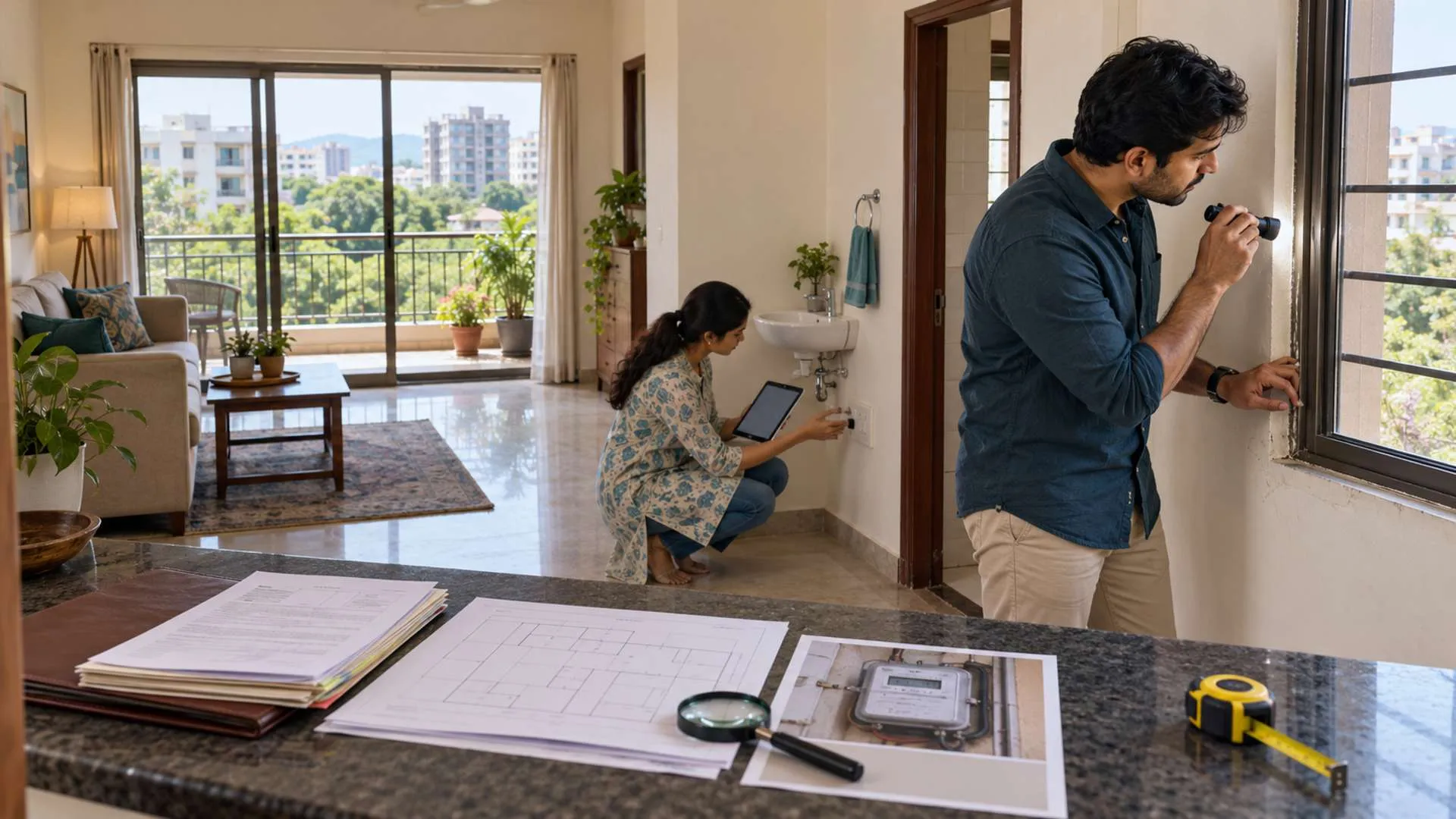
A document check before buying a Panvel flat CIDCO NOC guide should also include an independent lawyer’s title review. CIDCO approval and MahaRERA registration are important checks, but neither replaces complete legal due diligence.
The same applies to Panvel township projects: RERA-verified 2026 reviews and a Hiranandani Fortune City Panvel vs private developer comparison. Buyers should compare construction status, delivery record, maintenance structure, access roads and existing occupancy rather than relying on brand recognition alone.
Questions Frequently Asked
Is Panvel Still Worth Buying After 76% Appreciation Since 2021?
Panvel may still suit long-term buyers, but the 76% price-index rise shows that it is no longer an early-stage market. Future appreciation will depend on airport-led employment, infrastructure delivery and absorption of the large under-construction supply.
Where Exactly in Panvel Should I Invest for Maximum Returns?
There is no guaranteed maximum-return location. Station-adjacent areas offer established connectivity, while New Panvel, Pushpak Nagar and airport-facing corridors present different development-stage opportunities. Match the location to a five-to-seven-year horizon.
Is Uran Good for Property Investment?
Uran and Dronagiri may suit buyers seeking a lower entry price and long-term exposure to JNPT, logistics and CIDCO-led development. They are less suitable for buyers who need mature social infrastructure or immediate rental liquidity.
Panvel or Ulwe: Which Is the Better Investment?
Panvel offers a larger residential market and stronger existing social infrastructure. Ulwe provides more direct Atal Setu and airport proximity. The better choice depends on current liveability needs, entry price and holding period.
Is the Airport Premium Already Priced Into Panvel?
Part of it is already priced in, as suggested by Panvel’s 76% residential price-index increase since 2021. Further upside is possible, but it will depend increasingly on actual airport operations, employment creation and infrastructure execution.
Panvel and Uran Are Entering Different Stages of the Same Growth Story
The Panvel Uran Navi Mumbai next growth frontier is real, but the opportunity is uneven. Panvel has moved from infrastructure promise towards a large, increasingly priced residential market. Uran and Dronagiri remain earlier-stage, lower-liquidity bets linked to port, logistics and planned urban development.
Before booking, compare at least three projects, verify MahaRERA and CIDCO records, inspect current access and calculate the all-inclusive price. Visit the location on a working day, the strongest investment story still has to function as a real place to live.