

Will Extreme Heat Cut Your Home’s Value? India’s Climate Discount
Will Extreme Heat Reduce Property Value in India?
SHARE:
For decades, Indian homebuyers have asked the same questions: Where is the project? Who is the developer? How close is the office? What is the price per sq ft?
A new question is entering that checklist: How hot will this home become in 10 years?
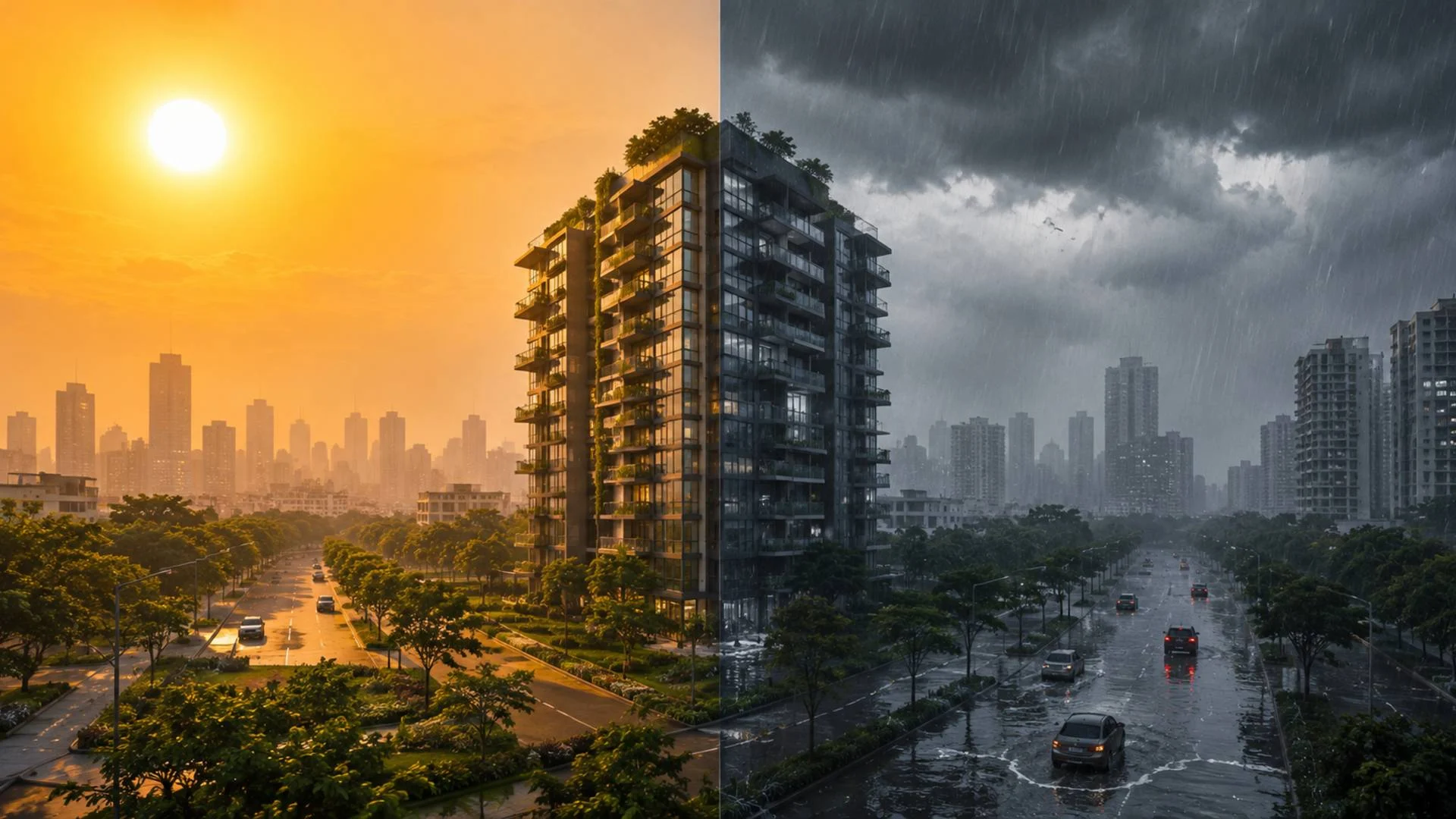
As extreme heat, urban flooding, and water stress become harder to ignore, India’s climate risk to real estate property value in 2026 is moving from an environmental discussion to an investment issue. BeyondWalls notes that climate change is already influencing housing decisions as buyers confront hotter summers, waterlogged streets and stressed urban infrastructure.
That raises an uncomfortable possibility for homeowners: India may be heading towards a “climate discount,” where two otherwise similar homes command different prices because one is significantly harder and costlier to live in.
Will extreme heat reduce my property value in India?
Potentially, yes. Extreme heat can weaken a property’s future appeal when it increases cooling bills, water stress, maintenance costs and everyday discomfort. Climate-resilient homes with better ventilation, insulation, shading, water management and reliable infrastructure could increasingly command a “resilience premium” over vulnerable properties.
Your ₹1 Crore Home May Have a New Risk Nobody Priced In
The climate discount India property value heat risk 2026 story is not simply about temperature.
Consider two ₹1 crore apartments in the same neighbourhood. One has shaded façades, cross-ventilation, insulated walls, trees, reliable water supply and efficient cooling. The other has heat-trapping glass, exposed western walls, limited ventilation and heavy dependence on air-conditioning.
Today, their location may give them similar valuations. Ten years from now, buyers may not value them equally.
Trident Realty argues that climate exposure is becoming a financial variable because heat stress can increase cooling expenditure, accelerate equipment wear and raise long-term operating and maintenance costs. It describes an emerging distinction between a “liquidity discount” for vulnerable properties and a “resilience premium” for better-protected assets.
That is how climate change could create a property value discount in India, not necessarily through a sudden crash, but through slower resale, weaker buyer demand and higher ownership costs.
Heat Could Change What “Premium” Means
The design of the apartment itself could become increasingly important.
Mongabay India reports that cities and homes are expected to become hotter due to climate change, urbanisation and the urban heat-island effect. Its examination of passive cooling highlights three surprisingly basic tools: shade, ventilation and insulation.
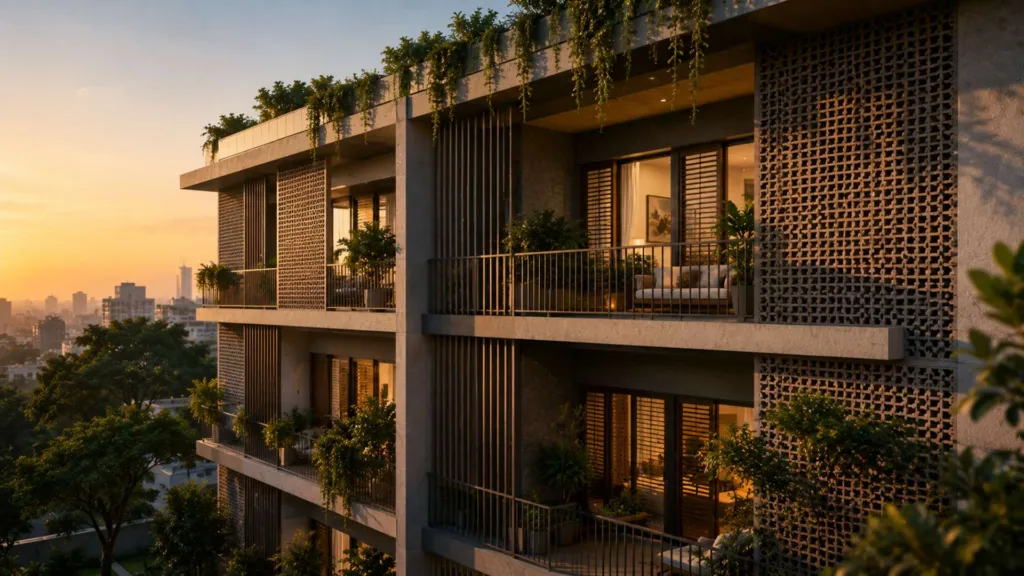
Large glass façades may photograph beautifully, but excessive glass can trap heat. Thin concrete walls can also transfer heat faster than better-insulated alternatives. Meanwhile, building orientation, shaded windows, roof treatments and cross-ventilation can reduce dependence on mechanical cooling.
In other words, tomorrow’s luxury apartment may be the one that stays comfortable when the power bill rises, not simply the one with the biggest clubhouse.
Delhi, Mumbai or Pune: Climate Risk Will Not Look the Same
There is no credible basis for declaring an entire Indian city “too hot to live in” in 2026. Climate risk is far more localised.
For Delhi NCR property climate risk, extreme heat and the urban heat-island effect deserve scrutiny. Mumbai’s equation includes heat, humidity and coastal flooding risk, while Chennai and Kolkata face their own combinations of flooding, heat and coastal exposure.
Cities such as Pune and Bengaluru may appear climatically attractive relative to hotter markets, but “Pune climate resilient property investment 2026” should not be treated as a blanket safe-bet label. Water availability, tree cover, drainage, building orientation and the individual micro-market still matter.
Even within one neighbourhood, the climate performance of two buildings can be dramatically different.
Could Climate Risk Become the Next RERA-Level Disclosure?
One keyword buyers should treat cautiously is “RERA mandatory climate risk disclosure developers India.” As of 2026, buyers should not assume there is a universal RERA requirement forcing developers to provide a standardised property-level climate-risk score.
But that does not make the question irrelevant.
Climate exposure could increasingly enter due diligence through lenders, institutional investors, insurers and sophisticated buyers. Trident Realty expects financing, insurance and regulatory scrutiny of climate readiness to increase as resilience moves from a differentiator towards a baseline expectation.
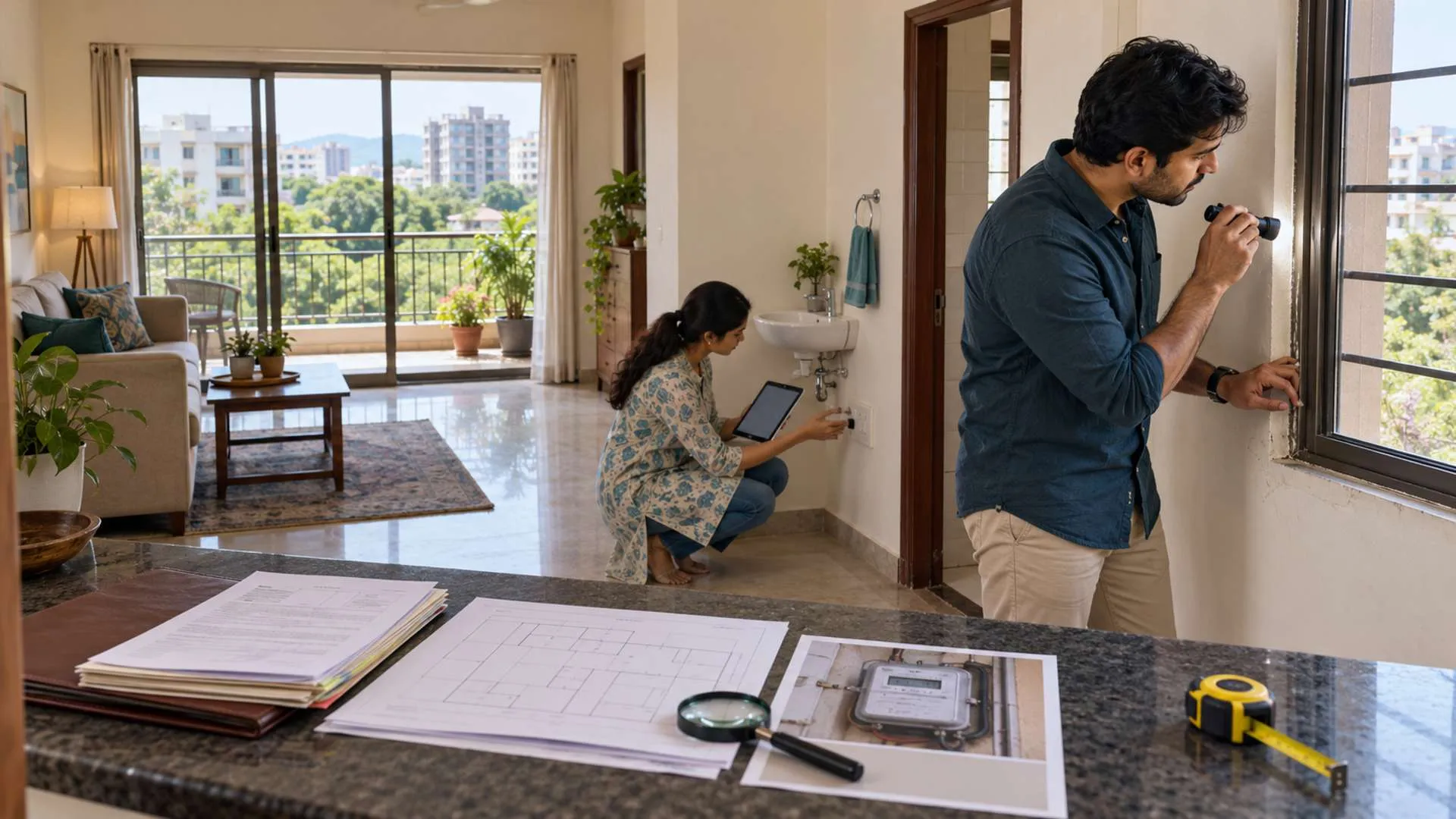
The practical homebuyer checklist may therefore evolve beyond RERA number, carpet area and possession date to include:
- How hot does the apartment get in May?
- Does it receive harsh western sunlight?
- Is there cross-ventilation and effective shading?
- How secure is the project’s water supply?
- Has the surrounding road flooded previously?
- What are residents actually paying for summer electricity?
Those questions could reveal more about whether extreme heat damages home value in India in 2026 than a glossy sustainability brochure.
India’s Next Property Premium May Be “Comfort”
The biggest change might be in the mind.
“Buyers were paying a premium for location. Amenities, branded developers and gated communities came next. Climate resilience could be the next step in the property valuation ladder.
That is not to say that every house in Ahmedabad, Nagpur, Hyderabad, Delhi, Mumbai or Chennai will lose value, or that property in Pune, Bengaluru, Chandigarh, Coimbatore or Mysore is automatically a climate-proof investment. The developing divide is likely to be asset to asset, street to street and micro-market to micro-market.
If you are asking yourself, “Is it safe to buy property in India right now given climate risk?”, the answer is still yes, but climate due diligence deserves a place next to legal and financial due diligence.
Before buying your next home, don’t only ask what it is worth today. Ask what it will cost to keep comfortable in 2036. That answer may increasingly decide what somebody else is willing to pay for it.