Pune’s Branded Homes Command a 44% Premium: What Justifies It?
Pune Branded Homes: Why They Command a 44% Premium
SHARE:
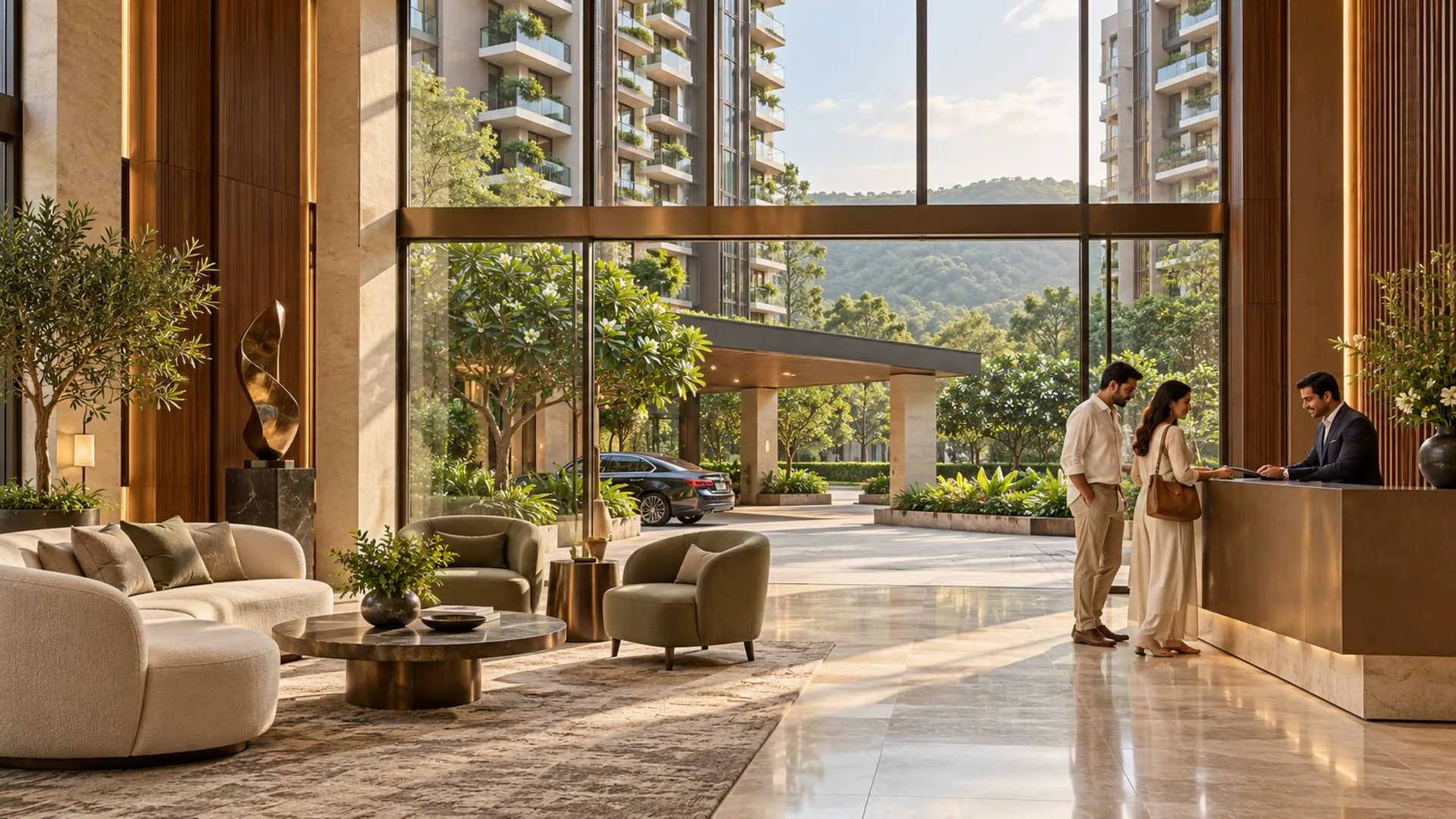
A global brand on a residential tower can do more than change its design, services and sales levers; in Pune, it can even change its price tags.
According to the findings of NOESIS Hotel Advisors’ report, The Landscape of Branded Residences in India, Edition 3, published in October 2026, Pune commands a premium of 44% over similar projects in the residential space, compared to the national average of 32%. The story was reported by Realty & Infrastructure.
Thus, the next question for luxury home buyers in Pune is: What does all this money get them?
It boils down to the dynamics of branded residences, the differentials of design, management and service, and the value proposition beyond the label at the time of possession.
Why do branded homes in Pune command a 44% premium, and is it justified?
NOESIS’s reported findings place Pune’s branded-residence premium at 44% against comparable local developments. Brand-linked design, specifications, services and buyer confidence can support higher pricing. Whether an individual home justifies that premium depends on its actual offering, recurring charges and contractual commitments. The percentage measures a price difference, not guaranteed appreciation or investment returns.
What separates branded residences from conventional luxury homes?
An expensive home from a prominent developer is not automatically a branded residence.
The distinguishing feature is an association with an external hospitality, fashion, design, or lifestyle brand. The brand’s involvement may cover design, specifications, services or management, depending on the agreement.
SQUAREA’s Pune guide describes this category through signature design, curated amenities and brand-linked living experiences. It identifies YOO Pune, YOO Villas and Trump Towers Pune among the developments shaping the city’s branded-residential identity.
However, the arrangements are not interchangeable. Gupta & Sen distinguishes hospitality-linked residences from fashion- and design-led collaborations. A design house may contribute aesthetics and specifications without managing daily operations.
A designer-branded apartment should not be assumed to include hotel-style management.
A conventional luxury flat in Pune may also offer excellent architecture, privacy and amenities. The comparison should therefore examine the additional, documented benefits of the brand association.
What the 44% premium actually means
The reported comparison puts Pune above the national benchmark:
| Market | Reported branded-residence premium |
| Pune | 44% |
| Kolkata | 42% |
| India average | 32% |
These are the NOESIS findings reported in October coverage, rather than a valuation rule for every project.
Consider an illustration: if a genuinely comparable unbranded home costs ₹2 crore, adding 44% produces ₹2.88 crore, a difference of ₹88 lakh before other purchase expenses.
That is a substantial amount to justify through identifiable benefits.
Buyers should compare carpet area, location, floor, views, condition and possession status consistently. A larger apartment in a superior position cannot reveal the value of branding alone when compared with a smaller, less convenient home.
The 44% headline is a reason to investigate the premium, not automatically accept it.
It also does not establish why Pune leads the comparison. Without detailed project-level analysis, explanations such as limited supply, brand recognition or product differentiation remain possible contributors rather than proven causes.
Where buyers could receive meaningful value
The strongest case begins with the home itself.
A brand partnership can influence planning, interiors, arrival spaces and shared amenities. For a buyer, the question is whether those choices create durable advantages: better layouts, privacy, useful common areas or consistently maintained surroundings.
Service is the next test. Concierge assistance, housekeeping, or other conveniences may be valuable to someone seeking a home that requires less personal supervision. Buyers need to establish which services are included, which cost extra and who provides them.
For an NRI owner spending substantial time overseas, dependable management could carry practical value. For a resident who rarely uses the service package, the same recurring expenditure may feel less worthwhile.
SQUAREA’s HNI and NRI analysis connects affluent buyers’ interest with lifestyle, international exposure and brand familiarity. This is useful market context, rather than proof that every branded property earns superior returns.
The wider luxury market matters too. Mantra Properties links demand for premium homes in Pune with high-income professionals, privacy, wellness and lifestyle expectations. Those preferences can support both branded and unbranded developments.
The brand must therefore add something beyond features buyers can obtain elsewhere.
India’s ₹92,000 crore market raises the stakes for developers
The NOESIS study values India’s branded-residences market at approximately ₹92,000 crore, or $9.7 billion, the highest in Asia-Pacific by value, according to Realty & Infrastructure’s coverage. Its analysed portfolio comprises 38 launched or operational projects containing 10,452 homes.
This scale makes the category commercially significant, while increasing scrutiny of delivery.
Travel Trends Today’s summit coverage reports that branded homes sell faster and explains how earlier collections can reduce developers’ construction-period financing exposure. It also reports that non-hospitality brands account for 73% of Indian branded units, compared with about 20% globally.
That mix reinforces the need to understand each partnership. Brand recognition may help sell a project, but long-term differentiation depends on what residents receive.
For developers, the opportunity is to integrate the brand into planning, specifications and operations from the outset. A partnership becomes more persuasive when buyers can see how it changes the product.
The ownership test: will the promise survive possession?
A premium property purchase requires attention to recurring costs as well as the entry price.
Ask for the proposed maintenance budget, management charges and the basis for future increases. Establish whether advertised facilities are included in regular charges or operated separately.
Then examine the brand arrangement. What responsibilities continue after handover? How long does the agreement last? What happens to services or branding if it ends?
These questions become especially relevant when the purchase premium depends heavily on ongoing management.
For property investment in Pune, test the income separately. A higher sale price does not necessarily produce a proportionately higher rent. Compare realistic rental evidence after maintenance, vacancy and other ownership expenses.
Before paying a premium, verify:
- Brand role: Design, licensing, operations, or a combination.
- Delivered benefits: Specifications and services documented for the relevant project.
- Ownership costs: Regular charges, optional services and future obligations.
- Exit evidence: Comparable resale transactions rather than assumed brand-led appreciation.
Pune’s branded homes may justify a 44% premium for buyers who value and use a distinctive, well-delivered ownership experience. The case becomes weaker when the additional benefits are vague or available at a lower complete cost elsewhere.
Explore premium housing options through RealtyConnect, then compare the brand agreement, full ownership cost and delivered experience. Let those details decide whether the name deserves the premium.

FAQs:
 Studio Apartments in Mumbai 2026: Prices, Rents and Investment Returns