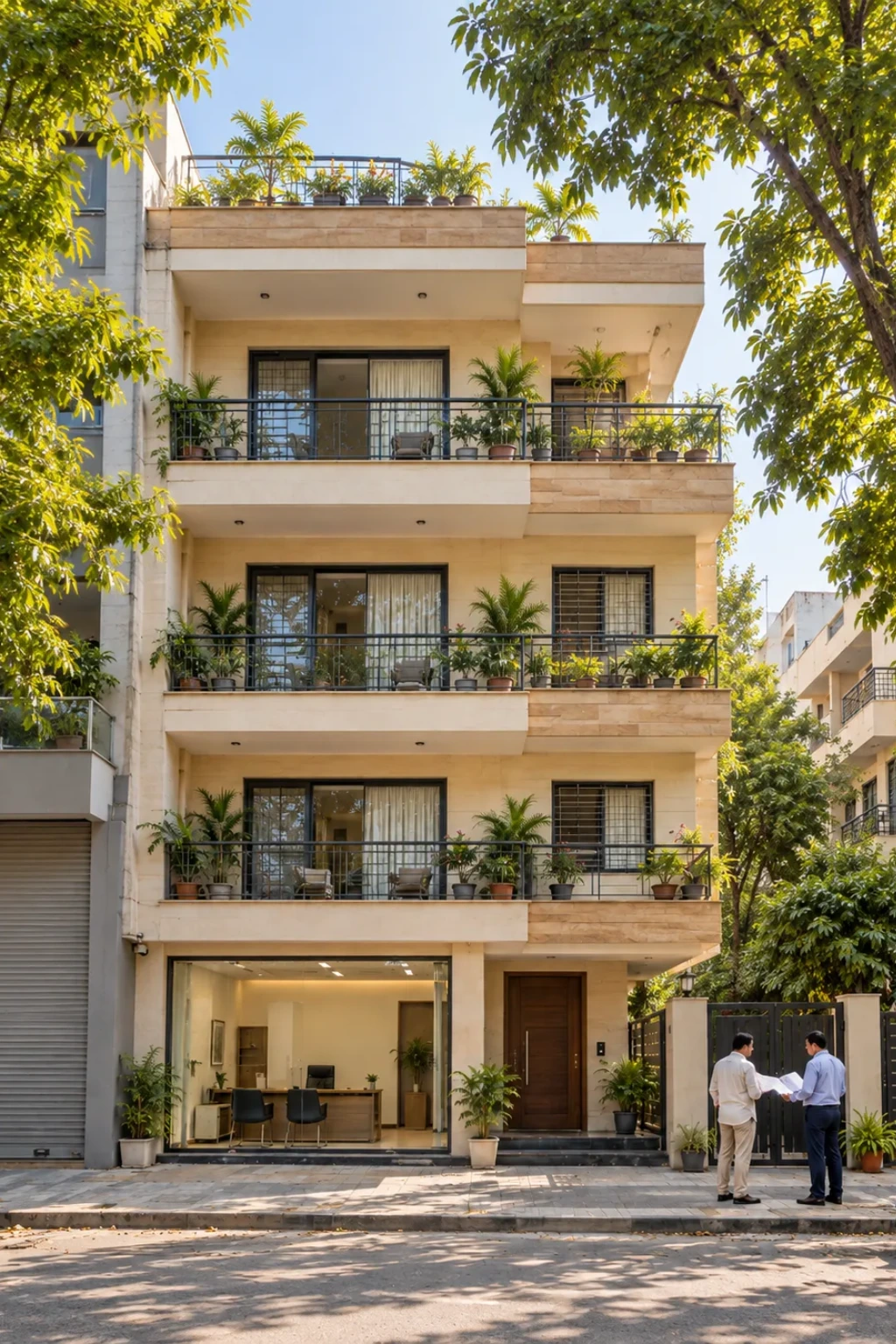


Coworking for Doctors: How Managed Clinics Are Creating Property Demand
Medical Coworking in India — Managed Clinic Demand
SHARE:
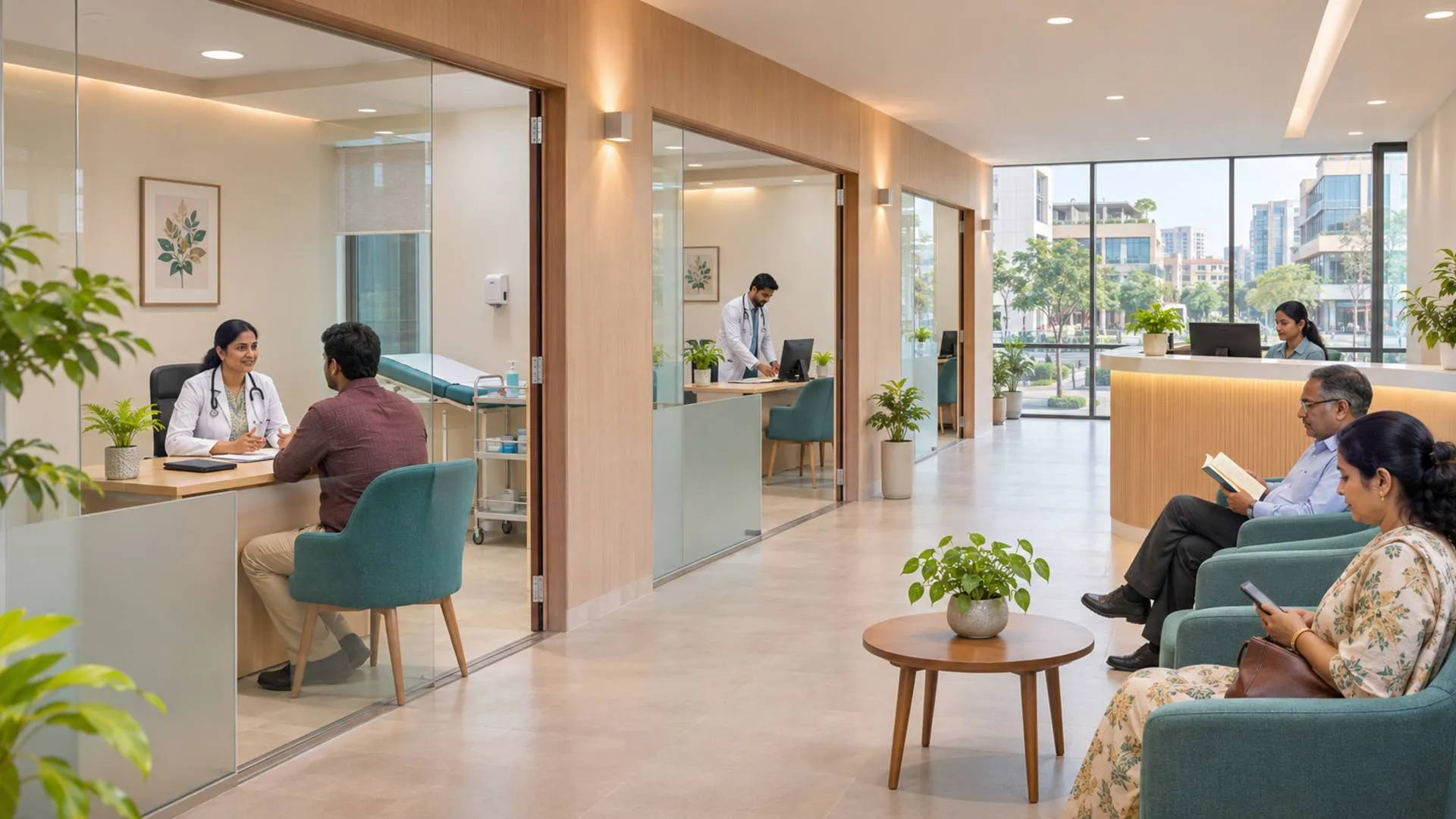


The emergence of renting consulting spaces has sparked a new segment in the field of commercial real estate. Aartas CliniShare offers shared consultation spaces which eliminates having to invest between ₹10-20 lakh to run an independent clinic. Doctors can rent out fully equipped spaces with shared support. The space itself and administration are taken care of by the owners. This provides an opportunity for property owners who have easily accessible buildings. Shared doctor workspaces are emerging into managed clinics and there is now a clear link between the two. As reported by The Economic Times (5th Nov), Aartas will be adding 20,000sqft of space in Delhi NCR by the end of the financial year.
What Does a Managed Clinic or Medical Coworking Space Actually Look Like?
Think of a furnished outpatient department with consultation rooms that doctors use according to a booking schedule.
Aartas CliniShare describes private consulting cabins supported by reception and billing staff, waiting areas, diagnostic support and electronic medical records. Its model allows hourly or on-demand bookings rather than requiring every doctor to establish separate premises.
That makes managed clinic space for doctors in India relevant to specialists testing a neighbourhood, consultants running part-time OPDs and practitioners building an independent patient base.
The format is already visible beyond Delhi NCR. Health Spectrum in Baner, Pune, advertises equipped medical and dental cabins with hourly, daily and monthly booking options. House of Cure similarly describes flexible bookings or memberships for ready-to-use clinical infrastructure.
However, plug-and-play clinic space for specialists must match the speciality. A consultation cabin does not automatically support dental procedures, imaging, or minor surgery. Equipment, sterilisation arrangements and permissions need separate confirmation.
Why Are Doctors Moving Away from Independent Clinics?
The attraction is lower upfront commitment and fewer administrative responsibilities, not automatic profitability.
When comparing the cost of setting up a clinic vs shared clinic space, doctors should examine the complete service package. A low booking fee can become less attractive if nursing, consumables, software, or procedure equipment cost extra.
Table 1: Independent clinic versus managed clinic space
| Parameter | Independent clinic | Managed clinic space |
|---|---|---|
| Setup investment | Deposit, interiors and equipment funded separately | Operator supplies agreed infrastructure; deposits or joining fees may apply |
| Occupancy cost | Rent continues regardless of consultations | Hourly, session-based or monthly charges, depending on operator |
| Staffing | Doctor recruits and manages staff | Agreed reception and support services may be included |
| Equipment | Purchased or leased by the practice | Basic equipment may be included; speciality equipment needs confirmation |
| IT and software | Arranged separately | Available under some service packages |
| Compliance | Practice must establish applicable responsibilities | Operator support does not remove every professional obligation |
| Opening timeline | Depends on fit-out and approvals | Potentially quicker where infrastructure and permissions are ready |
| Break-even | Depends on costs and patient income | Still depends on bookings, fees and expenses |
The shared clinic space rental model in India changes how costs are incurred. It does not make the first consultation profitable by definition.
For illustration, a ₹30,000 monthly space package and ₹1,000 contribution per consultation would require 30 consultations to cover that package alone, before other practice expenses.
How are coworking for doctors and managed clinics creating property demand in India?
Medical coworking operators provide equipped consultation rooms and shared services that doctors access through flexible bookings or memberships. Operators need suitable premises, creating leasing opportunities for outpatient-ready commercial property. The potential is supported by actual expansion plans, but rent, approvals, patient access and operator finances determine whether an individual property works.
How Managed Clinics Are Creating a New Layer of Property Demand
Medical coworking separates the doctor’s need for consulting time from the operator’s need for a physical facility.
A landlord may lease one premises to an operator, which then schedules rooms across multiple practitioners. The Economic Times reports that Aartas uses leased infrastructure and serves individual doctors, speciality clinics and healthcare enterprises. Its planned expansion targets Noida, West Delhi and North Delhi.
This is a specific example of healthcare coworking creating real estate demand. It sits within a much larger infrastructure requirement.
Table 2: Healthcare real estate demand, the verified numbers
| Data point | Figure | Source and qualification |
|---|---|---|
| Additional healthcare real estate potentially required by 2035 | 2.6 billion sqft | CBRE; broad healthcare infrastructure requirement |
| Estimated healthcare footprint in 2025 | 2.1 billion sqft | CBRE |
| Incremental hospital beds required by 2035 | Nearly 2.9 million | CBRE benchmark-based projection |
| India’s hospital-bed density | Approximately 1.6 per 1,000 people | CBRE |
| Global comparison used in the report | 3.3 beds per 1,000 people | CBRE |
| Aartas’s announced near-term expansion | 20,000 sqft | Economic Times; planned Delhi NCR addition |
CBRE’s October 2026 report also identifies emerging medical office buildings accommodating services such as diagnostics, rehabilitation, dental care and wellness. Its national projection must not be presented as demand for shared clinics alone.
For healthcare real estate demand in India in 2026, the useful takeaway is diversification: outpatient operators can become prospective occupiers alongside hospitals and diagnostic chains.
Which Property Types Are Best Suited for Managed Clinic Spaces?
The strongest premises make attending an appointment straightforward. Visibility matters, but so do step-free access, lifts, toilets, ventilation, waiting space and dependable building services.
Table 3: Property suitability for managed clinic conversion
| Property type | Potential suitability | Why it may work | Main check |
|---|---|---|---|
| Township ground-floor shops | Strong where medical use is permitted | Nearby households and convenient access | Permitted use, patient entry and service infrastructure |
| Residential high-street ground floors | Strong for neighbourhood OPDs | Visibility and local catchment | Rent, parking and congestion |
| Mixed-use buildings near hospitals | Potentially strong | Accessible specialist-care ecosystem | Competition and patient access |
| Mall or shopping-centre units | Case-specific | Accessible premises may suit some formats | Operating hours, costs and clinical permissions |
| Upper-floor commercial units | Suitable with reliable accessibility | Can support appointment-led practices | Lift reliability and evacuation arrangements |
| Independent buildings or bungalows | Case-specific | Greater layout flexibility | Lawful use, conversion requirements and maintenance |
There is no universal requirement that every managed clinic occupy 1,500–5,000 sqft or provide exactly five parking spaces. Requirements depend on consultation volumes, room layouts and procedures.
For Pune, Health Spectrum’s Baner presence provides a concrete local example. It does not establish that every IT corridor has equivalent operator demand.
Patient convenience should guide the property shortlist before an investor assumes a healthcare premium.
What This Means for Property Investors and Developers
The opportunity in healthcare commercial property investment is to provide premises an operator can use efficiently and lawfully.
However, the reviewed evidence does not establish universal clinic yields of 7–10%, nine-to-fifteen-year leases, or uniformly lower vacancy than offices and shops. Those assumptions belong in a negotiated transaction, not a guaranteed investment comparison.
Table 4: Healthcare versus office versus retail investment
| Parameter | Healthcare/clinic space | Office space | Retail shop |
|---|---|---|---|
| Lease tenure | Operator- and property-specific | Tenant- and property-specific | Tenant- and property-specific |
| Lock-in | Check enforceability and exit provisions | Check negotiated terms | Check negotiated terms |
| Vacancy exposure | Operator viability and suitability for replacement users | Business demand and building competitiveness | Trading viability and customer access |
| Fit-out requirements | Depends on clinical services and equipment | Depends on workplace requirements | Depends on retail format |
| Rental yield | Calculate from actual rent and total investment | Apply the same calculation | Apply the same calculation |
| Resale prospects | Depend on income, approvals and alternative use | Depend on income and market demand | Depend on income and market demand |
Developers can assess whether part of a commercial development should accommodate outpatient services. Planning access, drainage, electrical capacity and flexible partitions early may reduce conversion difficulties later.
For investors, review the operator’s collections, commitments and financial capacity. Several doctors using the facility do not necessarily mean the landlord has several tenants: one operator lease can still represent one source of rental income.
The Risks: What Can Go Wrong with Medical Coworking Investments
1. Regulatory responsibilities can be misunderstood.
Do not assume one national registration regime applies identically everywhere. The central Clinical Establishments portal lists adopting jurisdictions; Maharashtra is not on that list. Separately, MPCB states that non-bedded healthcare establishments require biomedical-waste authorisation. Confirm requirements for the exact location and services.
2. A commercial address may not permit the intended clinical activity.
Check sanctioned use, building rules and applicable permissions before purchasing or commissioning a fit-out.
3. Operator failure can interrupt rent.
A busy-looking clinic does not establish that its operator can meet lease payments. Examine financial evidence and security arrangements.
4. Specialised layouts can complicate resale.
Assess whether another clinic, or an alternative permitted occupier, could use the premises without expensive alterations.
5. Fit-out responsibility can become a dispute.
The lease should allocate equipment ownership, repairs, reinstatement and handover obligations. Do not assume the next tenant will want the existing installation.
Managed clinic space for doctors in India creates a credible property opportunity when patient demand, operator economics and building suitability align.