

Pune Railway Station’s ₹442 Crore Expansion Could Reshape Nearby Property Markets
Which Areas Near Pune Railway Station Could See Property-Price Growth?
SHARE:
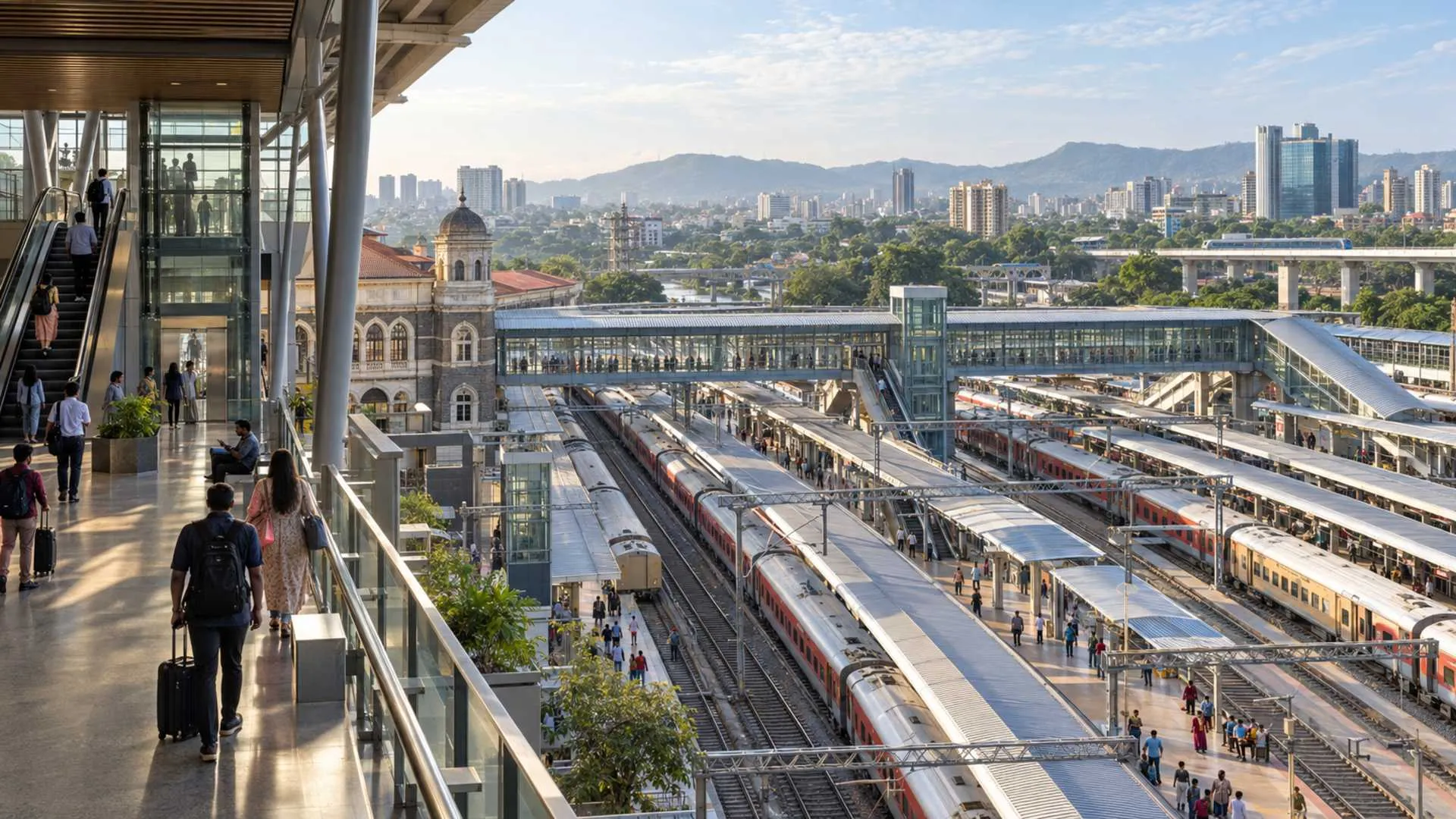
Under the capacity augmentation plan at Pune Junction, carriage sophistication has been planned at Pune railway station, which is expected to cost about ₹442 crore. This upgrade will include new platforms, passenger amenities, and remodelling of railway yards and other developments within the railway station.
The project aims to increase the number of platforms at the station from six to twelve as well as lengthen the existing platforms to accommodate longer trains. Besides, it will also introduce an electronic interlocking system. According to Railway officials, Pune Junction will handle nearly 20 more train operations a day once the works are completed.
Pune’s regional transport hub status will receive a boost with the expansion, but its property impact will be uneven. The central neighborhoods that are maturing may get the benefits of accessibility and commercial activity. Also, the secondary railway nodes like Hadapsar and the proposed Alandi coaching terminal may get visible development opportunities.
The most vibrant real estate opportunity might be around the wider railway network of Pune, not just by the main station.
Which Areas Near Pune Railway Station Could See Property-Price Growth?
Camp, Somwar Peth, Rasta Peth, Sangamwadi and the Bund Garden side are the closest established markets that could benefit from improved access to Pune Junction. Shivajinagar, Deccan and Koregaon Park may receive secondary connectivity benefits, while Hadapsar and the proposed Alandi coaching-terminal area could gain from the wider redistribution of railway services. Price growth, however, will depend on redevelopment, road access and liveability.
Proximity alone does not guarantee appreciation. Areas immediately surrounding a major station may also experience traffic, noise, parking pressure and intense commercial activity.
What Does the ₹442 Crore Pune Station Expansion Include?
According to The Indian Express, approximately ₹202.39 crore has been sanctioned under passenger and customer amenities.
Of this, ₹129.57 crore is intended for the development of platform pairs 7–8, 9–10 and 11–12, together with foot overbridges, a skywalk, lifts, escalators and other passenger facilities. Another ₹37.12 crore has been allocated to upgrade platforms 1–6, including drainage, flooring, painting and toilet repairs.
A permanent passenger-holding area has received ₹22.13 crore, while ₹13.57 crore is planned for a new parcel office.
Separately, approximately ₹239.64 crore has been sanctioned for traffic facilities and yard remodelling. The work includes extending existing platforms, adding platform and stabling lines, developing a third main line between the Ghorpadi Coach Maintenance Complex, Pune Junction and Hadapsar, and replacing the route-relay system with electronic interlocking.
Together, these two principal allocations amount to about ₹442 crore. Some reports have cited a broader project value of approximately ₹473 crore, apparently reflecting a wider scope or earlier announcement. Buyers and publishers should therefore avoid treating the two figures as interchangeable without identifying the included works.
Pune Mirror and News18 have also highlighted the six new platforms and modern interlocking system.
Around 150 trains currently originate, terminate or pass through Pune Junction daily. Railway officials expect capacity for approximately 20 additional services after the platform and yard works are completed.
Central Pune May Gain Access, Not Unlimited Appreciation
Camp, Somwar Peth, Rasta Peth and parts of Sangamwadi are positioned closest to Pune Junction. Better passenger circulation, new station entries and upgraded facilities could support hotels, retail, offices and rental accommodation.
However, these are mature, densely built neighbourhoods. Limited developable land, older buildings and constrained roads may prevent the kind of large-scale residential construction seen in Pune’s outer corridors.
Kasba Peth and Sadashiv Peth may receive an indirect accessibility advantage, but they are not all within immediate walking distance of Pune Junction. Their investment case depends more heavily on redevelopment, neighbourhood character and access to multiple modes of transport.
Shivajinagar is another important railway and metro node, but it should not be described as an extension of Pune Junction. Its property demand is shaped by its own station, Metro connectivity, educational institutions and access to central business areas.
Deccan Gymkhana and Kothrud are even farther from Pune Junction. They may benefit from Pune’s broader mobility improvements, but the ₹442 crore station project is unlikely to be their principal price catalyst.
In established central Pune, the expansion may improve convenience and rental demand more than it creates sudden double-digit appreciation.
Hadapsar Could Become the Operational Winner
Hadapsar station is central to the capacity strategy because shifting some services away from Pune Junction can reduce pressure on the main terminus.
Three platforms at Hadapsar have already been modernised and a fourth added, allowing the station to handle five additional trains daily, according to The Indian Express. The planned third main line connecting Ghorpadi, Pune and Hadapsar could further improve operational flexibility.
Residential areas with practical access to Hadapsar station may benefit if more trains originate or terminate there. Yet the station’s influence should not be confused with Hadapsar’s much larger property market, which is driven by Magarpatta, SP Infocity, industrial employment and road connectivity.
Buyers must examine the specific route to the station. A property marketed as “near Hadapsar railway station” may still face difficult last-mile access.
Could Alandi Become a New Railway-Linked Property Hotspot?
A separate Mega Coaching Terminal has been announced at Alandi on existing railway land, with nine proposed platforms and 17 stabling lines. It is not part of the Pune Junction property site and should not be presented as though construction is already complete.
If developed as planned, the terminal could create demand for staff housing, budget accommodation, retail and transport-linked services. Nearby property markets may also gain from improved road and transit infrastructure required to support a large terminal.
However, investors should wait for detailed execution timelines, access plans and official land-use information. The religious destination of Alandi already has distinct tourism and housing demand, and a coaching terminal would add an operational railway function rather than automatically create a premium residential market.
Dhanori is sometimes included in wider northeast Pune investment discussions because of its relative affordability and access to the airport side of the city. SquareYards lists an indicative average sale price of around ₹9,700 per sq ft. Nevertheless, Dhanori is not an immediate Pune Junction market, and its prices are influenced more directly by airport, Viman Nagar and Nagar Road connectivity.
Railway Expansion Versus Metro: Which Has the Bigger Property Impact?
Metro infrastructure generally affects daily urban commuting and can create a more localised premium around stations. A long-distance railway-terminal expansion improves regional access, passenger capacity and commercial movement, but its residential effect is usually broader and less direct.
Pune Junction’s advantage is multimodal connectivity. It connects intercity rail with nearby Metro access, buses, roads and central employment districts. When these systems work together, the station’s effective property catchment can expand beyond its immediate surroundings.
As Wealth Clinic notes, improved mobility can make locations more accessible to residents and businesses. It also cautions that buyers should verify project status instead of relying solely on future infrastructure promises.
The proposed Mumbai–Pune high-speed rail or “48-minute bullet train” should not be used to sell property near Pune Junction unless it receives clear approvals, financing and an implementation schedule. It is distinct from the sanctioned ₹442 crore station works.
Should Buyers Invest Near Pune Junction Before Completion?
The expansion strengthens the long-term case for Pune’s central transport network, but buyers should not pay a speculative railway premium today.
Before purchasing, check:
- Actual distance and peak-hour travel time to the station
- Road width, traffic, parking and monsoon drainage
- Redevelopment potential and building condition
- Comparable rents and registered sale prices
- MahaRERA details for under-construction projects
- The confirmed status of any proposed infrastructure
Pune Junction’s expansion can improve accessibility, station capacity and commercial activity, but property appreciation will follow only where transport upgrades combine with liveability and viable redevelopment.